
Tax residency determines where you’re legally required to pay taxes. For digital nomads, this can mean paying taxes in one country, multiple countries, or even facing double taxation. Here’s what you need to know:
- 183-Day Rule: Spend more than 183 days in a country, and you’re often considered a tax resident there.
- Center of Vital Interests: Authorities may look at your strongest personal and economic ties, like where your family lives or where you earn most of your income.
- Double Taxation Treaties: These agreements help resolve conflicts when two countries claim you as a tax resident, using tie-breaker rules like permanent home, habitual abode, or nationality.
- U.S. Rules: The U.S. taxes its citizens on worldwide income, regardless of where they live. You may qualify for exclusions like the Foreign Earned Income Exclusion (FEIE) or credits like the Foreign Tax Credit (FTC).
- State Tax Risks: Some U.S. states aggressively pursue taxes if you haven’t clearly severed ties, especially high-tax states like California or New York.
To minimize taxes legally, consider:
- Choosing tax-friendly countries with low or no income tax or territorial tax systems.
- Using tax treaties to avoid double taxation.
- Keeping detailed records of travel days, income, and expenses to stay compliant.
Popular destinations for digital nomads include the UAE (0% income tax), Portugal (tax benefits under the NHR program), Panama (territorial taxation), Singapore (progressive rates), and Estonia (0% on retained corporate earnings).
Understanding and managing tax residency is essential for avoiding unexpected tax bills and penalties while optimizing your financial situation.
How Countries Determine Tax Residency
Countries use several criteria to determine tax residency: physical presence, personal and economic ties, and tie-breaker rules. Knowing how these factors work can help you navigate your travel and work plans while steering clear of unexpected tax liabilities. Let’s break these down further.
The 183-Day Rule
The 183-day rule is a common benchmark. If you spend more than 183 days in a tax year within a country, you’re typically considered a resident for tax purposes. However, the way days are counted can vary between countries, so it’s important to check the specific rules in each jurisdiction you frequent.
Center of Vital Interests
When the 183-day rule doesn’t provide a clear answer, authorities look at your center of vital interests – essentially, where your strongest personal and economic connections lie. This test is especially relevant if you split your time across multiple countries.
Personal ties include factors like where your family lives, whether you own or rent a home, and where your children go to school. Economic connections, on the other hand, focus on where you earn most of your income, hold bank accounts, or own investments and property. Even the availability of a permanent home in one country, compared to temporary stays elsewhere, can weigh heavily in determining your tax residency.
Tie-Breaker Rules in Tax Treaties
When two or more countries claim you as a tax resident, tax treaties step in with tie-breaker rules to avoid double taxation. These rules start with the permanent home test. If you have a permanent home in just one country, that country generally has the right to tax you.
If you maintain permanent homes in multiple countries, the next factor is your habitual abode, which examines both the amount of time and the quality of your presence in each location. If this still doesn’t resolve the issue, nationality often becomes the deciding factor. For example, U.S. citizens with ties to multiple countries may default to U.S. tax residency due to their citizenship. Some treaties even include a mutual agreement procedure, where tax authorities negotiate to settle disputes.
Understanding these rules is especially important for digital nomads looking to streamline their tax obligations while working across borders.
U.S. Tax Rules for Digital Nomads
Navigating U.S. tax laws as a digital nomad can be tricky. Unlike many countries that tax only residents, the U.S. taxes its citizens and green card holders on their worldwide income, no matter where they live or work. This means that even if you’re living abroad full-time, you’re still on the hook for U.S. taxes. Below, we’ll break down the key filing requirements and strategies to help you manage both federal and state tax obligations.
Citizenship-Based Taxation and Filing Requirements
If you’re a U.S. citizen or green card holder earning income abroad, you’re required to file Form 1040 each year to report your global income. This rule applies even if you haven’t set foot in the U.S. all year or your income comes entirely from foreign sources. While the standard filing deadline is April 15th, living abroad gives you an automatic extension until June 15th.
The filing thresholds are relatively low. For 2024, single filers under 65 must file if their gross income exceeds $13,850, while married couples filing jointly must file if their income exceeds $27,700. These thresholds include all income earned worldwide. Additionally, if your foreign financial accounts hold more than $10,000 at any point during the year, you’re required to file a Foreign Bank Account Report (FBAR). Failing to file can result in steep penalties.
Foreign Earned Income Exclusion (FEIE) and Foreign Tax Credit (FTC)
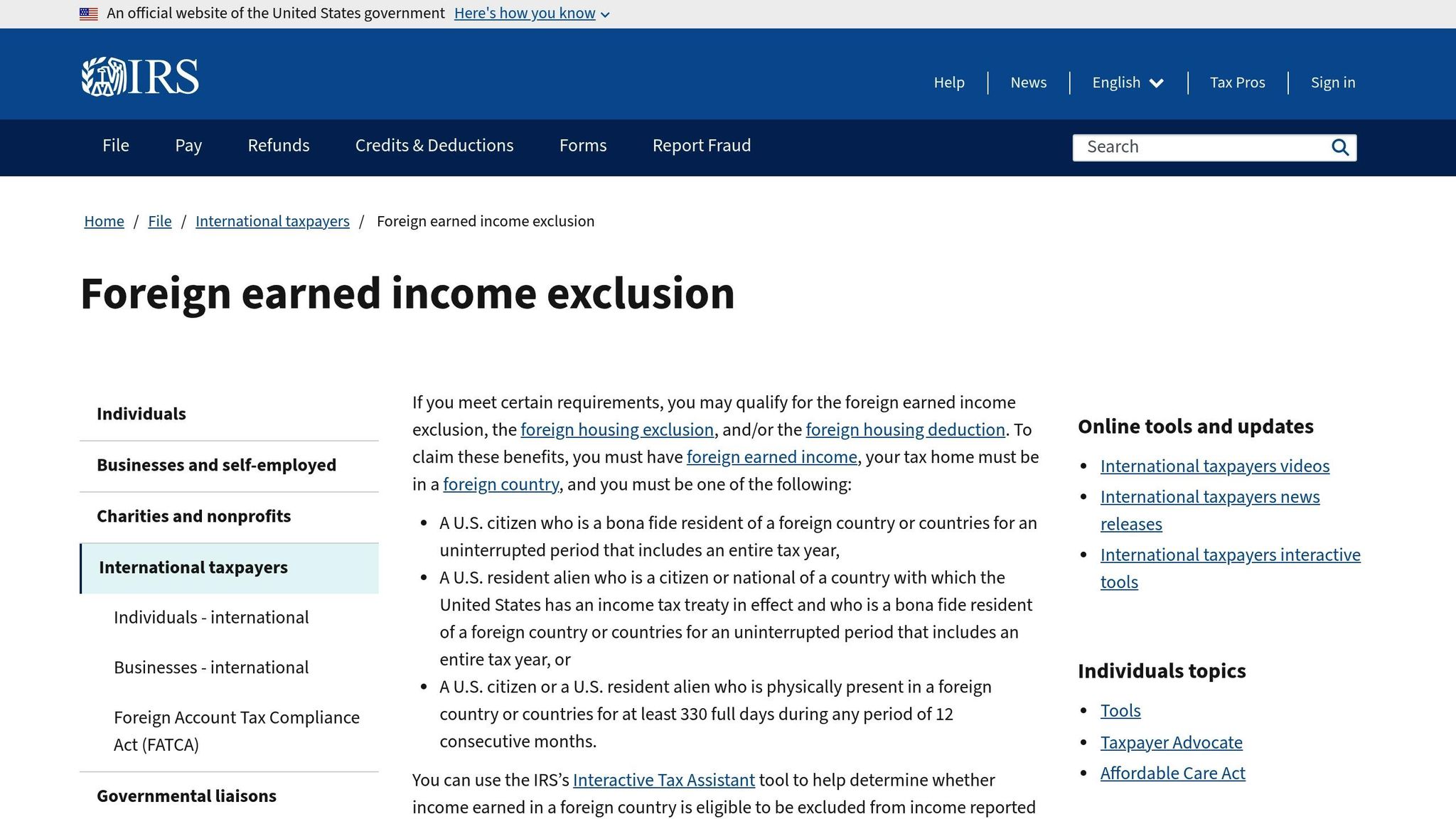
To ease the tax burden, the U.S. provides two key options: the Foreign Earned Income Exclusion (FEIE) and the Foreign Tax Credit (FTC).
- The FEIE allows you to exclude up to $120,000 of foreign earned income for 2023 (adjusted annually for inflation). To qualify, you’ll need to meet one of two tests:
- The Physical Presence Test, which requires you to be in a foreign country for at least 330 full days within any 12-month period.
- The Bona Fide Residence Test, which generally involves establishing a permanent residence abroad for an uninterrupted period that includes an entire tax year.
- The FTC, on the other hand, provides a dollar-for-dollar credit against your U.S. tax liability for income taxes paid to foreign governments. However, you can’t apply both the FEIE and FTC to the same income. Your choice will depend on your situation. For example, the FTC may be more advantageous if you’re working in a high-tax country, while the FEIE might work better in low-tax or no-tax regions.
State Tax Residency Risks
State taxes can add another layer of complexity, especially if you’re leaving behind ties to states like California, New York, or New Jersey, which are known for aggressively pursuing tax claims. These states often look for evidence that you’ve truly severed ties, such as canceling your driver’s license, updating voter registration, or relinquishing professional licenses.
For instance, California’s Franchise Tax Board may scrutinize your records to determine whether you’re still considered a resident. New York has a statutory residency test that could deem you a resident if you maintain a permanent home in the state and spend more than 183 days there during the tax year. To avoid these issues, take proactive steps like closing local bank accounts, updating all official documents, and keeping detailed travel logs. Without proper documentation, you could face hefty tax bills in the future.
How to Legally Minimize Tax Obligations
Reducing your tax burden requires a smart approach to international tax laws and thorough documentation. Here’s how you can use tax treaties, careful recordkeeping, and location management to navigate this complex landscape and minimize your tax obligations.
Using Tax Treaties and Foreign Tax Credits
Tax treaties exist to prevent double taxation, ensuring you’re not taxed fully on the same income in multiple countries. If you’re working in a country that has a tax treaty with the U.S., you might qualify for reduced withholding rates on certain types of income – as long as permanent establishment rules aren’t triggered.
The Foreign Tax Credit (FTC) provides a dollar-for-dollar reduction in U.S. taxes for foreign taxes you’ve paid. Alternatively, the Foreign Earned Income Exclusion (FEIE) lets you exclude a certain amount of income from taxation, provided you meet either the physical presence test or the bona fide residence test. Keep in mind, though, that you can’t use both the FTC and FEIE for the same income. Choosing between the two depends on your specific earnings and the tax rates in your host country.
Tracking Days and Keeping Accurate Records
Once you’ve taken advantage of treaty benefits, staying compliant hinges on tracking your travel days carefully. Miscounting days is one of the most common mistakes, so maintaining accurate travel logs is essential. Apps designed for day counting can help you monitor your movements and send alerts when you’re nearing important thresholds.
To back up your claims, digitize and organize travel-related documents like boarding passes, receipts, and passport stamps. This documentation creates a reliable audit trail, which can be critical if you’re ever asked to prove your residency or eligibility for tax benefits.
Avoiding Permanent Establishment Risks
Permanent Establishment (PE) is a key factor in determining whether a business owes taxes in a foreign country. PE can be triggered if you maintain a fixed place of business or frequently perform services for local clients. For example, regularly working from the same coworking space or office in another country increases your risk of establishing PE.
Certain roles – like sales or senior leadership – pose a higher PE risk because they’re directly tied to revenue generation. To reduce this risk, consider varying your work locations and using different coworking spaces. Virtual meetings can also help limit the need for repeated visits to the same jurisdiction.
If a PE is established, the consequences can be significant. You could face corporate tax liabilities, transfer pricing rules, and additional reporting requirements in the local jurisdiction. These obligations can be costly and time-consuming, making it far more efficient to take preventive measures upfront.
sbb-itb-39d39a6
Best Tax-Friendly Countries for Digital Nomads
Picking the right tax-friendly country can make a big difference in your finances. By establishing residency in a low-tax or no-tax jurisdiction instead of a high-tax one, you could save a significant amount of money each year. Understanding what makes a country tax-friendly and comparing your options can help you decide where to set up your tax home.
What Makes a Country Tax-Friendly
Certain characteristics make a country appealing for digital nomads looking to minimize taxes:
- Low or Zero Income Tax: Some countries either don’t tax personal income at all or only tax income earned locally through a territorial tax system. Others may offer exemptions on foreign-sourced income.
- Clear Residency Rules: Straightforward residency requirements, like the common 183-day rule, help you plan your travel and work schedule without confusion.
- Tax Treaties: Countries with extensive tax treaty networks can help you avoid double taxation and may reduce withholding rates on various types of income.
- Ease of Compliance: Reasonable administrative processes and lower compliance costs make it easier for freelancers and small business owners to manage their taxes.
- Stability: Political and economic stability ensures that tax policies remain consistent, giving you peace of mind when planning long-term.
Popular Digital Nomad Destinations Compared
Different countries offer unique combinations of tax benefits, lifestyle perks, and practical considerations. Here’s a comparison of some popular tax-friendly destinations:
| Country | Income Tax Rate | Residency Requirement | Key Advantages | Main Drawbacks |
|---|---|---|---|---|
| United Arab Emirates | 0% personal income tax | 183 days | No income tax, modern infrastructure, reliable banking | High living costs, limited tax treaties, hot climate |
| Portugal | 0-28% (NHR program) | 183 days or permanent home | EU access, NHR program benefits for up to 10 years, great quality of life | NHR program under review, rising property costs |
| Panama | Territorial system | 183 days | Only local income taxed, uses US dollars, strategic location | Limited tax treaties, developing infrastructure |
| Singapore | 0-22% progressive | 183 days | Excellent infrastructure, strong legal system, extensive tax treaties | High cost of living, strict regulations, limited space |
| Estonia | 0% on retained earnings | 183 days | Digital-friendly, EU access, innovative e-residency program | 20% tax on distributed profits, cold climate |
The United Arab Emirates (UAE) is a top choice for digital nomads due to its zero personal income tax policy and exceptional infrastructure. Cities like Dubai and Abu Dhabi offer coworking spaces, reliable internet, and a cosmopolitan vibe. However, the high cost of living and limited tax treaty network might be drawbacks for some.
Portugal attracts nomads with its Non-Habitual Resident (NHR) program, which offers tax benefits on foreign income for up to 10 years. While the program is under review, Portugal remains appealing for its EU access, reasonable living costs, and excellent quality of life.
Panama operates on a territorial tax system, meaning only income earned within the country is taxed. This setup is ideal for digital nomads earning primarily from international clients. The use of the US dollar also helps reduce currency risks for Americans.
Singapore combines a progressive tax system with a strategic location for accessing Asian markets. Its strong financial infrastructure and comprehensive tax treaties make it a practical choice, though high living costs and strict regulations may not suit everyone.
Estonia takes a unique approach by not taxing retained corporate earnings until they are distributed. This makes it an attractive option for digital nomads running businesses. Its e-residency program and EU membership further enhance its appeal, though colder weather might be less inviting.
When deciding, consider factors like your income level, client locations, lifestyle preferences, and long-term business goals. For instance, a country that works well for someone earning $50,000 a year might not suit someone earning $200,000. If most of your clients are in Europe, an EU country could provide additional advantages. Keep an eye on tax law updates to ensure your choice remains a good fit over time.
Conclusion: Managing Tax Residency as a Digital Nomad
Navigating tax residency rules is about more than just staying compliant – it’s a critical step toward achieving financial independence on a global scale. Many banks and fintech platforms require proof of tax residency to open or maintain accounts, making this knowledge an essential part of your toolkit for financial freedom. With this understanding, you can lay the groundwork for strategies that help you optimize your tax situation.
Proper tax planning isn’t just about reducing taxes – it’s about doing so legally while steering clear of penalties. If you fail to establish clear tax residency, you could end up in a gray area where countries assume you’re a resident by default. This can lead to problems like automatic tax withholdings, frozen accounts, or even substantial fines.
While the well-known 183-day rule is a common standard, many countries dig deeper, examining your center of vital interests. This includes factors like where your home, family, business, and clients are based – even if you don’t spend the majority of the year in that country.
For those ready to take their tax strategy to the next level, consider leveraging dual residencies. By combining residency in two countries, you can take advantage of how their tax laws interact. For instance, you could establish residency in a territorial tax system like Panama while keeping your banking and business operations in Singapore. This approach can unlock benefits that neither country offers on its own.
To protect your claims, track your movements carefully. Keep detailed records of travel dates, housing arrangements, and banking transactions. These documents not only support your residency claims but also strengthen your position when relying on Double Taxation Agreements (DTAs).
Speaking of DTAs, they are invaluable for avoiding double taxation. These agreements use tie-breaker rules to determine which country has the right to tax you when multiple residencies are in play.
Lastly, don’t overlook the importance of planning your exit strategy. Before leaving any jurisdiction, make sure you’re aware of potential exit taxes or ongoing obligations. This preparation can save you from costly surprises down the road. Partnering with tax professionals who specialize in expat tax laws can help you stay compliant and adapt your strategy as your situation changes. By mastering these practices, you can confidently manage your global tax responsibilities and focus on enjoying the digital nomad lifestyle.
FAQs
How can digital nomads legally avoid paying taxes in two countries at the same time?
Digital nomads can sidestep double taxation by leveraging tools like the Foreign Earned Income Exclusion (FEIE). This provision allows eligible U.S. taxpayers to exclude up to $126,500 of foreign-earned income from their U.S. taxes in 2024 (this amount adjusts annually). To qualify, you must meet either the Physical Presence Test or the Bona Fide Residence Test.
Another useful option is the Foreign Tax Credit (FTC). This credit lets you offset your U.S. tax liability by claiming the income taxes you’ve paid to a foreign government. On top of that, the U.S. has established tax treaties with numerous countries to clarify tax rules and prevent double taxation. If you’re living in a country with a totalization agreement, you may also be exempt from paying U.S. self-employment taxes.
Since international tax laws can be complex, it’s a smart move to consult a tax professional who specializes in this area. They can help ensure you stay compliant while optimizing your tax strategy.
How can U.S. citizens stay compliant with federal and state tax requirements while living abroad?
U.S. citizens and resident aliens must file a federal tax return if their income surpasses the annual filing threshold, regardless of where they earn that income. This rule applies even if you’re living outside the U.S. at the time. On top of that, state tax requirements can vary widely. Some states might still consider you a resident if you have strong connections, like owning property or being registered to vote there. Others may not require you to file if you’ve established residency in another state or country.
To steer clear of penalties and stay compliant, it’s crucial to understand both federal and state tax rules that apply to your specific situation. Working with a tax professional experienced in expatriate tax matters can make navigating these requirements much easier – and help you manage your taxes within the law.
What should digital nomads consider when selecting a tax-friendly country for residency?
When picking a tax-friendly country for residency, digital nomads should weigh several critical factors to manage their tax responsibilities effectively and steer clear of unnecessary hassles.
Start by understanding the country’s tax system. Some countries tax based on residency, others on citizenship, and some follow a territorial approach, where only locally earned income is taxed. Pay close attention to the 183-day rule, which might classify you as a tax resident if you spend 183 days or more there in a year. Another factor to consider is the center of vital interests – this applies if your main connections, such as family or property, are located in that country.
It’s also worth exploring countries with tax treaties, which can help you avoid being taxed twice on the same income. Check out digital nomad visas, as they often include tax perks designed for remote workers. Lastly, keep an eye on economic substance requirements. Some countries may require you to establish a legitimate business presence to access specific tax benefits.
