
The new guidance out of MiCA is the EU wants cryptocurrency without privacy, which is a total oxymoron and wildly hypocritical.
May 5, 2025
By: Bobby Casey, Managing Director GWP
Cryptocurrencies were supposed to be an alternative currency to fiat. There were supposed to be multiple competing currencies. In theory, their value would be determined by level of privacy, efficiency, ease of use, practicality, and their finite amount in the market.
Perhaps that’s the real problem: that it posed an existential threat to central banks and unbacked fiat currencies. Money laundering and terrorism are the usual boogeymen behind all the regulations and hysteria around cryptocurrencies. But if they really wanted to end money laundering, you’d think they’d have a more jaundiced eye toward the art industry. Or all the innocuous government programs that oddly don’t do anything but employ a lot of people.
The ONE thing cryptocurrencies were supposed to offer was anonymity similar to if not greater than what you’d get with using cash. All the convenience of digital payment without all the surveillance. All the convenience of a portable form of payment, without the inflation.
Can we just for a second unpack the meaning of “crypto”?
It comes from the Greek word “kryptos”, which means “hidden, or secret”.
The word, cryptography, then, is secret writing.
The word, cryptocurrency, then, is…? Secret money.
This is yet another case where it’s important to recognize that words mean particular things. They aren’t just political whims.
The EU wants cryptocurrency without privacy, and that’s an oxymoron.
How it Started
There were several members of the EU Parliament who wanted to ban Bitcoin. This was out of environmental concerns due to the intensity of energy needed to mine them. That measure was shot down.
The hypocrisy is palpable here. How do you argue against cryptocurrencies due to their energy consumption and toll of the environment, but allow the gaming industry and data centers to continue?
This happened in 2022 when the European Parliament agreed on a 31 to 4 vote on its position for the MiCA (Markets in Crypto-Assets) regulation. What does MiCA do?
MiCA regulates the offer of crypto assets to the public and their admission to trading on crypto-asset trading platforms and sets requirements for various service providers, including those involved in custody, trading, and other crypto-relateed activities.
Basically it decides who gets to play in the crypto sandbox and how they may play. More importantly, it’s safe to say, cryptocurrency went from decriminalized to legalized. That means there’s a good amount of regulatory baggage that comes with that. And that’s how we land on the EU wants cryptocurrency without privacy. That’s what “legalization” looks like. An expensive, highly regulated, diluted or bastardized version of what it should’ve been.
“The future of European cryptocurrency has no room for anonymity”
This is how The Crytonomist interprets the roll-out of these regulations. Then stop calling them cryptocurrencies, because they are banning the crypto part. It becomes a misnomer right? Like hemophilia. It’s not an actual love of blood. It’s a condition where your blood doesn’t clot.
For a federation that has been riding every social media and tech giant about “privacy”, the irony of wanting to exempt themselves from honoring the privacy of others is not lost on me.
The GDPR (General Data Protection Regulation) highlight reel includes €1.2 billion fine against Meta, €746 million fine against Amazon, €345 fine against Tiktok, and €310 fine against LinkedIn. The GDPR is supposed to be about protecting people’s privacy, but apparently is a money making scheme by a bunch of hypocrites because these same regulators are actively seeking to violate the privacy of individuals using cryptocurrency.
The EU wants cryptocurrency without privacy, and they intend to have that starting in 2027.
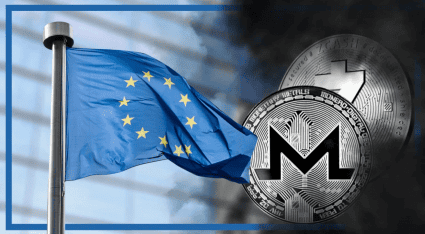
The European Union (EU) is preparing to introduce one of the most impactful regulations in crypto history: by 2027, both anonymous crypto accounts and the so-called privacy coins, such as Monero and Zcash, will be banned.
According to what is reported in the AML [Anti Money Laundering] Manual published by the European Crypto Initiative (EUCI), the new Anti-Money Laundering Regulation (AMLR) will prevent credit institutions, financial institutions, and crypto-asset service providers (CASP) from maintaining anonymous accounts or managing cryptocurrencies that offer anonymization mechanisms.
It apparently wants to lead as an example on how to regulate cryptocurrencies. I wonder if the squeeze is worth the juice. The cost of compliance and the cost of enforcement just to make sure people aren’t laundering money seems a long way for a hot dog, if I can mix my metaphors for a moment.
Due Diligence and Enforcement
Naturally with any ban, comes enforcement and due diligence:
- CASPs (Crytpo Asset Service Providers) operating in at least six member states will be under direct AML (Anti Money Laundering) supervision.
- In the initial stage, AMLA plans to select 40 entities, with at least one entity per member state, according to EUCI’s (European Union Classified Information) AML Handbook. The selection process is set to start on July 1, 2027.
- AMLA will use “materiality thresholds” to ensure that only firms with “substantial operations presence in multiple jurisdictions are considered for direct supervision.”
- The thresholds include a “minimum of 20,000 customers residing in the host member state,” or a total transaction volume of over 50 million euros ($56 million).
- Other notable measures include mandatory customer due diligence on transactions above 1,000 euros ($1,100).
The service providers and other businesses will need to rethink how they intend to do business, and bake in the cost and needs of meeting these requirements to pass these inspections and evaluations. Banning anonymity seems pretty on brand for the EU lately, and that’s unfortunate. The EU wants cryptocurrency without privacy, but that defeats the very purpose, and maybe that’s the point.
Click here to get a copy of our offshore banking report, or here to become a member of our Insider program, where you are eligible for free consultations, deep discounts on corporate and trust services, plus a host of information about internationalizing your business, wealth and life.
