
If you’re a digital nomad or entrepreneur, managing finances across borders can be tricky. High fees, limited access, and outdated systems from traditional banks often fall short. Luckily, international digital banks offer better solutions tailored to your needs. Here’s what you need to know:
- Wise: Great for multi-currency accounts and transparent fees with real mid-market exchange rates.
- Revolut: Offers real-time currency exchange and premium plans with added perks like travel insurance.
- Mercury: Ideal for U.S.-based startups with no monthly fees and tools for team collaboration.
- Suisse Bank: Provides global banking, crypto-to-fiat conversions, and no hidden fees.
- Monzo & Starling Bank: UK-based neobanks with solid budgeting tools, though limited for non-UK residents.
- Payoneer: Best for freelancers, with global payment solutions and invoice tools.
Each option has unique strengths, so your choice depends on your currency needs, transaction volumes, and geographical focus.
1. Wise
Wise, formerly known as TransferWise, has become a trusted banking option for digital nomads, especially when it comes to managing finances across multiple currencies. Based in London, this fintech company has earned its reputation for offering transparent services and fair exchange rates, making it a top choice for professionals on the move.
Multi-Currency Support
Wise makes handling multiple currencies easy with its multi-currency accounts. These accounts let you hold, send, and receive a variety of currencies without the hassle of constant conversion fees. Plus, you get local account details in key regions like the United States, United Kingdom, Australia, and several European countries, making it easier to manage payments across borders.
One of Wise’s standout features is its currency conversion. Instead of inflated rates, Wise uses mid-market rates – the same rates you’d find on financial platforms – and charges a small, clearly displayed fee. The exact fee depends on the currency pair and payment method, but it’s always upfront, so there are no surprises.
Fees and Costs
Wise keeps things simple with its fee structure. Personal accounts don’t come with monthly maintenance fees, and you only pay when you use the service. For international transfers, there’s a flat fee plus a small percentage, both shown before you finalize the transaction.
If you use the Wise debit card, you can spend without fees up to a monthly limit. After that, minimal charges apply. Similarly, ATM withdrawals are free up to a certain limit each month, with small fees kicking in for additional withdrawals.
Global Accessibility
Wise’s platform – available as a mobile app and web interface – works seamlessly around the globe. You can access your account anytime, anywhere with an internet connection. The interface is user-friendly and offers multilingual support, making it accessible for users worldwide. Customer support is available 24/7 via chat and email, although phone support might be region-specific.
Wise also integrates with popular business tools and accounting software, which is a big plus for keeping track of expenses and managing finances while on the go.
Features for Entrepreneurs
Wise Business accounts are tailored for freelancers and entrepreneurs who work with clients or suppliers across borders. You can receive payments using local bank details, which reduces fees and speeds up transactions. The platform also supports batch payments, allowing you to pay multiple contractors or suppliers in one go. Additionally, you can set up automatic currency conversions when your balance hits a certain threshold – saving you both time and effort.
For tax and accounting purposes, Wise offers detailed transaction histories and downloadable statements, which you can easily share with your accountant. Businesses can also take advantage of Wise’s API to integrate payment capabilities directly into their systems or apps. These features make Wise a strong option for digital nomads and entrepreneurs alike, setting the stage for the next banking solution in our guide.
2. Revolut
Revolut goes beyond traditional banking by offering digital-first solutions tailored to modern needs, especially for digital nomads and entrepreneurs. Founded in London in 2015, this fintech powerhouse has rapidly expanded its reach across the globe.
Multi-Currency Support
Revolut makes managing multiple currencies easy. With a single account, users can hold and exchange various currencies at real-time exchange rates on weekdays. On weekends, a small fee applies. The app can even handle automatic currency conversions during transactions, saving users the hassle of manual exchanges. For added convenience, Revolut provides local account details in key markets, simplifying domestic payments.
Fees and Costs
Revolut operates on a freemium model. The free standard account covers basic banking needs, while paid plans offer extras like travel insurance, higher transaction limits, and priority customer support. International transfers are priced competitively, though fees can rise for certain methods, such as SWIFT transfers to banks not directly supported by Revolut.
Global Accessibility
Designed with a mobile-first approach, Revolut ensures global usability. However, some features are limited by local regulations, which can vary by region. For U.S.-based users, certain functionalities may be more restricted compared to those available in Europe due to regulatory differences. Customer support also depends on the plan, with premium tiers offering faster response times and additional support options.
Features for Entrepreneurs
Revolut Business caters to entrepreneurs with tools like team spending controls, automated expense categorization, bulk payments, virtual cards, and real-time notifications. It also integrates with APIs for seamless financial management. The platform generates reports compatible with popular accounting software, making it easier for businesses to manage international operations.
3. Mercury
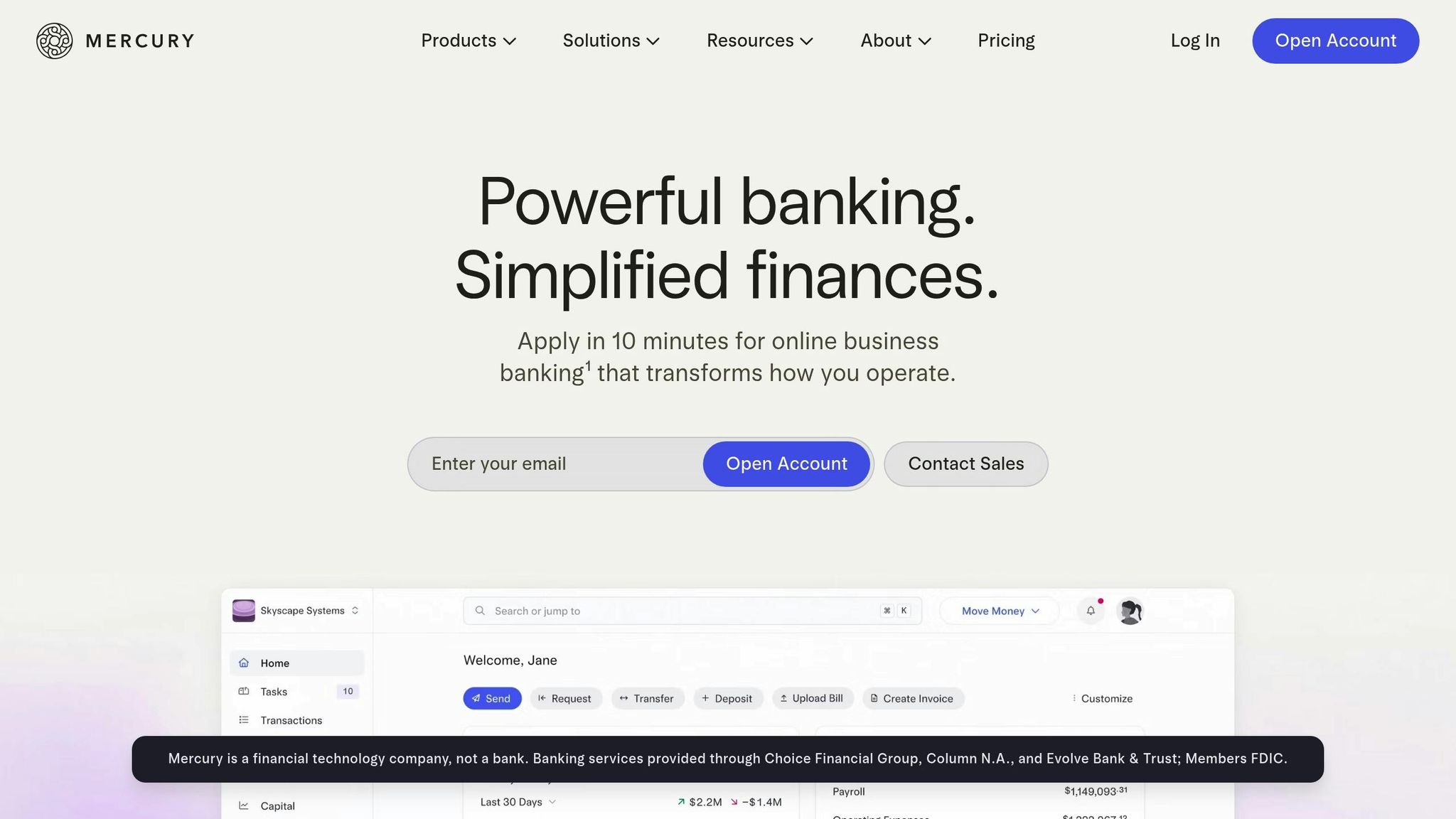
Mercury is built with startups and growing businesses in mind, offering a streamlined approach to business banking.
Fees and Costs
Mercury is known for its straightforward pricing, making it an attractive option for entrepreneurs mindful of expenses. The platform offers business checking accounts with no monthly maintenance fees and no minimum balance requirements for standard use. Most transactions come at no cost, although some services, like certain wire transfers, might involve fees. These wallet-friendly features make Mercury a standout choice in the business banking world.
Global Accessibility
Mercury caters to U.S.-based businesses, including those founded by international entrepreneurs with U.S. entities. Its web and mobile platforms allow users to manage their finances from anywhere. However, customer support is only available during U.S. business hours. Mercury also connects seamlessly with international payment tools, making it easier to handle payments from global clients.
Features for Entrepreneurs
Mercury offers tools tailored to help businesses run smoothly. Companies can issue virtual debit cards with spending controls and integrate Mercury with accounting and expense management software. The platform supports team collaboration by allowing multi-user access with customizable permissions. Additionally, it provides detailed financial insights, helping businesses keep a close eye on their cash flow.
4. Suisse Bank
Suisse Bank is tailored for digital nomads and entrepreneurs, offering a modern alternative to traditional banks that often fall short when it comes to cross-border banking. By blending regulatory reliability with cutting-edge digital solutions, Suisse Bank delivers a truly global banking experience.
Multi-Currency Support
At the heart of Suisse Bank’s offerings is the All-In-One Global Wallet, which supports both multiple currencies and cryptocurrencies. Covering 170 countries, it allows users to send, receive, and transfer money effortlessly through a dedicated IBAN. The platform integrates major payment systems like SWIFT, SEPA, SEPA Instant, and UK Faster Payments, ensuring smooth and efficient transactions worldwide.
A standout feature is the near-instant crypto-to-fiat conversion for major cryptocurrencies such as BTC, ETH, ADA, SOL, and USDT. This is especially useful for entrepreneurs and digital nomads who rely on cryptocurrencies or need quick access to various currencies.
The service also includes a Mastercard debit card with generous limits for global spending and ATM withdrawals. Additionally, it supports Apple Pay and Google Pay, making digital payments convenient and accessible. These features highlight Suisse Bank’s commitment to providing a seamless banking experience for a global audience.
Fees and Costs
Suisse Bank operates with a transparent, no-hidden-fees approach, addressing one of the biggest pain points in international banking. Here’s what you won’t find with Suisse Bank: monthly fees, minimum balance requirements, foreign transaction fees, or overdraft fees. All charges are clearly outlined upfront, eliminating the frustration of unexpected costs.
Global Accessibility
Suisse Bank removes the typical hurdles of international banking, offering a streamlined digital onboarding process that takes less than 30 minutes. No residency, deposit, or local structure requirements are needed.
"At Suisse Bank, we recognize that digital nomads, entrepreneurs, and internationally mobile professionals require more than convenience – they need a banking partner built for a borderless world."
Unlike traditional banks, Suisse Bank doesn’t require a permanent address, local tax residency, or even a local phone number. This makes it an ideal choice for those with mobile lifestyles. By simplifying onboarding and offering global access, Suisse Bank enables professionals to focus on their work instead of navigating complex banking setups.
Features for Entrepreneurs
Suisse Bank goes beyond standard banking by offering trade finance instruments like guarantees, Standby Letters of Credit (SBLCs), and Letters of Credit (LCs). These tools are invaluable for entrepreneurs involved in international trade or needing financial guarantees for business operations.
The platform also provides segregated accounts, ensuring institutional-grade security for managing significant business funds or handling client money.
With its trade finance solutions, compliance support, and robust security measures, Suisse Bank empowers entrepreneurs to manage their global banking needs without hassle. By consolidating all services into a single online platform, it eliminates the typical challenges of cross-border banking, giving entrepreneurs the freedom to focus on scaling their businesses.
sbb-itb-39d39a6
5. Monzo & Starling Bank
Monzo and Starling Bank are two standout names in the UK’s neobank scene, catering to tech-savvy users with their digital-first approach. While they shine in domestic banking with intuitive apps and innovative features, they fall short when it comes to accessibility for non-UK residents.
Global Accessibility
For US-based digital nomads, the biggest hurdle is availability. Both banks primarily serve UK residents, making it tough for Americans without UK residency to open accounts. Monzo has made strides by launching in the US, but its offering there is more limited compared to what’s available in the UK.
For those eligible, account setup is fast and fully digital, taking just a few minutes. However, physical cards can only be delivered to UK addresses, which isn’t ideal for nomads. On the bright side, both banks issue instant virtual cards as soon as the account is approved, adding some convenience.
Customer support is a strong suit for both. Their in-app chat systems offer quick response times – often within minutes during business hours – which is a lifesaver for resolving international transaction issues or account concerns while traveling.
Fees and Costs
Both Monzo and Starling Bank are known for their straightforward fee structures, steering clear of many traditional banking charges. Standard accounts come with no monthly maintenance fees, and overdraft fees are avoided thanks to spending controls that prevent users from going over their limits.
When it comes to international use, the two banks diverge. Starling Bank allows fee-free spending and ATM withdrawals abroad up to £300 per day. If you exceed this amount, a 2% fee applies to additional ATM withdrawals.
Monzo, on the other hand, uses a tiered account system. Its basic account offers free international spending but charges for ATM withdrawals after the first £200 per month. Premium options like Monzo Plus (£5/month) and Monzo Premium (£15/month) increase withdrawal limits and add travel perks.
Multi-Currency Support
For international transactions, both banks handle currency conversion seamlessly, but their multi-currency capabilities are limited compared to specialized global banking options. They primarily operate in British pounds, converting currencies for international transactions at competitive rates.
Starling Bank uses Mastercard’s exchange rates without adding a markup, making it a cost-effective choice for purchases abroad. The app also provides real-time notifications showing the foreign transaction amount alongside its GBP equivalent, helping users stay on top of their spending.
Monzo offers similar real-time conversion features, with instant notifications and detailed breakdowns of exchange rates. The app’s expense categorization makes it easy to track international spending, which is particularly useful for frequent travelers.
However, neither bank supports true multi-currency accounts or the ability to receive payments in multiple currencies with local account details. This can be a drawback for entrepreneurs who work with international clients.
Features for Entrepreneurs
Although neither Monzo nor Starling Bank is primarily designed for business banking, they include features that appeal to freelancers and solo entrepreneurs. Both apps offer spending categorization and budgeting tools, making it easier to track business-related expenses. However, they lack advanced business account features like invoicing or direct integration with accounting software.
Starling Bank’s Marketplace provides access to third-party financial tools, including accounting apps and business management services. This ecosystem approach can help entrepreneurs customize their financial setup.
Monzo stands out for its spending analytics. The app automatically categorizes transactions and generates detailed spending reports, which can be helpful for managing expenses and preparing tax documents.
Both banks excel in providing instant payment notifications and real-time transaction tracking. These features are invaluable for keeping tabs on cash flow. However, they lack advanced business tools like multi-user access, team expense management, or accounting system integrations, which are often necessary for scaling businesses.
These features highlight the strengths and limitations of Monzo and Starling Bank, setting the stage for a broader comparison with other international banking options.
6. Payoneer
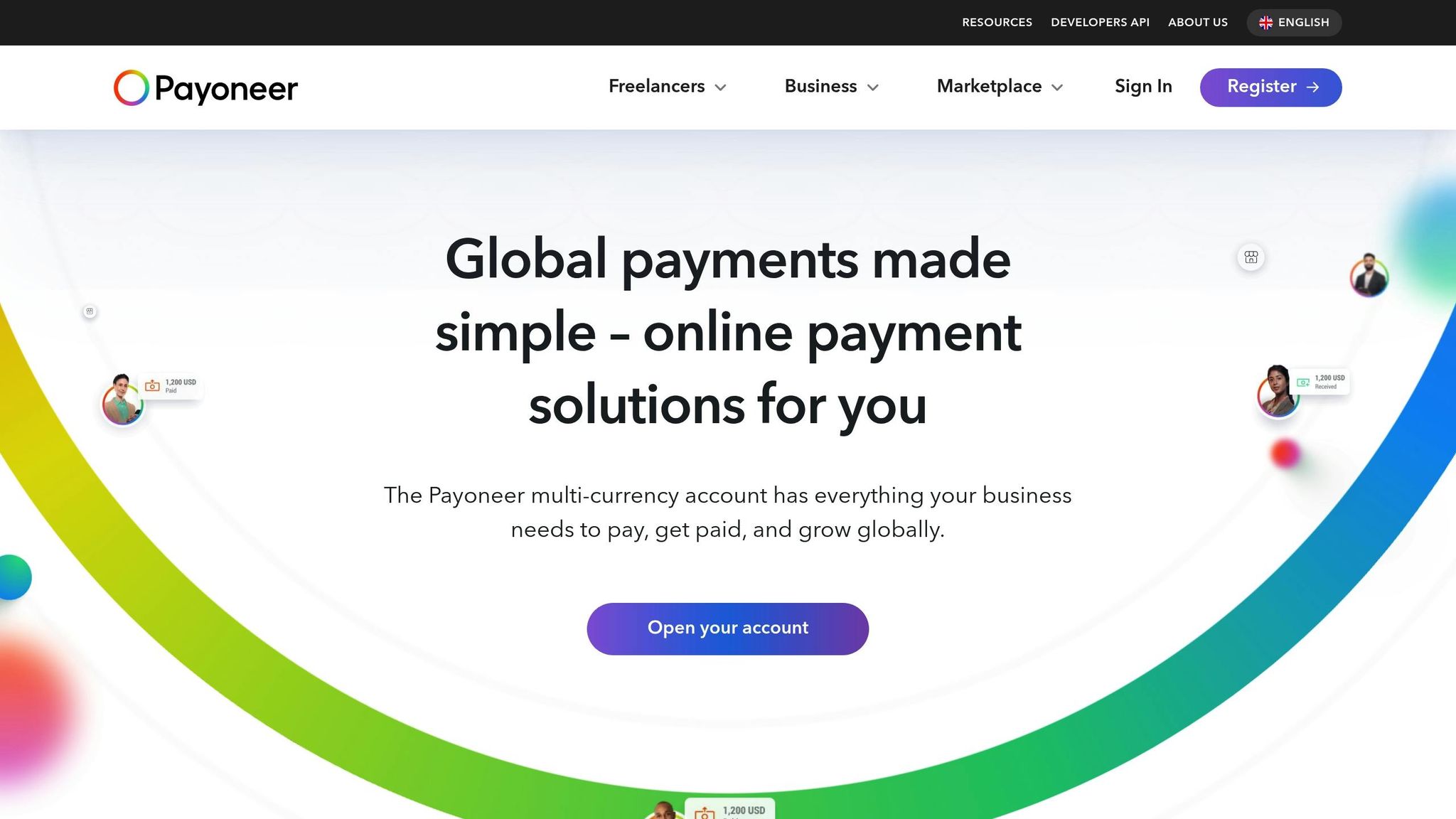
Payoneer blends traditional banking services with modern fintech solutions. Initially created to help freelancers and businesses handle international payments, it has since expanded into a versatile financial platform. It’s particularly appealing to digital nomads and entrepreneurs working with global clients and marketplaces, thanks to its extensive range of features and worldwide reach.
Global Accessibility
Payoneer operates in over 200 countries and territories, making it a go-to option for US-based digital nomads seeking a reliable financial platform. Opening an account is straightforward and can be completed online within 1-3 business days using basic identification documents. There are no minimum deposit requirements or balance thresholds, removing common obstacles for location-independent professionals.
The Payoneer Mastercard can be shipped to most international destinations, though delivery times vary. For those who need immediate access, virtual card details are available as soon as the account is approved, enabling online purchases right away.
Customer support is available 24/7 across multiple time zones, a critical feature for digital nomads who may need assistance at unconventional hours due to time differences.
Multi-Currency Support
Payoneer’s global reach is complemented by its support for over 150 currencies for receiving payments and 70+ for sending. It offers local receiving accounts in major markets like the US, UK, EU, Canada, Australia, and Japan. This setup allows you to receive payments as if you had a local bank account in these countries, which can speed up transactions and lower costs for your clients.
Currency conversions are processed at competitive rates, typically within 2% of the mid-market rate. While these rates may not match those of specialized currency exchange providers, they are reasonable when considering the convenience and additional services offered by Payoneer.
A standout feature is the ability to hold balances in multiple currencies simultaneously. This flexibility allows you to manage conversions strategically or retain funds in a specific currency for future expenses, helping you avoid unnecessary fees.
Features for Entrepreneurs
Payoneer is packed with features tailored to entrepreneurs and freelancers. It integrates seamlessly with major platforms like Amazon, Upwork, Fiverr, Getty Images, and Shutterstock, simplifying the payment collection process.
The bulk payment feature is especially useful for businesses managing international teams or paying multiple vendors. You can send payments to up to 5,000 recipients in one batch, with each transaction tracked individually for clarity.
The platform also includes invoice management tools, enabling you to create and send professional invoices directly to clients worldwide. It tracks payment statuses and even sends automatic reminders for overdue invoices, saving you time and effort.
For tax purposes, Payoneer provides detailed transaction history and reporting tools, which can be exported in various formats. These records are invaluable for accurate financial tracking and tax preparation across different jurisdictions.
Additionally, Payoneer offers working capital solutions to eligible businesses. This feature provides access to funds based on your payment history and business performance, which can be a lifeline for entrepreneurs dealing with seasonal cash flow fluctuations.
Fees and Costs
Payoneer operates with a transaction-based fee structure, which can be cost-effective for users with moderate transaction volumes. There are no monthly maintenance fees or minimum balance requirements, keeping costs manageable.
Key fees include:
- Receiving payments: 0-3%, depending on the payment method and source
- ATM withdrawals: $3.15 per transaction, plus up to a 2% currency conversion fee
- Sending payments: Free to other Payoneer users; $1.50-$3.00 for bank transfers
- Payoneer card: Free for the first year, with a $29.95 annual fee afterward
While fees may rise with higher transaction volumes, the platform’s global accessibility and convenience often outweigh the costs for digital nomads and entrepreneurs who need streamlined international payment solutions.
Comparison of Features and Drawbacks
When it comes to international banking, finding the right solution depends on your specific needs. This section breaks down how platforms stack up in areas like currency management, fees, accessibility, and business tools, helping you make an informed decision.
Currency management is a key difference. Digital-first banks often excel at handling multiple currencies, making them a strong choice for those with diverse financial needs. Meanwhile, traditional banks also support various currencies but typically require more documentation and may enforce account minimums, which can add layers of complexity.
Fee structures vary widely. Some platforms offer transparent, low conversion fees or even fee-free models with monthly limits, while others – especially traditional banks – follow more established pricing schedules. These can include higher costs for international services, so it’s crucial to consider your transaction volume when comparing options.
Accessibility is another factor to weigh. Some banks have a global presence, offering services across numerous countries, which is ideal for those operating internationally. Others focus on specific regions, providing streamlined setups and localized support that work well for local markets but may fall short for global needs.
Business tools can make a big difference for entrepreneurs. Many platforms include features like expense management, invoicing, and integrations with accounting software, catering to modern business needs. Traditional banks, on the other hand, may prioritize personalized relationship management over digital tools, which could appeal to those who value a more hands-on approach.
Account setup and customer support also vary significantly. Digital banks often let you open an account quickly through apps or online portals, while traditional banks may require more time-consuming verification processes. Support options range from 24/7 dedicated service with relationship managers to app-based assistance, which can vary in responsiveness.
Lastly, stability and compliance are critical. Digital banks, while innovative, have faced regulatory challenges that might disrupt services. In contrast, traditional banks generally offer more regulatory stability, though this often comes with stricter requirements and higher fees.
Choosing the right banking partner depends on your transaction habits, geographic focus, and the complexity of your financial operations. By evaluating factors like currency management, fees, global accessibility, business tools, onboarding processes, and regulatory reliability, you’ll be better equipped to align your banking choice with both your personal and professional goals.
Conclusion
When deciding on the right international banking solution, it’s essential to weigh the features and limitations discussed earlier against your specific needs.
If keeping costs low is a priority, look for banks that offer transparent fees and competitive exchange rates to minimize conversion expenses. For those who value convenience, digital-first platforms with user-friendly mobile apps and quick setup processes can provide instant access to funds – ideal for digital nomads and entrepreneurs who need flexibility and speed.
Entrepreneurs managing international finances should prioritize platforms that seamlessly integrate with accounting software, offer automated expense tracking, and provide appropriate transaction limits. These features can help streamline business operations and ensure smooth financial management across borders.
It’s also important to assess how well your chosen platform performs in the regions you frequent. Consider factors like ATM availability, local partnerships, and regulatory compliance to ensure reliable service. Whether you make frequent transactions or only occasional ones, select a solution that aligns with your usage patterns.
Lastly, strike a balance between cutting-edge features and regulatory stability to safeguard your financial plans. Having a backup option can also provide peace of mind. By choosing a solution that can scale with your evolving needs, you’ll be better prepared to handle future challenges without unnecessary hassle.
FAQs
What should digital nomads and entrepreneurs look for in an international bank to manage multiple currencies effectively?
When selecting an international bank, digital nomads and entrepreneurs should focus on finding options that offer multi-currency accounts. These accounts make it easier to handle different currencies by providing real-time exchange rates, simplifying transactions across borders. Additionally, banks with low foreign transaction fees can help you save money on currency exchanges and international payments.
Another key factor is access to user-friendly online banking tools, ensuring you can manage your finances effortlessly from anywhere in the world. Pair this with banks that have strong global accessibility, like expansive ATM networks and dependable customer support, so you’re never left stranded. Also, think about the ease of account setup, advanced security features, and whether the bank’s services align with a remote lifestyle. These elements are crucial for keeping your finances secure and convenient while living or working abroad.
What are the key benefits of digital banks like Wise and Revolut for entrepreneurs working with international clients?
Digital banks such as Wise and Revolut offer practical tools that make financial management easier for entrepreneurs working with international clients.
Wise stands out for its low-cost international money transfers. By using mid-market exchange rates, it enables users to send and receive payments in various currencies without incurring hefty fees. This approach helps simplify cross-border transactions and keeps costs manageable.
On the other hand, Revolut provides features like multi-currency accounts, both virtual and physical debit cards, and competitive exchange rates. These tools make it simpler to manage payments, monitor expenses, and handle finances across borders. For entrepreneurs, this means saving money, streamlining international operations, and staying organized when working with clients around the globe.
What challenges do digital nomads face when using UK-based neobanks like Monzo or Starling Bank, and how can they overcome them?
UK-based digital banks like Monzo and Starling Bank can pose hurdles for digital nomads, primarily because of their residency requirements. For instance, Monzo generally requires users to live in the UK to open an account. Similarly, Starling Bank insists on a UK address and mobile number during the account setup process. These rules can make it tough for non-UK residents to access their services.
For digital nomads facing these challenges, there are alternatives worth considering. International banks and fintech platforms often provide multi-currency accounts with global accessibility, making them a practical choice. Additionally, some specialized services cater to non-residents by offering options to open UK business accounts. These accounts can simplify financial management while working remotely. Taking the time to research banks and services designed for a mobile lifestyle can help ensure your finances stay hassle-free, no matter where you are.
