
When a pandemic strikes, it doesn’t just affect health – it can also wreak havoc on your investments. Here’s the key takeaway: market volatility spikes, liquidity dries up, and credit risks soar. Without preparation, your financial stability can take a hit.
Here’s what you need to know to safeguard your portfolio:
- Market swings are brutal: The S&P 500 dropped 18% from January to April 2025, and missing just a few top-performing days can slash long-term returns.
- Liquidity problems arise: Emergencies force investors to sell assets at the worst time, locking in losses.
- Credit risks escalate: Borrower defaults and new regulations can hurt portfolios, especially those concentrated in vulnerable sectors.
To protect your wealth, you need strategies like offshore trusts, international diversification, and private LLCs. These tools help shield assets, reduce risks, and create a safety net during crises. The key is acting before disaster strikes – timing is critical.
Let’s break down how these methods work and why they’re effective.
Main Threats to Conventional Portfolios During Pandemics
Pandemics reveal vulnerabilities in portfolios, particularly in the areas of market volatility, liquidity constraints, and credit risks. To safeguard your investments, it’s crucial to understand how these risks manifest and impact financial stability.
Market Swings and Economic Instability
Pandemics often lead to sharp price fluctuations across stocks, bonds, and commodities, creating a climate of uncertainty. For instance, between January and April 2025, the S&P 500 fell by 18% from its peak. Diversification strategies that usually mitigate risk may fail during such periods, as evidenced in 2022 when both stocks and bonds declined simultaneously.
Market volatility can also drive emotional decision-making, such as panic selling. Consider this: missing the five best-performing days in the S&P 500 over a 20-year span (2005–2024) would have slashed a $100,000 investment from $717,046 to $452,884 – a staggering $264,162 loss. This highlights the long-term damage that reacting impulsively to market swings can cause.
These rapid market changes not only erode portfolio value but also contribute to liquidity challenges, which we’ll examine next.
Liquidity Problems and Cash Flow Issues
Crises often create a mismatch between your cash needs and your portfolio’s composition. Investors face "income shocks", such as job losses, and "spending shocks" from unplanned emergencies, which can strain available cash reserves. When forced to sell assets during a downturn, investors lock in losses and miss out on potential recoveries.
"If you don’t have enough cash on hand when you need it, you might end up selling your investments in a down market, which can hurt your overall returns." – Vanguard
Portfolios heavily invested in illiquid assets, like real estate or private equity, face additional risks. These investments may require sudden cash infusions, such as margin or capital calls, at the worst possible time – when portfolio values are already depressed. Research suggests that keeping at least 3 to 6 months of expenses in savings correlates with a 13% improvement in financial well-being.
Higher Legal and Creditor Threats
Pandemics also amplify credit risks, increasing the likelihood of defaults by borrowers or corporations. Political instability during such times can lead to new regulations that negatively affect investments. Portfolios concentrated in specific sectors are particularly vulnerable to disruptions like lockdowns or supply chain breakdowns.
The situation becomes even more precarious if you need to withdraw funds to meet legal or creditor demands during a downturn. These withdrawals can permanently impair your portfolio’s ability to recover. Addressing these risks is a critical part of building a resilient investment strategy. This often involves implementing offshore asset protection to insulate capital from domestic legal threats.
Summary of Key Risks
| Risk Type | Impact | Wealth Erosion Mechanism |
|---|---|---|
| Market Risk | 18% S&P 500 drop (Jan–Apr 2025) | Panic-selling and missing recovery days |
| Liquidity Risk | Forced asset sales during downturns | Selling assets at depressed prices |
| Credit Risk | Increased defaults and creditor demands | Declining bond values and forced sales |
Understanding these threats is the first step in creating a strategy to protect your wealth during unpredictable times.
sbb-itb-39d39a6
Methods for Protecting Wealth During Crises
Understanding the financial risks posed by global crises is just the first step. The real challenge lies in implementing strategies that can safeguard your wealth. By leveraging geographic diversification, legal structures, and tax-efficient planning, you can build a stronger defense for your portfolio. Let’s dive into a few specific methods.
Offshore Asset Protection with Anguilla Trusts
Offshore trusts and private interest foundations are powerful tools for creating a legal separation between your assets and potential claims. Anguilla trusts, in particular, offer strong privacy measures and legal safeguards to help protect your wealth. By transferring assets into a trust, you effectively remove them from personal ownership, making it significantly harder for creditors to seize them in times of financial or legal trouble.
However, timing is critical. Setting up these protections before any claims or lawsuits arise is essential. Attempting to shield assets after a crisis begins could be considered fraudulent conveyance. For high-net-worth individuals, offshore trusts can also double as estate planning tools, potentially lowering estate taxes and reducing state-level tax liabilities.
International Diversification to Reduce Risk
Legal structures like trusts are just one piece of the puzzle. International diversification adds another layer of protection by spreading your investments across different countries and currencies. This approach reduces reliance on any single economy, which is especially valuable during prolonged domestic market disruptions.
Consider this: Vanguard projects international equities to deliver annualized returns of 6.9%–8.9% over the next decade, compared to 3.7%–5.7% for U.S. equities. By including both domestic and foreign stocks in your portfolio, you not only reduce the risk of significant losses but also smooth out your overall investment returns. As the SEC puts it:
"By including exposure to both domestic and foreign stocks in your portfolio, you’ll reduce the risk that you’ll lose money and your portfolio’s overall investment returns will have a smoother ride" – SEC
Additionally, international bonds can help lower portfolio volatility due to their weaker correlation with domestic assets. For example, during the 2008–2009 bear market, a diversified portfolio with 70% stocks (including international exposure), 25% bonds, and 5% short-term investments performed much better than a portfolio consisting only of U.S. stocks. Tools like ETFs and American Depositary Receipts (ADRs) make accessing foreign markets easier, allowing you to trade international companies in U.S. dollars without the hassle of currency conversions.
Private U.S. LLCs for Tax Efficiency and Privacy
Limited Liability Companies (LLCs) are another effective way to protect your assets. By creating a legal barrier between personal and business holdings, LLCs shield your wealth from legal judgments, creditor claims, and potential seizures. U.S. LLCs also benefit from domestic reporting requirements, offering privacy alongside asset protection.
For maximum effectiveness, LLCs can be paired with other strategies. For instance, an LLC might hold real estate or business interests, while a trust safeguards liquid assets. This layered approach creates multiple hurdles for creditors, making it far more challenging and expensive for them to pursue your assets. Focus your LLC protections on non-exempt assets like investment accounts, real estate, and business ventures.
Building a Multi-Structure Portfolio Protection Plan
Expanding on earlier strategies like offshore trusts and U.S. LLCs, a multi-structure portfolio plan combines these tools into a robust defense system. No single structure can shield against every possible threat. By layering offshore trusts, international companies, and private U.S. LLCs, you create multiple barriers that make it harder and more expensive for creditors to access your assets. This strategy not only helps manage market volatility and liquidity risks but also strengthens your portfolio against sudden legal challenges.
Layered Asset Protection Approaches
Think of layered protection as building a fortress with multiple walls. A common approach involves a foreign asset protection trust that fully owns an offshore LLC, where you maintain management control – at least until legal threats arise. This setup allows you to handle investments as usual while keeping them legally insulated from personal liability.
One key feature of this strategy is a duress clause, which forces the offshore trustee to ignore court orders demanding the return of funds. This creates a legal stalemate, ensuring your assets stay protected even under intense legal pressure.
For U.S.-based real estate, equity stripping can be employed. This involves using an offshore finance company to place a lien on the property and funneling the loan proceeds into your offshore trust. By doing this, the equity is effectively moved out of reach of creditors. Offshore trusts in well-regarded jurisdictions boast a success rate of over 87% in protecting assets from foreign judgments.
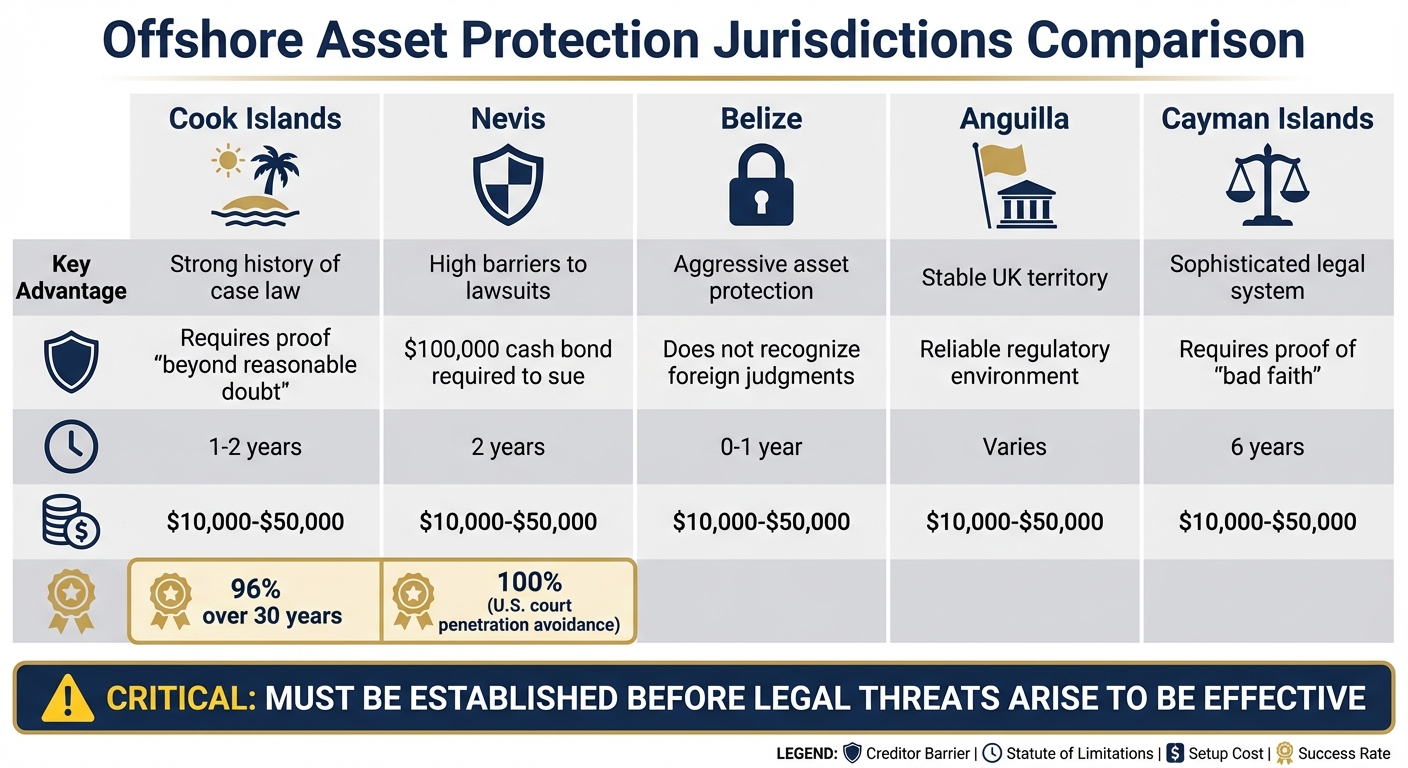
Comparing Jurisdictions for Offshore Structures
Choosing the right jurisdiction is as crucial as the structure itself. Different locations offer unique benefits based on your specific needs and risk tolerance.
| Jurisdiction | Key Advantage | Creditor Barrier | Statute of Limitations (Fraud) | Setup Cost Range |
|---|---|---|---|---|
| Cook Islands | Strong history of case law | Requires proof "beyond reasonable doubt" | 1–2 years | $10,000–$50,000 |
| Nevis | High barriers to lawsuits | $100,000 cash bond required to sue | 2 years | $10,000–$50,000 |
| Belize | Aggressive asset protection | Does not recognize foreign judgments | 0–1 year | $10,000–$50,000 |
| Anguilla | Stable UK territory | Reliable regulatory environment | Varies | $10,000–$50,000 |
| Cayman Islands | Sophisticated legal system | Requires proof of "bad faith" | 6 years | $10,000–$50,000 |
Cook Islands trusts have demonstrated a 96% success rate in protecting assets over the past three decades, while Nevis trusts boast a 100% success rate in avoiding U.S. court penetration when established outside the fraudulent conveyance period. The $100,000 cash bond required in Nevis discourages most creditors from even filing a lawsuit.
Timing is everything. These structures must be put in place before any legal threats arise, as creating them afterward could nullify their effectiveness. A good starting point is a Nevis or Cook Islands LLC, which can later be integrated into an offshore trust if necessary. This layered strategy lays the groundwork for a portfolio that can withstand even the toughest challenges.
Conclusion: Building Crisis-Resistant Portfolios
Pandemics highlight weak points in investment portfolios, making proactive planning a must. Strategies like offshore trusts, international diversification, private U.S. LLCs, and layered protection structures are most effective when implemented before legal or economic challenges arise. Acting ahead of a crisis is key.
International diversification offers more than just risk management – it opens doors to new opportunities. By broadening your portfolio beyond domestic markets, you can strengthen its resilience. For example, international equities are projected to deliver annualized returns of 6.9%–8.9% over the next decade, outpacing the 3.7%–5.7% expected for U.S. equities. This advantage stems from lower valuations and a variety of growth drivers.
Building a portfolio that can weather crises often requires professional expertise. Financial advisors play a crucial role in fine-tuning asset allocation, ensuring tax efficiency, and managing rebalancing strategies – all while helping investors avoid emotional decision-making. As Ann Dowd, CFP® and Vice President at Fidelity Investments, wisely points out:
"Being disciplined as an investor isn’t always easy, but over time it has demonstrated the ability to generate wealth, while market timing has proven to be a costly exercise for many investors".
FAQs
What are the best ways to protect my investments during a pandemic?
To protect your investments during a pandemic, it’s important to focus on reducing risk while building a portfolio that can weather uncertainty. One of the most effective ways to do this is through diversification – spreading your investments across different asset types like stocks, bonds, and cash. This approach helps ensure you’re not overly dependent on the performance of any single market.
Another critical step is to regularly rebalance your portfolio. Market fluctuations can shift your portfolio’s balance, so adjusting it periodically keeps it aligned with your risk tolerance and long-term objectives.
Having a cash reserve is also essential. This safety net can cover unexpected expenses, allowing you to avoid selling investments at a loss during a downturn. You might also explore alternative investments, such as hedge funds or real assets, which tend to be less connected to traditional markets and can offer some extra stability.
Finally, maintaining a long-term perspective is crucial. Resist the urge to panic sell during market dips – these downturns are often temporary. Staying disciplined and focused on your goals can help safeguard your wealth over time.
What are the advantages of using offshore trusts for protecting your assets?
Offshore trusts offer a range of benefits for those seeking to protect their assets. These trusts are set up in locations with strict privacy laws and regulations that favor creditors, making it much harder for lawsuits or creditors to gain access to the assets held within them. This can provide strong legal protection against local claims and lawsuits.
One of the standout advantages is privacy. Offshore trusts help keep your financial and estate planning under wraps, which is particularly appealing to individuals who want to avoid having their personal or financial details exposed. On top of that, they offer a safeguard against political or economic instability. The laws governing these trusts often make it difficult to challenge asset transfers, typically requiring proof of actual fraud to do so.
For high-net-worth individuals looking to minimize legal risks and secure their financial future, offshore trusts are a dependable option for preserving wealth over the long term.
Why is investing internationally important for protecting your portfolio during a crisis?
Investing beyond your home country is a smart way to shield your portfolio during times of crisis. Why? Because it spreads your risk across various countries and markets. Economic disruptions – like those triggered by pandemics – don’t hit every region in the same way. If one country faces a downturn, others might still perform well, helping to balance out potential losses.
Global investments also act as a buffer when domestic markets get shaky due to economic or political turmoil. By including international assets, you’re building a portfolio that can better handle uncertainty, offering a steadier foundation for navigating unpredictable times.
