
Handling payments across borders can be tricky – currency fees, fluctuating exchange rates, and compliance with regulations are just a few of the challenges. Yet, with global payments projected to reach $290 trillion by 2030, finding the right payment solution is essential for businesses aiming to thrive internationally. This article compares four popular options:
- Stripe: Developer-friendly, supports 135+ currencies, and offers advanced integration tools.
- Wise: Transparent fees, real exchange rates, and fast international transfers.
- Payoneer: Tailored for global payouts, with multi-currency accounts and mass payment features.
- Local Payment Gateways: Focused on regional payment methods and compliance.
Each platform addresses specific business needs, from managing complex transactions to reducing costs. Choosing the right one depends on your priorities – transaction volume, geographic focus, and technical resources.
1. Stripe
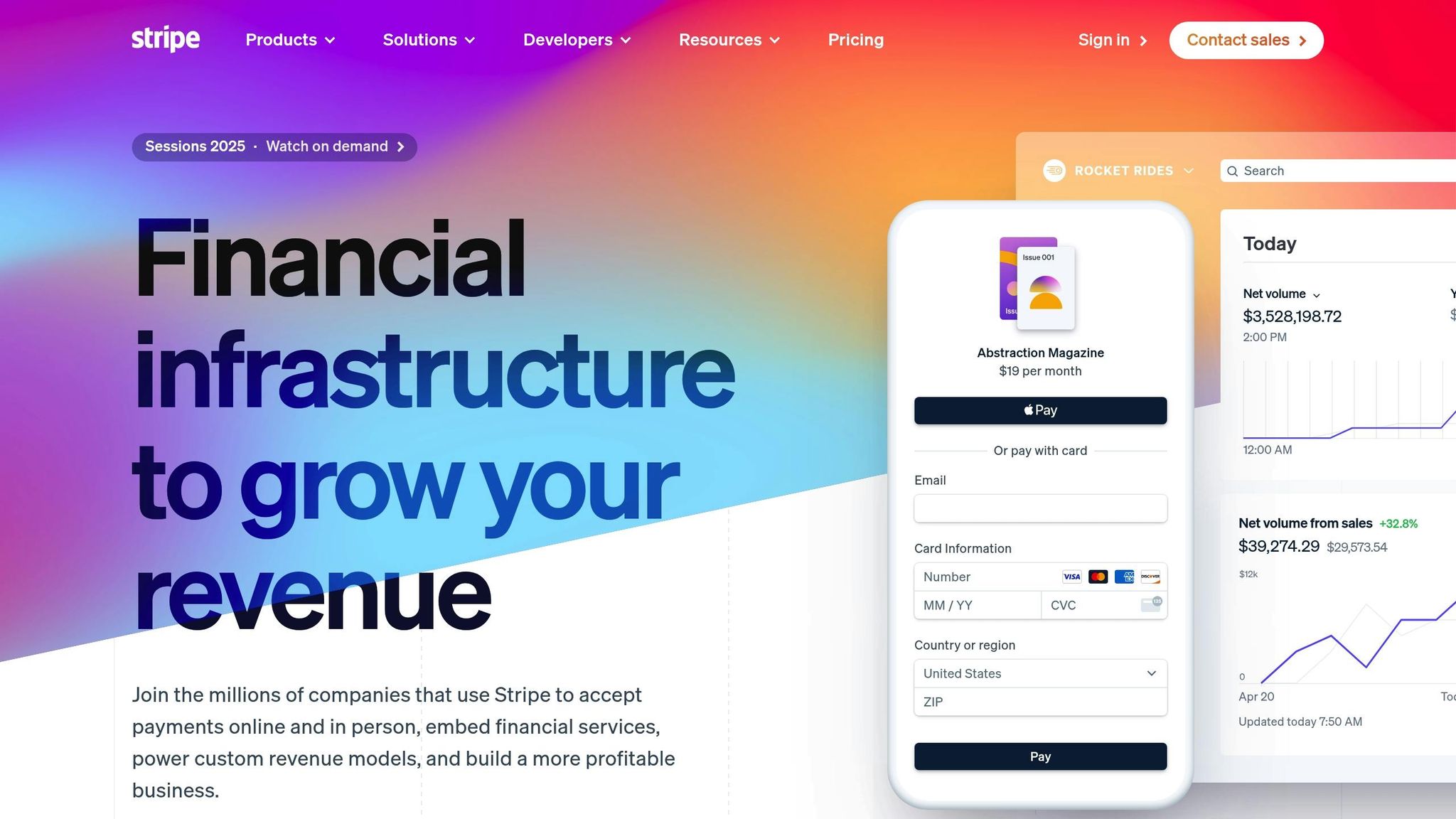
Stripe is a payment platform designed with developers in mind, making it easier to handle international transactions.
With its multi-currency support, businesses can display prices in local currencies and choose payout options that minimize conversion fees. This feature is especially useful for companies targeting global markets.
Stripe provides a variety of tools for integration, including pre-built payment forms, mobile SDKs, APIs, and no-code options like payment links and hosted checkouts. These resources allow businesses to set up payment systems quickly and efficiently.
The platform follows a clear pricing model for domestic transactions, with additional charges for international cards. It also includes features like fraud protection, tax management, and subscription billing, which are valuable for businesses managing complex payment needs.
Stripe is ideal for e-commerce platforms, software companies, and service providers that require multi-party payments, recurring billing, or invoicing. It also adheres to important regulatory standards, such as Strong Customer Authentication in Europe and PCI DSS globally, while meeting local banking requirements. This ensures smooth cross-border operations.
The platform offers real-time reporting and analytics, giving businesses insights into transaction success rates, customer behavior, and revenue patterns. Additionally, Stripe supports mobile payment options like Apple Pay, Google Pay, and regional wallets, making transactions more convenient for customers.
2. Wise
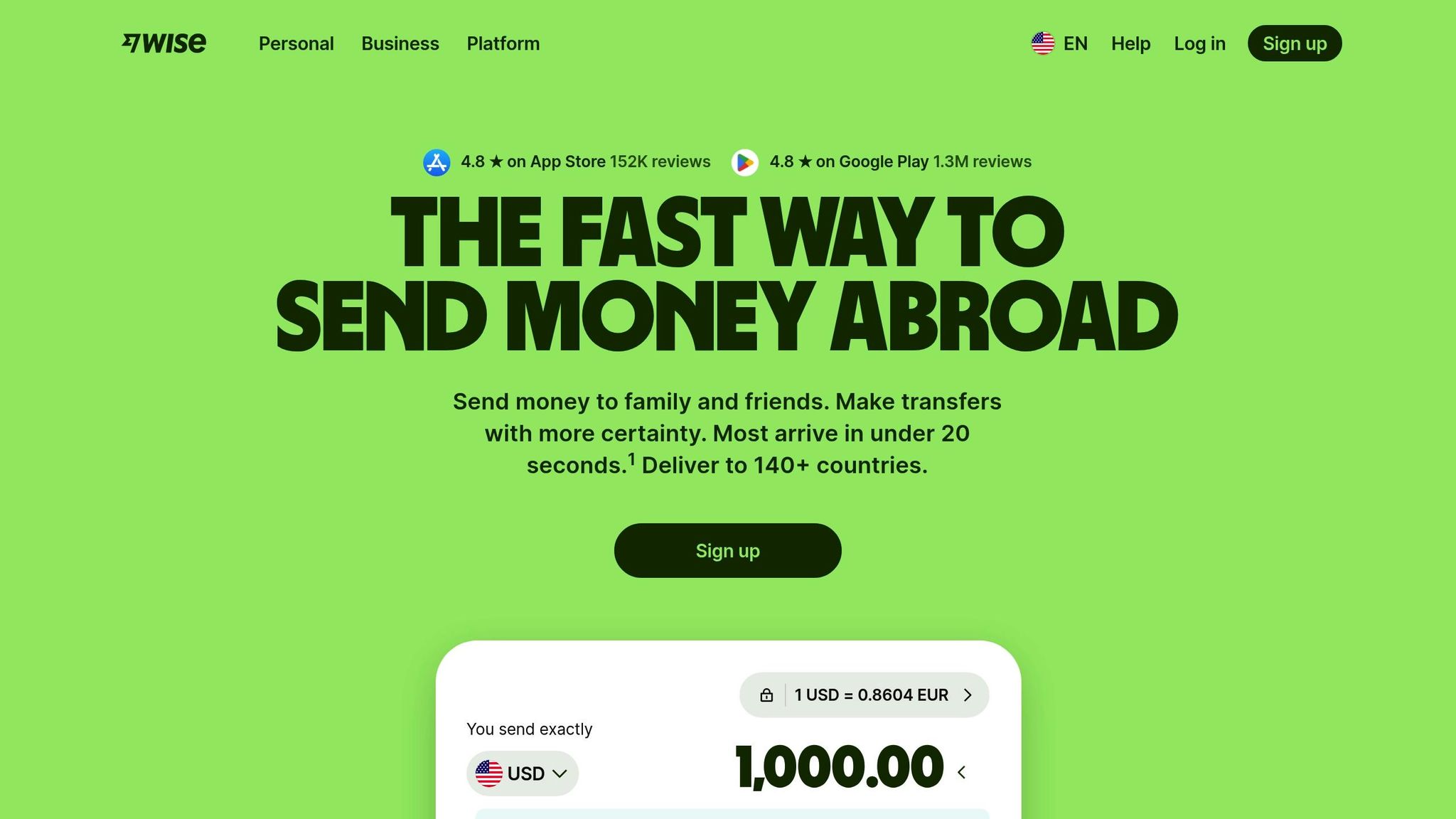
Wise focuses on making cross-border transactions quick and efficient. It uses the real mid-market exchange rate without any hidden markups, ensuring businesses get fair rates while managing their international finances securely.
One standout feature is the multi-currency account, which lets businesses hold and exchange over 40 currencies in a single account. Companies can also receive local bank details in more than 8 currencies, making it easier for international clients to pay as if they were local.
Speed is where Wise truly shines. Over half of its transactions are completed in just 20 seconds, and 95% are processed within 24 hours. This fast turnaround helps businesses maintain a steady cash flow.
For those handling multiple payments abroad, Wise offers a batch payment feature that can process payments for up to 1,000 recipients at once. This is especially useful for paying contractors, suppliers, or employees across different countries.
Wise’s global reach is impressive, enabling payments to over 140 countries. Additionally, its debit and expense cards are accepted in more than 150 countries. With real-time tracking, businesses can monitor payment statuses and estimated delivery times, providing better control over cash flow.
The platform integrates seamlessly with cloud accounting tools, offers API access, and supports multi-user permissions. This makes it a practical choice for teams managing international financial operations, allowing for smooth collaboration with controlled access.
Wise keeps things simple when it comes to pricing. There are no monthly fees or minimum balance requirements, and the fee structure is transparent – businesses know the exact cost of each transaction upfront.
This platform is a great fit for service-based businesses, freelancers working with global clients, e-commerce companies sourcing from international suppliers, and any organization that values speed and transparency in cross-border payments.
Next, let’s take a closer look at Payoneer’s specialized global payout solutions.
3. Payoneer
Payoneer is designed to simplify global payouts for businesses handling payments to recipients across the world. It’s particularly helpful for companies juggling diverse international payment needs.
The platform supports a range of currencies and allows payments to be sent through local bank transfers, prepaid cards, or direct deposits. Its mass payout feature is a standout, enabling businesses to process payments efficiently using CSV uploads or API integrations. This reduces the administrative workload for freelancers, contractors, and partners.
For businesses with high transaction volumes, Payoneer offers customized pricing plans. These tailored options can help users secure better rates and reduce fees, making it a cost-effective choice for large-scale operations.
One of Payoneer’s key features is its multi-currency receiving accounts. These accounts let businesses accept payments in major currencies using local banking details, cutting down on the costs typically associated with international transactions. This feature is particularly beneficial for companies dealing with clients or customers across multiple regions.
Payoneer also integrates with popular e-commerce platforms and marketplaces, streamlining the collection and distribution of funds across different business channels. To further support cash flow management, the platform provides credit lines and advance payments based on transaction history, helping businesses bridge gaps in international payments while reducing financial risks.
Security is another area where Payoneer excels. The platform employs two-factor authentication, fraud monitoring systems, and adheres to strict regulatory standards across various jurisdictions. This ensures transactions are secure and compliant, aligning with the principles of safeguarding global financial operations.
Payoneer is a practical solution for industries like digital marketing, e-commerce, SaaS, and marketplace management. Its ability to handle complex payment scenarios while staying compliant with regulations makes it a reliable choice for international payouts.
Next, we’ll explore how local payment gateways can work alongside these global solutions to further streamline financial operations.
sbb-itb-39d39a6
4. Local Payment Gateways
Local payment gateways cater to the specific needs of individual regions, offering a tailored approach to transactions. They support widely-used local payment methods, accept regional currencies, and integrate with domestic banks. Additionally, they ensure compliance with local financial regulations, making transactions smoother and more efficient for businesses and customers alike.
Advantages and Disadvantages
Taking a closer look at the platforms reviewed earlier, here’s a breakdown of their strengths and weaknesses. Each payment solution has its own set of benefits and challenges, which can influence the choice depending on business needs. Understanding these trade-offs is crucial for safeguarding assets in international commerce.
Stripe stands out for its technical flexibility and developer-friendly features, making it an excellent option for businesses with strong technical teams. Its detailed API documentation and customization options allow for highly tailored payment experiences. However, this level of sophistication can be overwhelming for smaller businesses without dedicated developers. Additionally, its fee structure may not be the most economical for companies handling very high transaction volumes.
Wise is well-regarded for its transparent pricing and use of real exchange rates, which can lead to cost savings for businesses dealing with frequent currency conversions. Its multi-currency accounts simplify international financial transactions. On the downside, its payment features are somewhat limited, and setting up recurring billing requires additional effort.
Payoneer shines with its extensive global reach, supporting payments in numerous countries and regions. Its mass payout capabilities are especially useful for businesses that need to pay multiple international recipients at once. However, some transaction types come with higher fees, and processing times can vary depending on the region.
| Solution | Key Advantages | Key Disadvantages |
|---|---|---|
| Stripe | Advanced API integration, customizable features, strong security. | Complex setup needing technical expertise; higher costs for large volumes. |
| Wise | Transparent pricing, real exchange rates, multi-currency accounts. | Limited features; recurring billing requires extra setup. |
| Payoneer | Wide global reach, efficient mass payouts, strong international support. | Higher fees for some transactions; variable processing times. |
| Local Gateways | Regional compliance expertise, support for local payment methods, seamless domestic integration. | Limited global reach; managing multiple vendors can add complexity. |
Local payment gateways bring a deep understanding of regional compliance and regulations. They support popular local payment methods, which can boost conversion rates in specific markets. However, using multiple systems and vendors can increase operational challenges and lead to inconsistent user experiences across regions.
It’s important to note that fee structures and processing models differ across platforms. Security and compliance remain a priority, with all solutions emphasizing fraud detection, regulatory adherence, and anti-money laundering measures.
These comparisons provide valuable insights for integrating payment processing into a broader asset protection strategy. The right choice can significantly impact transaction security and overall financial safeguarding.
Conclusion
Choosing the right payment processing solution hinges on understanding your business’s unique needs and priorities. Each platform is designed to address specific challenges, making it essential to match your choice with your operational goals.
Stripe offers extensive customization, making it ideal for businesses with strong technical teams that can handle its advanced setup. Wise stands out for its transparent pricing and fast transfers, appealing to companies that prioritize cost clarity. Payoneer is a smart choice for businesses managing large-scale international payouts, while local gateways excel in addressing region-specific compliance and market demands.
When deciding, consider key factors like transaction volume (Stripe’s fees may not suit high-volume businesses), geographic focus (local gateways work best for regional needs, while Payoneer supports global operations), and technical resources (Wise is simpler to implement compared to Stripe’s intricate setup).
Starting with a single solution allows you to evaluate its effectiveness without overwhelming your operations. As your business grows, you can integrate additional platforms to meet evolving demands. The right payment processing solution strikes a balance between functionality and your capacity to implement it effectively.
As the payment landscape changes, regularly reassess your needs to ensure your tools support growth and international ambitions. Aligning your payment solution with your strategy for protecting assets is crucial for securing global operations.
FAQs
What should international businesses look for in a payment processing solution?
When choosing a payment processing solution for international business, there are a few key factors to keep in mind to ensure smooth and secure transactions across borders. Start by confirming that the platform supports the currencies and countries where you operate. This helps transactions flow without unnecessary hiccups.
Next, take a close look at the payment methods the platform offers. Options like credit cards, digital wallets, and local payment solutions can make it easier to cater to your global customers’ preferences. It’s also wise to examine transaction fees and currency conversion rates, as these costs can add up and affect your profits.
Finally, make security a top priority. Features like encryption and compliance with international regulations are essential to protect your business and customers from potential fraud.
How do local payment gateways work alongside global solutions to support businesses in specific regions?
Local payment gateways work hand-in-hand with global solutions by allowing businesses to accept payment methods tailored to specific regions. These can include local credit cards, bank transfers, or digital wallets. Offering these options not only reduces the chances of payment failures but also creates a smoother purchasing experience for international customers.
When businesses align with local payment preferences, they build trust and foster loyalty among their customers. This approach can also lead to higher conversion rates. Incorporating regional payment methods into a global strategy ensures transactions are more seamless and better suited to the needs of different markets.
What security measures do payment processing platforms use to protect international transactions?
Payment processing platforms use a range of security measures to protect international transactions and secure sensitive data. Here’s how they keep things safe:
- Encryption: Sensitive information, like payment details, is converted into secure codes, making it unreadable to unauthorized parties.
- Tokenization: Instead of storing actual data, such as credit card numbers, platforms replace it with unique tokens that are useless if intercepted.
- Multi-factor authentication (MFA): This adds an extra layer of protection by requiring users to confirm their identity using multiple methods – like a password and a one-time code sent to their phone.
- Fraud detection systems: Advanced algorithms and machine learning monitor transactions in real time, flagging anything that looks suspicious.
These tools work together to help businesses minimize fraud risks and ensure secure cross-border payments, offering peace of mind to both companies and their customers.
