
Medical tourism is booming, offering U.S. patients access to world-class healthcare at significantly lower costs. Imagine spending 50–90% less on surgeries, dental work, or fertility treatments, all while receiving care from internationally accredited facilities. Popular destinations like Taiwan, South Korea, and Mexico are leading the way, combining advanced medical technology with affordable pricing.
Here’s a quick overview of what you’ll find in this guide:
- Taiwan: Top-rated healthcare system with advanced tech and low costs.
- South Korea: Cutting-edge procedures, especially in cosmetic and cancer care.
- Portugal: Affordable private hospitals with English-speaking staff.
- Costa Rica & Mexico: Convenient for Americans, with savings up to 80%.
- Colombia & Thailand: Known for dental, cosmetic, and orthopedic procedures.
- Spain & Japan: High-quality care with shorter wait times.
- Australia: Strong private sector and advanced medical options.
Why Choose Medical Tourism?
- Cost savings: Save tens of thousands on major surgeries.
- High-quality care: Many hospitals are internationally accredited.
- Specialized treatments: Access cutting-edge procedures often unavailable or unaffordable in the U.S.
- Ease of travel: Many destinations offer visa-free access for U.S. citizens.
This guide dives into the best destinations, cost comparisons, and planning tips to help you make an informed decision for your healthcare needs.
1. Taiwan
Healthcare System Quality and Accessibility
For seven years straight (2019–2025), Taiwan secured the top spot on the Numbeo Health Care Index, earning an impressive score of 86.5 in 2025. The country operates under a single-payer National Health Insurance (NHI) model, providing coverage to 100% of its population – a stark contrast to the 36% public insurance coverage in the United States. A standout feature of Taiwan’s system is the use of advanced "Health IC" smart cards, which store complete patient medical histories and prescriptions. These cards streamline care across a vast network of hospitals and clinics.
Taiwan’s healthcare system also incorporates a "two-track" approach, combining Traditional Chinese Medicine (TCM) with Western medicine. This integration allows patients to choose between or combine both approaches, as TCM is part of standard professional training for medical practitioners. With 2.3 physicians and 7.3 hospital beds per 1,000 people, Taiwan ensures accessibility while keeping administrative costs remarkably low – just 2%, the lowest globally. These efficiencies directly benefit both locals and medical tourists by reducing costs without compromising quality.
Cost Savings Compared to US Healthcare
Taiwan spends only 7.3% of its GDP on healthcare, compared to 18% in the U.S., while delivering better health outcomes. The life expectancy in Taiwan is 80.2 years, compared to 78.5 years in the U.S.. In 2023, per capita health expenditure in Taiwan was $2,522. For medical tourists, the cost advantages are striking. For instance, IVF treatment costs about one-third of what it does in the U.S., yet maintains a live birth rate exceeding 30%. General surgeries are roughly 20% of U.S. costs, and joint replacements cost 40% less than in Singapore or Thailand. These savings, paired with high-quality care, make Taiwan a compelling choice for medical travel.
Availability of Specialized Treatments and Procedures
Taiwan shines in specialized medical fields, particularly in living-donor liver transplantation, where it boasts a 93.5% five-year survival rate – higher than rates in Europe or North America. Other areas of expertise include craniofacial surgery, cardiovascular treatments, reproductive medicine, and joint replacements. Many healthcare facilities in Taiwan offer integrated medical tourism packages, which combine treatments with accommodations for a seamless experience. Impressively, 17 healthcare institutions in Taiwan have earned the JCI Gold Seal of Approval accreditation, reflecting their commitment to high standards.
Ease of Travel and Visa Requirements for US Citizens
Traveling to Taiwan for medical care is straightforward for U.S. citizens, as no official visa is required for short-term stays. Major hospitals cater to international patients with English-speaking staff and on-site translation services, ensuring smooth communication. Taiwan also offers "healing" packages that combine medical care with luxurious resort stays or comprehensive health screenings. These packages provide a relaxing environment for recovery, blending healthcare with a vacation-like experience.
sbb-itb-39d39a6
2. South Korea
Healthcare System Quality and Accessibility
South Korea boasts a healthcare system that is both advanced and accessible, consistently ranking among the best globally. According to the 2024 Health Care Index by CEOWORLD magazine, the country holds the second spot, highlighting its high standards and cost-effectiveness. With 12.7 hospital beds per 1,000 people – nearly triple the OECD average of 4.3 – South Korea ensures short wait times for consultations and procedures. Unlike the months-long delays often seen in Western nations, patients in South Korea can typically schedule appointments within days or weeks.
The country leverages cutting-edge technology, including 3.0 Tesla MRI machines, PET-CT scanners, and Da Vinci robotic surgical platforms, to deliver precise treatments. Many facilities also integrate AI-powered diagnostics and digital health records into a streamlined "one-stop" service model, simplifying the patient experience. In 2025 alone, South Korea treated over 2 million international patients, including 173,363 travelers from the U.S..
To accommodate international patients, specialized centers provide multilingual support, concierge services, and coordinators to guide them through their healthcare journey. Strict regulations from the Ministry of Health and Welfare ensure high standards, with many facilities earning Joint Commission International (JCI) accreditation or Korea’s own KAHF certification. These factors, combined with cost efficiency, make South Korea a standout in global healthcare.
Cost Savings Compared to US Healthcare
South Korea’s healthcare system is not only efficient but also far more affordable compared to the United States. For instance, cataract surgery costs $1,323 in South Korea, compared to $4,694 in the U.S. Similarly, an appendectomy is priced at $2,047 versus $14,010 across the Pacific. Dental care is another area of savings – a dental implant costs $896 in Korea, compared to $3,096 in the U.S., while a root canal is just $75 compared to $1,223. Even cosmetic procedures like rhinoplasty are more budget-friendly, ranging from $3,000 to $7,000 in South Korea versus $5,000 to $12,000 or more in the U.S..
These lower costs are a result of Korea’s standardized healthcare insurance policies, which regulate treatment fees across the board. Beyond affordability, the system delivers excellent outcomes. For example, the five-year survival rate for gastric cancer is 77% in Korea, significantly higher than the U.S. average of 30-40%. Liver transplant success rates also exceed those in the U.S., reaching 92% compared to 85%.
"Korea delivers one of the strongest value propositions in global healthcare." – Donkyo Seo, Co-founder & CEO, Himedi
Availability of Specialized Treatments and Procedures
South Korea is a leader in several specialized medical fields. Dermatology and aesthetics attract the largest number of international patients, offering advanced treatments like laser therapies, skin rejuvenation, and exosome therapy. The country also has the highest per capita rate of cosmetic surgeries globally, with expertise in facial contouring, rhinoplasty, and double eyelid surgery.
In cancer care, South Korea achieves impressive results, ranking 5th lowest in the OECD for age-adjusted cancer mortality rates. Technologies like CyberKnife and Da Vinci robotic surgery contribute to a 100% five-year survival rate for thyroid cancer. Meanwhile, in organ transplants, South Korea performs the most living donor liver transplants per capita worldwide.
Dental tourism is another growing sector, with South Korea performing six times more implant procedures than Switzerland. Additionally, comprehensive health screenings, which bundle MRI, CT scans, and colonoscopies, are popular among international visitors. In 2025, 15,695 U.S. patients opted for these preventive checkups.
Ease of Travel and Visa Requirements for US Citizens
Traveling to South Korea for medical purposes is straightforward for U.S. citizens. They can stay up to 90 days visa-free using the K-ETA system or apply for a C-3-3 Medical Tourism Visa for more specialized treatments. Starting January 1, 2026, all travelers must submit a mandatory e-Arrival Card at least 72 hours before departure. For patients invited by "Excellent Attracting Institutions" designated by the Ministry of Justice, electronic visas can be processed in just three days.
Many clinics offer preliminary assessments based on photos or medical history submissions, allowing patients to confirm their eligibility for procedures before traveling. Once in South Korea, patients benefit from a safe environment – Seoul ranks highly on the 2025 Numbeo Safety Index with a score of 75.13. Incheon International Airport even features medical tourism support centers for immediate consultations upon arrival. These conveniences, combined with the efficiency of the healthcare system, make South Korea a top choice for medical tourism.
3. Portugal
Healthcare System Quality and Accessibility
Portugal is a standout destination for medical tourism, offering a mix of quality care and affordability. The country operates a dual healthcare system, combining the public National Health Service (Serviço Nacional de Saúde or SNS) with a robust private healthcare sector. For medical tourists, the private system is especially appealing due to shorter wait times and direct access to specialists. Portugal ranks 12th in Europe on the Euro Health Consumer Index and 25th globally for healthcare quality and efficiency.
"Portugal offers high-quality healthcare at a fraction of the cost of the United States – but the real difference goes far beyond numbers." – RE/MAX Cidadela
English is widely spoken in private hospitals, clinics, and pharmacies, particularly in major cities like Lisbon, Porto, and the Algarve. Leading private hospital networks such as CUF and Hospital da Luz feature modern facilities that meet international standards. Additionally, specialized hospitals handle complex procedures, including cardiothoracic surgeries and medical genetics. With an average life expectancy of 82.8 years, Portugal achieves impressive healthcare outcomes relative to its spending.
Cost Savings Compared to US Healthcare
Healthcare in Portugal is significantly more affordable than in the U.S., with costs typically 50%–80% lower. For example:
- A GP consultation costs €40–€60 ($44–$66), compared to $150–$250 in the U.S.
- Specialist visits range from €70–€120 ($77–$132), versus $200–$400 stateside.
- MRI scans cost €250–€400 ($275–$440), compared to $1,000–$3,000 in the U.S.
Childbirth in a private Portuguese hospital is priced at €3,000–€5,000 ($3,300–$5,500), which is about 75% less than the $12,000–$30,000 charged in the U.S..
Private health insurance in Portugal is also far more economical, costing $55–$165 per month, which is 5–10 times less than typical U.S. premiums of $400–$1,000 or more. This represents an 83% savings, all while maintaining strong healthcare outcomes, as noted by the OECD.
Availability of Specialized Treatments and Procedures
Portugal has become a hub for medical tourists seeking treatments in dentistry, fertility, and cosmetic surgery. The country is particularly well-regarded for orthopedic procedures, including hip and knee replacements, spinal surgeries, and other advanced treatments. Cosmetic surgeries such as rhinoplasty, facelifts, liposuction, and breast augmentations are also popular for their high standards and competitive pricing.
Beyond these, Portugal offers advanced care in fields like oncology, neurology (with a focus on Parkinson’s and stroke rehabilitation), bariatric surgery, and eye care procedures like LASIK and cataract removal. With over 30% of medical professionals fluent in English and private facilities operating without waiting lists, patients can expect a smooth experience. Easy travel arrangements further enhance the appeal of Portugal as a medical travel destination.
Ease of Travel and Visa Requirements for US Citizens
Traveling to Portugal is straightforward for U.S. citizens, who can enter visa-free for up to 90 days for medical purposes. However, European Union regulations require non-EU visitors to carry travel medical insurance with a minimum coverage of €30,000 ($33,000) for emergency care, hospitalization, and repatriation. Since the U.S. government does not cover overseas medical costs and Portugal does not provide free healthcare to visitors, securing proper insurance is a must.
For extended stays, options like the D7 Passive Income Visa (requiring €920 or $1,012 per month) or the D8 Digital Nomad Visa (requiring €3,680 or $4,048 monthly) are available. With direct international flights to Lisbon, Porto, and Faro, travel logistics are simple. However, medical tourists should be aware that most standard insurance policies exclude medical evacuation, which can cost over $50,000 depending on the situation.
4. Costa Rica
Healthcare System Quality and Accessibility
Costa Rica operates a dual healthcare system that combines the public Caja Costarricense de Seguro Social with private clinics, making it a popular destination for medical tourists. It ranks first in Latin America for Joint Commission International accreditation, which ensures compliance with strict global safety and quality standards. The United Nations has recognized Costa Rica’s public health system as one of the top 20 worldwide, and the World Health Organization has ranked it 36th globally – one spot ahead of the United States.
Each year, over 40,000 Americans travel to Costa Rica for medical care, drawn by its high-quality services and convenient location. Key private hospitals like CIMA Hospital, Clínica Bíblica, Clínica Católica, and Hospital Clínica UNIBE are mainly located in and around San José. These facilities offer modern amenities, English-speaking staff, and physicians who often hold certifications from both local and U.S.-accredited institutions. Additionally, pharmacists in Costa Rica are authorized to diagnose and treat common conditions, providing added convenience [28,29]. Patient satisfaction is notably high, with Costa Rican clinics earning an average Trustpilot rating of 4.7 out of 5. Combined with significant cost savings, these factors make Costa Rica a standout option for medical care.
Cost Savings Compared to US Healthcare
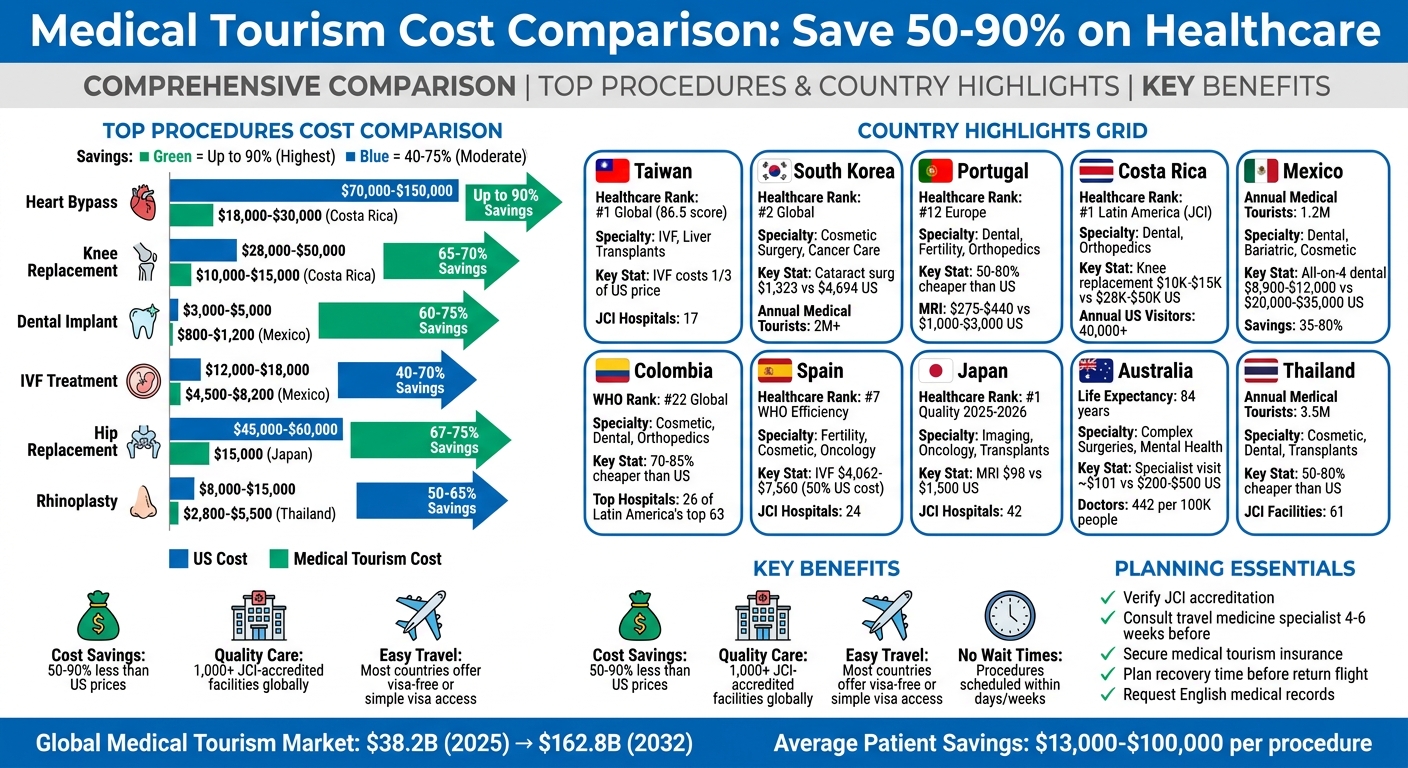
Healthcare in Costa Rica is far more affordable than in the U.S. For instance, a knee replacement costs between $10,000 and $15,000 in Costa Rica, compared to $28,000 to $50,000 in the U.S. – a savings of 65% to 70%. Heart surgery, which can cost $70,000 to $150,000 in the U.S., is priced between $18,000 and $30,000 in Costa Rica, offering savings of up to 90%. Even routine care is much cheaper: annual checkups range from $50 to $100, compared to $150 to $400 in the U.S.. Dental implants, a popular option, cost $800 to $1,200 per tooth versus $3,000 to $5,000 in the U.S.. Diagnostic tests are also much less expensive; for example, an MRI scan costs roughly $200 in Costa Rica, compared to about $3,000 in high-cost U.S. areas.
Private medical insurance in Costa Rica typically costs between $60 and $250 per month, and generic prescription medications are 60% to 80% cheaper than in the U.S., often available over-the-counter [28,29]. These savings, combined with the availability of specialized procedures, make Costa Rica an attractive option for medical tourists.
Availability of Specialized Treatments and Procedures
Costa Rica’s healthcare system is well-known for its expertise in dental care, which accounts for about 30% of its medical tourism. Procedures include implants, crowns, veneers, and full-mouth rehabilitation [30–32]. Cosmetic and plastic surgeries are also popular, making up around 25% of treatments sought by tourists. Common procedures include breast augmentation, facelifts, liposuction, rhinoplasty, and tummy tucks [30–33]. Additionally, the country offers orthopedic and cardiology treatments, although access to experimental cancer therapies is still limited [29–33].
Ease of Travel and Visa Requirements for US Citizens
For U.S. citizens, traveling to Costa Rica is straightforward. A valid passport allows visa-free entry for up to 90 days. With short flight times from most U.S. cities, Costa Rica is an easily accessible destination for medical tourism. The typical recovery period for major surgeries, which ranges from 3 to 6 weeks, fits well within the 90-day allowance. Furthermore, local regulations require medical tourists to have minimum liability coverage, adding an extra layer of legal protection.
5. Mexico
Mexico has become a popular destination for affordable, high-quality medical care, thanks to its convenient location and specialized healthcare services.
Healthcare System Quality and Accessibility
Each year, about 1.2 million international medical travelers choose Mexico for their healthcare needs. The country’s private hospitals, regulated by COFEPRIS, often feature English-speaking staff and offer pre-arrival coordination to make the process smoother for international patients.
Mexico’s proximity to the U.S. is a major advantage. Border cities like Tijuana and Mexicali provide easy access for West Coast residents, while Cancun offers direct international flights and recovery options in resort-like settings. Many hospitals hold international accreditations, such as Joint Commission International (JCI), and some even partner with prestigious institutions. For example, Médica Sur in Mexico City is both JCI-accredited and part of the Mayo Clinic Care Network, ensuring access to top-tier expertise.
The country’s medical tourism market is highly specialized by region. For example:
- Los Algodones is known for dental care.
- Tijuana specializes in bariatric surgery.
- Mexico City and Monterrey handle complex procedures like oncology and cardiology.
This regional specialization allows patients to select destinations tailored to their specific medical needs.
Cost Savings Compared to US Healthcare
Healthcare in Mexico costs 35%–80% less than private healthcare in the U.S.. Here’s a closer look at some of the savings:
- Dental implants: $750–$1,200 in Mexico vs. $3,000–$5,000 in the U.S. (60%–75% savings).
- All-on-4 dental implants per arch: $8,900–$12,000 in Mexico compared to $20,000–$35,000 in the U.S. (40%–65% savings).
- IVF cycles: $4,500–$8,200 in Mexico vs. $12,000–$18,000 in the U.S. (40%–70% savings).
- Plastic surgery: Patients typically save 30%–60%, with procedures like tummy tucks costing $3,500–$5,500 in Mexico compared to $8,000–$12,000 in the U.S. Similarly, facelifts range from $4,500–$7,500 in Mexico versus $9,000–$15,000 in the U.S..
Even after factoring in travel costs – usually $1,500 to $3,000 for a 7 to 10-day trip including flights, lodging, and food – patients still see substantial savings.
Availability of Specialized Treatments and Procedures
Mexico’s healthcare system offers a broad spectrum of specialized treatments, catering to a variety of medical needs. For instance:
- Border cities like Tijuana and Los Algodones are ideal for outpatient procedures such as dental work and bariatric surgery.
- Major cities like Mexico City and Monterrey provide advanced facilities for complex care, including oncology, cardiology, and neurology.
- Guadalajara and Puebla are well-regarded for orthopedic procedures, supported by the TecSalud healthcare network.
For fertility treatments, cities like Cancun, Mexicali, and Mexico City host specialized clinics, including Hospital de la Familia in Mexicali and Hospital Amerimed in Cancun. Cosmetic surgery is also widely available in Tijuana, Cancun, and Mexico City. Facilities like the JCI-accredited Hospital Amerimed Cancun offer a range of aesthetic procedures. To ensure safety, patients should verify provider credentials through organizations like the Consejo Mexicano de Cirugía Plástica or the International Society of Aesthetic Plastic Surgery (ISAPS).
Ease of Travel and Visa Requirements for US Citizens
Traveling to Mexico for medical care is straightforward for U.S. citizens. No visa is required for stays of up to 180 days, and all that’s needed is a passport valid for at least six months beyond the travel date. This generous stay allowance gives patients plenty of time for treatment and recovery without worrying about visa issues. Many private hospitals streamline the process by providing bilingual staff and patient coordinators to handle logistics.
6. Colombia
Colombia delivers high-quality healthcare at a fraction of what you’d pay in the U.S. Ranked 22nd globally by the World Health Organization for healthcare quality, it outperforms both Canada and the United States. The country is home to 26 of Latin America’s top 63 hospitals, accounting for 41% of the region’s best facilities.
Healthcare System Quality and Accessibility
Colombia’s healthcare system is equipped with an integrated electronic medical record system, making it easier to coordinate care, even for international patients. Four hospitals in the country hold Joint Commission International (JCI) accreditation, a gold standard in healthcare quality. Major cities like Bogotá, Medellín, and Cali feature specialized centers for complex medical procedures, including oncology, cardiology, neurosurgery, and orthopedics. Leading hospitals for international patients include Fundación Santa Fe de Bogotá (JCI-accredited), Fundación Cardioinfantil (ranked among Latin America’s top three), and Hospital Pablo Tobón Uribe in Medellín (JCI-accredited).
Many Colombian doctors have trained in the U.S. and are fluent in English, though most nursing and administrative staff speak only Spanish. Larger hospitals often have international relations departments to help foreign patients with translation and logistical support.
Cost Savings Compared to U.S. Healthcare
Private medical care in Colombia is significantly less expensive – typically 70% to 85% cheaper than similar treatments in the U.S.. Here’s a quick look at how costs compare:
| Procedure | Colombia Cost | U.S. Cost | Savings |
|---|---|---|---|
| Specialist Visit | $40–$90 | $200–$500 | 70%–82% |
| MRI | $150–$400 | $1,500–$3,000 | 73%–90% |
| ER Visit | $75–$180 | $1,500–$3,000 | 88%–95% |
| Gastric Sleeve | $4,500–$7,000 | $15,000–$25,000 | 70%–81% |
| Knee Replacement | $7,000–$12,500 | $35,000–$50,000 | 75%–82% |
Dental care offers even greater savings. A routine cleaning costs about $30, compared to $100–$200 in the U.S., while Invisalign treatment is approximately $3,000 in Colombia versus $6,000–$8,000 stateside. Prescription medications are also much cheaper, with prices 50%–70% lower than in the U.S. For example, a 10-day supply of Ciprofloxacin costs around $3. These cost advantages, paired with Colombia’s high standard of care, make it an attractive destination for medical procedures.
Availability of Specialized Treatments and Procedures
Colombia stands out in several medical specialties. In 2025 alone, over 15,000 U.S. patients sought treatment in the country. Medellín and Cali are particularly well-known for cosmetic and plastic surgery, performing thousands of Brazilian Butt Lift procedures each year. Bogotá, on the other hand, is a hub for complex surgeries like organ transplants and cardiac procedures, with institutions like Fundación Cardioinfantil leading in advanced cardiac care.
Dental tourism is another major draw, with patients traveling for full-mouth restorations, implants, and veneers at a fraction of U.S. prices. Orthopedic surgeries, often using implants from top brands like Stryker and Zimmer Biomet, are also popular among international patients. To ensure quality care, patients should confirm surgeon credentials through organizations like the Sociedad Colombiana de Cirugía Plástica (SCCP) or the Colombian Medical College. This broad range of specialized treatments highlights Colombia’s ability to deliver both advanced medical procedures and cosmetic solutions.
Ease of Travel and Visa Requirements for U.S. Citizens
Traveling to Colombia is straightforward for U.S. citizens. No visa is required for stays under 90 days, and this can be extended up to 180 days per year. However, all travelers must complete the Check-Mig digital form between 72 hours and 1 hour before their flight. Major cities like Bogotá, Medellín, and Cali are easily accessible via direct international flights and boast well-developed medical tourism infrastructure, including facilities located in safe, affluent neighborhoods.
7. Spain
Spain ranks at the top of the Bloomberg Healthiest Country Index and 4th on the Medical Tourism Index. Its healthcare system is highly regarded, with the World Health Organization placing it 7th in efficiency. Spain also leads globally in organ transplants. With 804 hospitals and over 160,000 beds, the country draws around 120,000 medical tourists each year, and this sector is growing at a rate of 20% annually.
Healthcare System Quality and Accessibility
Most international patients in Spain use private hospitals, which cater specifically to foreign visitors. These facilities often have international patient departments, multilingual staff, and quicker scheduling compared to public hospitals. Prominent private hospital groups like Quirónsalud and HM Hospitals operate in Madrid and Barcelona, offering comprehensive care for complex treatments. Meanwhile, cities like Valencia, Malaga, and Alicante provide excellent recovery environments with top-tier facilities. As of 2015, 24 medical institutions in Spain had earned Joint Commission International accreditation. English-speaking staff in major private hospitals make communication easier for U.S. patients, while the overall costs remain far lower than in the U.S.
Cost Savings Compared to U.S. Healthcare
Spain offers excellent medical care at a fraction of U.S. prices. For example, Kiara DeWitt, a Certified Neurology Nurse, highlights that knee arthroscopy costs in Spain range from $6,000 to $7,000, compared to over $18,000 in the U.S.. IVF treatments cost between $4,062 and $7,560, roughly half of U.S. prices. Hip and knee replacements fall between $9,500 and $16,000. Cosmetic procedures also offer considerable savings: breast augmentation costs $4,300–$6,400, and rhinoplasty ranges from $4,300 to $7,000 – 30–40% less than in Western markets. Routine care is equally affordable, with specialist consultations priced between $67 and $167 and dental cleanings costing $44 to $78. These lower costs, paired with high-quality services, make Spain a popular choice for a wide variety of medical treatments.
Availability of Specialized Treatments and Procedures
Spain has earned a reputation as Europe’s fertility hub, thanks to laws allowing anonymous egg donation and shorter wait times. The country is also a leader in cosmetic and plastic surgery, with top centers in cities like Madrid, Barcelona, and Marbella offering procedures such as facelifts, rhinoplasty, and breast augmentation. Orthopedic care is another strength, with private hospitals specializing in joint replacements and sports medicine. Many facilities use advanced robotic surgery techniques to minimize recovery times. Spain also excels in ophthalmology, offering treatments like cataract surgery and LASIK at competitive prices – LASIK costs about $2,150 per eye, 45–55% less than in the U.K.. Oncology care is another highlight, with cutting-edge options like proton therapy and specialized cancer surgeries available in Madrid and Barcelona.
Ease of Travel and Visa Requirements for U.S. Citizens
U.S. citizens can travel to Spain for medical treatment for up to 90 days without needing a visa, thanks to Schengen Area rules. For longer stays, a national long-stay or medical visa is required. Spain’s well-developed tourism infrastructure, including major international airports in Madrid and Barcelona with direct flights from many U.S. cities, makes travel straightforward. Combined with English-speaking medical staff and the Mediterranean setting, Spain offers an attractive and convenient option for American medical tourists seeking affordable, high-quality care abroad.
8. Japan
Japan ranks as the global leader in healthcare quality for 2025–2026. With the highest life expectancy worldwide – 84.7 years for men and 87.7 years for women – Japan’s healthcare system sets the standard. The country also features 42 Joint Commission International-accredited hospitals, offering top-tier medical care at a fraction of U.S. costs.
Healthcare System Quality and Accessibility
Japan’s healthcare system is renowned for its advanced technology and accessibility. For instance, the country has four times as many MRI scanners and six times as many CT scanners per capita as Europe. Patients benefit from a system that allows direct access to specialists without referrals and offers same-day appointments. Routine care wait times are typically under a week.
"Japan holds the top spot for quality healthcare. Not because it spends the most money, but because it delivers the most value." – Arnav Singh, Health Expert
The government actively supports medical tourism through initiatives like the "Basic Policy on Economic and Fiscal Management and Reform 2024." These efforts include multilingual hospital services and specialized medical visas. While residents enjoy universal insurance coverage, medical tourists pay out-of-pocket, benefiting from government-regulated fee schedules updated biennially. Ambulance services are free for all, regardless of nationality or insurance status. This combination of accessibility and affordability makes Japan a standout destination for high-quality care.
Cost Savings Compared to U.S. Healthcare
Japan’s regulated pricing system offers a stark contrast to U.S. healthcare costs:
- MRI scan: Around $98 in Japan versus $1,500 in the U.S.
- Hip replacement surgery: Approximately $15,000 compared to $45,000–$60,000 in the U.S.
- General consultations: $20–$70 for uninsured patients
- One-night hospital stay: $350–$700
- Full-body MRI scan: Roughly $600 versus $3,000 in the U.S.
Japan also delivers exceptional clinical outcomes. For example, the country boasts a 96.2% five-year survival rate for heart transplant recipients, well above the global average of 71.9%. Annual mortality rates for dialysis patients are 13%, significantly lower than the U.S. rate of 22.4%. While larger hospitals typically accept credit cards, smaller clinics often operate on a cash-only basis, so travelers should carry 10,000–20,000 yen ($67–$134) for medical expenses.
Availability of Specialized Treatments and Procedures
Japan’s expertise in advanced imaging and competitive pricing supports a wide range of specialized treatments. Key areas of focus include diagnostic imaging, oncology, reproductive medicine, and transplant surgery. A unique offering is "Ningen Dock," a comprehensive health screening program aimed at early detection of cancer, cardiovascular issues, and brain disorders. Robotic surgery is also widely available, and international patients frequently seek care in endocrinology, diabetes, and cardiovascular medicine.
For non-emergencies, it’s recommended to visit a clinic (shinsyojo) first to avoid additional fees of $33–$47. The Ministry of Health, Labour and Welfare maintains a list of medical facilities that cater to foreign patients with language support. However, certain procedures like surrogacy and preimplantation genetic testing for sex selection are not permitted under Japan’s professional guidelines.
Ease of Travel and Visa Requirements for U.S. Citizens
U.S. citizens can enter Japan visa-free for short stays of up to 90 days. For extended treatments, the "Visa for Medical Stay" allows multiple entries and longer durations than the standard tourist visa. Starting in 2026, all visitors must have private medical insurance under Japan’s national tourism policy. Direct flights connect major U.S. cities to Japan, and English-speaking telemedicine services introduced in 2024 now offer prescription delivery to hotels.
9. Australia
Australia offers a dual healthcare system that combines public Medicare with a strong private sector. With 442 doctors per 100,000 people – almost double the Western Pacific average – it ensures top-tier care and shorter wait times for elective procedures. The country consistently performs well in global healthcare rankings, particularly excelling in the "healthy lives" category, where it has ranked first or second among high-income nations.
Healthcare System Quality and Accessibility
Australia’s healthcare system delivers excellent outcomes while keeping costs relatively low, spending just 10.4% of its GDP on healthcare compared to 18% in the United States. Australians enjoy a life expectancy of 84 years, significantly higher than the U.S. average of 78.5 years. Medical tourists often opt for private hospitals, which provide faster services than the public system. For instance, the median wait time for elective surgeries in public hospitals is about 49 days.
"Australia’s healthcare setup isn’t quite what most Americans expect – but you might just end up wishing you’d made the move sooner." – Katelynn Minott, CEO, Bright!Tax
Digital advancements like the "My Health Record" system allow instant access to patient histories for specialists and hospitals, streamlining care. Additionally, over 130 Medicare Urgent Care Clinics address non-life-threatening emergencies, reducing the burden on hospital emergency rooms. However, seeing a specialist often requires a referral from a general practitioner. These features, combined with lower costs, make Australia a compelling alternative to U.S. healthcare.
Cost Savings Compared to U.S. Healthcare
Australia’s government plays a key role in regulating healthcare costs. The Pharmaceutical Benefits Scheme (PBS) ensures medications are affordable, with PBS-listed prescriptions capped at $25. Specialist consultations typically cost around AUD 153 (approximately $101 USD), which is far less than similar services in the United States.
"If you have an emergency – say, you’re hit by a car – you go to a public hospital, and you won’t pay anything. You can stay six weeks or six months, and it’s all free." – Dr. Elizabeth Deveny, CEO, Consumers Health Forum of Australia
However, ambulance transport isn’t covered by Medicare and can be costly without specific insurance or a subscription. Private health insurance is recommended to cover hospital stays and specialist fees. While the savings are significant, Australia also stands out for its advanced medical services.
Availability of Specialized Treatments and Procedures
Australia is well-equipped to provide specialized care, including complex inpatient treatments, maternity services, mental health support, and rehabilitation. The country’s mental health workforce includes 16 psychiatrists per 100,000 people, compared to an average of 9 in other high-income nations. With 704 public hospitals and roughly 67,300 public hospital beds, the infrastructure supports comprehensive medical care. Additionally, Australia has about 148.5 specialists per 100,000 people, a figure similar to Canada’s 147.6.
Ease of Travel and Visa Requirements for U.S. Citizens
Traveling to Australia is straightforward for U.S. citizens, who can typically use an Electronic Travel Authority (ETA) for short visits. For longer stays related to medical treatment, a Medical Treatment visa (Subclass 602) may be required. Direct flights from major U.S. cities make the journey convenient. However, since there’s no reciprocal healthcare agreement between the U.S. and Australia, medical expenses are generally out-of-pocket unless covered by private insurance.
10. Thailand
Thailand has carved out a prominent spot in the world of medical tourism by offering exceptional care at highly competitive prices. Over 3.5 million international patients visit the country each year for medical treatments, drawn by its reputation for quality and affordability. Thailand is home to 61 hospitals and clinics accredited by the Joint Commission International (JCI), a certification that signifies adherence to the same rigorous standards as top U.S. hospitals. Many of the country’s doctors have trained at prestigious medical institutions in the United Kingdom or the United States, ensuring care that aligns with Western expectations. Additionally, the Thai government is rolling out a 10-year "Medical Hub" strategy (2025–2034) to integrate advanced medical technologies like precision medicine and biotechnology into its healthcare system.
Healthcare System Quality and Accessibility
Thailand’s healthcare system features over 500 medical facilities, offering faster service compared to typical Western wait times. Procedures like MRIs are often completed within days, and hospital admissions usually occur within one to three days. Many leading hospitals operate 24/7 and provide "5-star" amenities, including private suites, high-speed internet, and translator services. These facilities often surpass the comfort levels of standard U.S. hospital rooms.
"Thai hospitals pioneered the ‘5-star medical care’ model with hotel-like amenities, personalized nursing, and serene recovery environments." – Dayvee Sutton, Creator of Travel with Dayvee
By 2026, advancements in AI are shaping personalized medicine in Thailand, using genetic data and wearable technology to create tailored treatment plans. Most JCI-accredited hospitals also have dedicated departments for international patients, staffed with fluent English speakers to ensure smooth communication. This combination of quality care and efficiency is offered at a fraction of U.S. healthcare costs.
Cost Savings Compared to U.S. Healthcare
Thailand’s medical treatments are priced 50% to 80% lower than their U.S. counterparts. For instance, rhinoplasty in Thailand costs between $2,800 and $5,500, compared to $8,000 to $15,000 in the U.S. A complete 10-day package, including surgery, airfare, and accommodations, typically ranges from $4,200 to $9,700 – still less than the cost of surgery alone in the U.S.. Similarly, hip and knee replacements in Thailand save patients an average of $13,000 compared to U.S. prices. Dental procedures like porcelain veneers cost $350 to $450 per tooth, far below the $925 to $2,500 charged in the United States.
"Medical treatment costs in Thailand are 50-80% lower than in the United States, Canada, and Europe." – Siam Commercial Bank Economic Intelligence Centre (SCB EIC)
Patients typically save between 50% and 70% on treatments while enjoying care in facilities that meet international standards. Beyond the financial savings, Thailand’s tropical landscapes offer an added benefit: patients can recover in serene beachside resorts while attending follow-up appointments. These savings and perks extend across a variety of specialized treatments.
Availability of Specialized Treatments and Procedures
Thailand is a leader in specialized medical fields such as organ transplants, cancer care, infertility treatments, dentistry, and cosmetic surgery. Procedures like rhinoplasty, breast augmentation, and body contouring are particularly popular. The country also caters to complex surgeries like "Mommy Makeover" packages, offering extended-stay visas and recovery facilities tailored to these procedures. Minor cosmetic surgeries can cost as little as $500, making them accessible to a wide range of patients. By 2026, advancements in genetic testing and infertility treatments are further expanding Thailand’s offerings in cutting-edge medical care.
Ease of Travel and Visa Requirements for U.S. Citizens
Traveling to Thailand for medical care is straightforward for U.S. citizens. Visitors can enter visa-free for 30–45 days or apply for a 60-day Tourist Visa (TR) for single treatments. For more complex procedures requiring extended stays, the Medical Treatment Visa (MT) allows multiple entries within a year, with each stay lasting up to 90 days. Major airlines like Thai Airways, Singapore Airlines, and Emirates provide convenient connections for international travelers. Patients are encouraged to arrive 2–3 days before surgery to complete pre-operative consultations and tests, and to plan for a recovery period of 10–14 days before flying home to minimize risks.
Cost and Healthcare System Comparison
When selecting a destination for medical tourism, understanding both the potential cost savings and the structure of the healthcare system is key. The 10 countries highlighted in this guide typically offer savings of 50–80% compared to U.S. healthcare costs, all while maintaining high standards of care through various healthcare models.
Healthcare Systems Overview
Taiwan, South Korea, and Japan operate under compulsory national health insurance programs that integrate cutting-edge technology and standardized care protocols. Taiwan, in particular, has gained international recognition, achieving a top global ranking with a score of 78.72. In contrast, Spain, Portugal, and Australia rely on universal healthcare systems focused on efficiency and preventive care. However, medical tourists often turn to private healthcare options in these countries to avoid long wait times. Meanwhile, Thailand, Mexico, Colombia, and Costa Rica have cultivated strong private healthcare sectors designed with international patients in mind, offering JCI-accredited facilities and recovery options that prioritize comfort. These varied systems highlight the balance each country strikes between affordability and quality.
Cost Savings by Procedure
The savings available depend on both the procedure and the destination. In countries like Thailand, Mexico, and South Korea, major surgeries such as heart bypasses, knee replacements, and dental implants can cost up to 80% less than in the U.S.. For instance, South Korea – a hub for cosmetic surgery – performs nearly 1 million procedures annually. Rhinoplasty there costs between $2,160 and $9,000, compared to $7,000 to $20,000 in the U.S..
"The industry exists because some countries offer premium care at a fraction of the price they’d pay to get the same treatment in the high-quality, but high-cost American healthcare system." – Yahoo/GOBankingRates
Growth of Medical Tourism
The global medical tourism industry has seen rapid expansion, growing from $38.2 billion in 2025 to a projected $162.8 billion by 2032. This growth is largely fueled by the substantial cost differences and the availability of internationally accredited medical facilities. These trends underline the importance of this guide in helping U.S. patients discover affordable, world-class care and plan their medical trips with confidence.
How to Plan Your Medical Trip
Planning a medical trip overseas takes careful preparation to ensure your safety and the success of your treatment. Start by scheduling a consultation with a travel medicine specialist about 4–6 weeks before your departure. This step helps address necessary vaccinations, potential health risks, and pre-existing conditions, giving you time to resolve any issues early on.
Verify the facility where you’ll receive treatment. Use international accrediting organizations like the Joint Commission International (JCI) or the Accreditation Association for Ambulatory Health Care to confirm the facility’s credentials. For context, JCI accreditation is rigorous, requiring hospitals to meet over 1,200 quality standards. Globally, fewer than 1,000 hospitals hold this certification.
"Patients should only be referred for medical care to institutions that have been accredited by recognized international accrediting bodies." – American Medical Association
You can confirm a facility’s accreditation by visiting the official websites of these organizations. Once you’ve verified the facility, focus on organizing your travel documents and securing proper insurance.
For travel documents and insurance, ensure you have a valid passport, a detailed treatment plan, and a letter from your physician outlining the medical necessity of your procedure. Keep in mind that most U.S. insurance policies don’t cover elective procedures abroad. To protect yourself, consider purchasing specialized medical tourism insurance. This type of insurance can cover complications or emergency evacuations – an essential safeguard since 4.3% of patients experience complications, and 5.2% contract infections after treatment abroad. Additionally, enrolling in the U.S. State Department’s STEP program can provide safety updates during your trip.
Plan your return flight carefully to allow enough recovery time. For example, if you undergo facial or laser procedures, wait 7–10 days before flying. For chest or abdominal surgeries, delay your return by at least 10 days to minimize the risk of blood clots or complications from air pressure changes. Before heading home, request English copies of all medical records to ensure your U.S. healthcare providers can continue your care seamlessly.
Lastly, be aware of the legal differences in medical recourse when receiving treatment abroad. Unlike in the U.S., your legal options may be limited, making it even more important to choose accredited facilities and secure comprehensive insurance. Upon returning, note that U.S. healthcare facilities may screen for carbapenem-resistant Enterobacterales (CRE) if you stayed overnight in a foreign hospital within the past six months.
Conclusion
After reviewing top destinations like Taiwan, South Korea, Portugal, Costa Rica, Mexico, Colombia, Spain, Japan, Australia, and Thailand, it’s clear that medical tourism presents a viable solution for Americans grappling with steep healthcare costs. Patients can cut expenses by as much as 50% to 90% on major procedures by opting for accredited facilities overseas. For instance, a heart bypass surgery priced between $70,000 and $150,000 in the U.S. might cost only $18,000 to $30,000 in Costa Rica. Similarly, dental implants that range from $3,000 to $7,000 domestically are often available for $800 to $1,200 in Mexico.
Quality is another key factor. Countries like Taiwan and South Korea are consistently ranked among the best globally for healthcare performance. Many facilities in these destinations also hold Joint Commission International (JCI) accreditation, ensuring standards comparable to those in the U.S. However, it’s essential to focus on the credentials of the specific surgeon and hospital rather than relying solely on the country’s reputation.
"Medical tourism offers substantial opportunities for affordable, high-quality medical care and travel experiences. Ensuring a successful journey involves careful research, understanding the risks, and preparing thoroughly for post-procedure care." – Epic Layover
This guide is a starting point for exploring your options. When planning, consider the total "landed cost" of your trip, which includes expenses like flights, visas, accommodations, and recovery time, instead of focusing only on the clinic’s advertised price. Additionally, securing specialized medical tourism insurance can help protect against unforeseen complications. Always consult with your U.S. healthcare provider before moving forward with treatment abroad. With proper research and preparation, you can access world-class care while managing your budget effectively.
FAQs
How do I choose a safe, accredited hospital abroad?
When choosing a hospital, safety and quality should be top priorities. Look for facilities with recognized international accreditation from trusted organizations like the Global Healthcare Accreditation (GHA). This ensures the hospital adheres to strict standards of care.
Take time to read reviews and testimonials from past patients to get a sense of their experiences. For instance, Bumrungrad International Hospital in Thailand is a well-known example of an accredited facility that meets high standards. Always confirm a hospital’s accreditation before making any decisions about your care.
What should medical tourism insurance cover (including evacuation)?
Medical tourism insurance should always include emergency medical evacuation coverage to ensure you’re transported to the nearest appropriate medical facility when needed. Many insurance plans provide evacuation coverage of up to $1 million, giving you peace of mind that you’ll receive proper care in emergencies, even if it means being transported to a different location.
How long should I stay after surgery before flying back to the U.S.?
It’s typically recommended to wait 4 to 6 weeks after surgery before flying back to the U.S. This waiting period gives your body enough time to heal and lowers the chances of complications like blood clots or infections. However, it’s essential to talk to your doctor for advice tailored to your specific procedure and recovery timeline.
