
Looking to move abroad with your family while working remotely? As of July 2025, 66 countries now offer digital nomad visas, with many tailored to families. These visas allow remote workers to live legally in a new country without local employment, offering stability for families traveling with children – an increasing trend, with 24% of American digital nomads bringing kids along.
Key points to know:
- Family visas simplify applications for spouses and children, covering schooling, healthcare, and housing.
- Income requirements vary: Portugal, for example, requires $3,278 monthly for individuals, plus $432 per adult and $248 per child.
- Top destinations like Thailand, Croatia, and Malta provide family-friendly policies, affordable living, and access to international schools.
Planning Tips:
- Start visa applications six months ahead.
- Budget for higher family costs (e.g., housing, schooling, and healthcare).
- Research local schools and health insurance options.
For families, these visas offer a chance to live abroad while maintaining work-life balance. With careful preparation, you can create a smooth transition for your family.
How to Choose a Digital Nomad Visa for Families
Picking the right digital nomad visa for your family involves more than just meeting eligibility criteria. It’s a decision that shapes not only your work situation but also your children’s education, access to healthcare, and overall quality of life in a new country.
Eligibility and Required Documents
Digital nomad visa programs generally have five basic requirements: a clean criminal record, proof of sufficient income, the ability to work remotely, employment outside the host country, and comprehensive health insurance for all applicants. When applying as a family, additional documentation is typically needed.
Income requirements for families are often higher than for solo applicants. Some countries, however, are more accommodating. For example, Malta keeps the income threshold the same regardless of family size, while Colombia has a relatively low requirement of about $1,220 per month for families. On the other hand, Japan demands a much higher annual income of around $66,902.
Family applications also require official documents like marriage certificates for spouses and birth certificates for children. These documents often need apostille certification, which can add both time and expense to the process.
Application fees can quickly add up for families. In Spain, for instance, the visa fee is approximately $216 per person, meaning a family of four would pay around $864 in government fees. It’s also crucial to confirm that the visa you’re applying for allows dependents, as not all programs do. Ensuring you have all the required documents and understanding the costs involved can make the application process much smoother. Once eligibility is sorted, the next step is addressing healthcare needs to ensure your family’s well-being abroad.
Healthcare and Insurance for Families
Healthcare is a top priority when relocating, especially with family in tow. Most digital nomad visa programs require international health insurance for all applicants, making it both a legal necessity and a practical safeguard.
Insurance plans can vary widely in cost and coverage. Basic plans start at around $50–$60 per month, while more comprehensive ones can exceed $200 per person monthly. When choosing a plan, consider factors such as coverage limits, emergency evacuation services, dental and vision care, telemedicine options, and whether pre-existing conditions are covered. Unlike travel insurance, which is designed for short-term issues like trip cancellations, international health insurance is tailored for long-term medical needs and is valid for extended stays.
To pick the right plan, evaluate each family member’s health needs, including any ongoing conditions, required medications, and potential healthcare requirements in your destination country. It’s also wise to research the reputation of insurance providers through reviews and testimonials. Carefully read policy details to understand terms, exclusions, and limitations.
School Options for Children
Education is a critical factor for families planning an international move. Understanding the schooling options available in your destination country is essential to ensure a smooth transition for your children.
Families typically choose from three types of schools: international, bilingual, or local. International schools often follow a curriculum from your home country, which can make the adjustment easier but comes with a higher price tag. Bilingual schools offer instruction in both the local and an international language, providing a balance between cultural integration and academic continuity. Local schools offer a deep dive into the culture but may pose challenges like language barriers and unfamiliar curricula.
When evaluating schools, look at factors such as curriculum, language of instruction, safety, facilities, and admission requirements. Consider practical details like the school’s location relative to your home, its accreditation status, class sizes, and whether it offers day school or boarding options. For families with college-bound students, it’s important to confirm that the school provides guidance for American university entrance exams and has counselors familiar with U.S. admissions. The length of your stay might also influence whether a bilingual or full immersion program is the better fit.
Researching schools thoroughly is key. Visit schools during operating hours to observe their environment, talk to teachers and administrators about their educational approach, and seek advice from relocation experts or other expat families. To ease the transition, you might also consider enrolling in language and cultural training programs for your children.
Balancing cost, academic standards, cultural alignment, and long-term educational goals will help ensure a smooth adjustment for your family in a new country.
Best Family Digital Nomad Visa Countries
Here’s a look at three top destinations offering digital nomad visas that cater to families, each with its own unique perks.
Thailand: Destination Thailand Visa
Thailand’s Destination Thailand Visa is a standout option for families, offering flexibility with a validity of up to 10 years. Stays are capped at 180 days per entry, but they can be extended once per calendar year, adding even more convenience.
Spouses and dependents can be included under this visa, although each family member must file a separate application. To qualify, applicants must be at least 20 years old and show proof of income amounting to 500,000 Thai Baht (around $14,500). Additionally, family members need valid passports with at least six months’ validity and must secure Thai-approved health insurance.
The application process requires documentation such as employment verification, salary evidence, or a freelancer portfolio. The visa fee is approximately 10,000 THB (about $300) per person, making it a relatively cost-effective choice for families. Eligible visa holders may also enjoy tax savings, especially if they earn substantial remote income. On top of that, Thailand offers excellent international schools and world-class healthcare facilities in major cities like Bangkok and Chiang Mai, making it a practical choice for families.
Now, let’s take a look at Croatia, a European destination with family-friendly policies and transparent costs.
Croatia: Digital Nomad Residence Permit
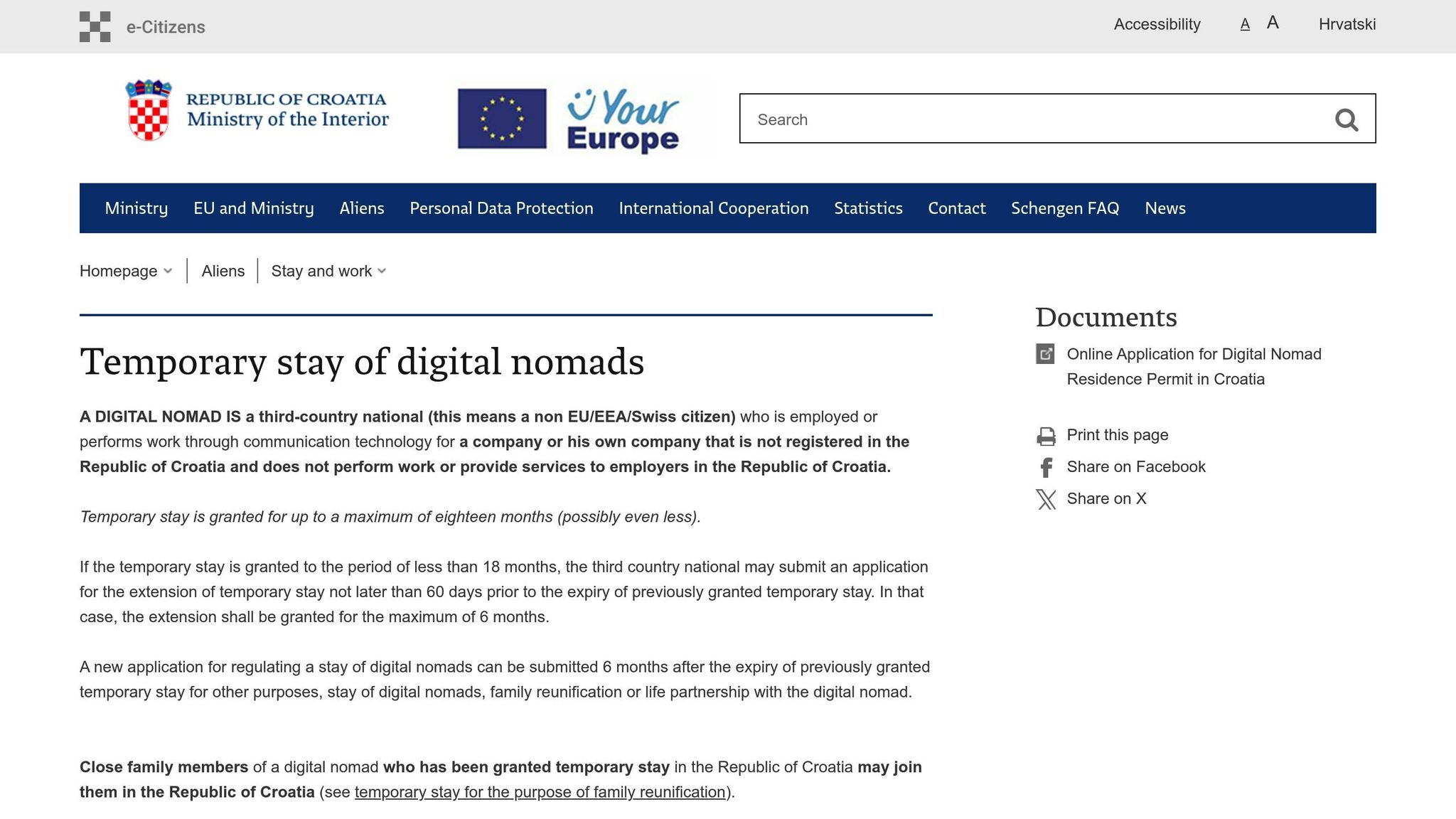
Croatia has carved out a reputation as one of Europe’s most family-oriented digital nomad destinations. Its Digital Nomad Residence Permit covers spouses and minor children, with income requirements increasing by 10% for each additional family member. To include a spouse, applicants must provide either a marriage certificate or proof of a common-law partnership, while children’s applications require birth certificates.
The costs are straightforward: roughly €55.74 per person for the application fee, €93 for a Type D visa, and €41.14 for a biometric residence card. Close family members can apply for temporary residence under family reunification rules. One major perk? Croatia exempts foreign-sourced income from local taxes, allowing digital nomads to maintain their current tax obligations elsewhere without additional Croatian taxes.
Croatia also stands out for its affordability. The cost of living is estimated to be 35–40% lower than in countries like France, making it a budget-friendly option for families. Beyond finances, Croatia offers stunning natural landscapes, historical landmarks, and rich cultural experiences. It’s also known for its safety, political stability, and family-focused benefits like financial assistance and child benefit programs (though these are tied to permanent residency).
For those looking for an English-speaking environment in Europe, Malta offers some compelling advantages.
Malta: Nomad Residence Permit
Malta is an excellent choice for families seeking a base in Europe, especially for English-speaking households. As an EU member state where English is widely spoken, Malta eliminates language barriers – a significant plus for children’s education and day-to-day life. International schools in Malta offer British and American curricula, ensuring a smooth transition for kids from English-speaking countries.
Health insurance is a requirement for digital nomads, but Malta’s modern hospitals and English-speaking medical professionals make healthcare access straightforward. Its small size and strong infrastructure make it easy to navigate, while its Mediterranean location provides easy access to other European countries – perfect for family trips during school vacations.
Malta also boasts mild winters and warm summers, encouraging outdoor activities year-round. Its residency programs are designed to accommodate families, and the country’s business-friendly environment and tax perks add to its appeal. Families seeking opportunities for financial planning or wealth management will find Malta’s setup particularly advantageous.
From Thailand’s long-term visa flexibility and tax perks to Croatia’s affordable European lifestyle and family-focused policies, and Malta’s English-speaking environment and strategic location, each of these destinations has something special to offer. The best choice depends on your family’s priorities, budget, and future plans.
How to Plan Your Family Move
Moving internationally with your family? It’s not just about packing bags and booking flights. You’ll need to think ahead about schools, healthcare, and the emotional toll of such a big transition. Careful planning can make all the difference, especially when taking advantage of family-friendly digital nomad visas.
Planning Your Move
The key to a smooth family relocation is starting early and staying organized. Digital nomad visa applications can take months, especially if you need apostilles or translations. Starting at least six months before your move gives you breathing room for any unexpected delays.
First, gather all the necessary documents for every family member. This includes passports, proof of employment, birth and marriage certificates, and criminal background checks. Don’t forget to secure health insurance that meets the requirements of your destination country.
Here’s a tip from someone who’s been there: Marae from Brave Free Travel shared her experience of moving to Spain with her family. She said:
"Hiring a lawyer familiar with Spain’s Digital Nomad Visa saved us time, stress, and potential mistakes."
If you have kids, researching schools should be a top priority. Educational systems vary widely across countries, and international schools often have long waiting lists. Decide whether you want your kids to attend local schools, which might require language skills, or international schools that follow familiar curricula. For instance, some countries offer English-language options, while others may require your children to adapt to the local language.
Housing is another big consideration. Families typically need larger spaces in residential neighborhoods, not the touristy areas that solo nomads might prefer. Many families start with short-term rentals to get a feel for neighborhoods, assess proximity to schools, and explore local amenities before committing to a long-term lease.
Once you’ve tackled the paperwork and logistics, it’s time to focus on the financial side of things.
Financial Planning for Families
Budgeting for a family move is a whole different ballgame compared to solo travel. While individual nomads might spend $1,000–$2,000 a month, family expenses can be far higher.
A family budget should include costs that solo travelers might not even think about. For example, childcare can be a big expense. In Thailand, childcare costs roughly 35,000 THB (about $1,018) per month, and international school fees are around 20,000 THB (about $570) monthly. Healthcare costs will also increase. For a family of four, health insurance can run about $200 per month.
Don’t forget about the initial setup costs. Beyond the usual gear, you’ll need to budget for extra luggage, additional technology, and insurance. Adding a 25% buffer to your budget is a smart move – it can help cover unexpected expenses like family emergencies or sudden housing needs.
Currency management is another critical piece. Choose banks with low international fees and consider setting up local accounts or using fee-free travel cards.
Lastly, where you choose to live can drastically impact your budget. Tools like Numbeo and Expatistan can help you compare costs of living across different countries, making it easier to select a destination that aligns with your financial goals.
Once your finances are sorted, turn your attention to legal and asset protection planning.
Legal and Asset Protection Planning
Moving internationally brings a whole new set of legal and financial challenges. For families, this can be even more complex with additional dependents and responsibilities.
Start with estate planning. If you have assets in multiple countries, you’ll need valid wills or trusts that work across jurisdictions. Make sure advance directives are recognized in your destination country, and establish financial powers of attorney in case someone needs to manage your affairs.
Taxes are another tricky area. You’ll need to understand your obligations in both your home and destination countries. Research double taxation treaties and foreign asset reporting requirements. For families, professional tax advice is crucial, especially when dealing with dependent deductions or education-related expenses.
If your family has significant assets or complex income streams, consider asset protection strategies. Trust structures, for example, can help manage wealth, reduce taxes, and protect your assets from potential risks like lawsuits or political instability.
For those with substantial financial assets, consulting experts can be a game-changer. Services like Global Wealth Protection can help you navigate offshore company setup, trust structures, and tax minimization strategies, ensuring your family’s financial security while you embrace the nomadic lifestyle.
Finally, don’t overlook digital asset management. Create an inventory of digital assets like cryptocurrency, online businesses, and intellectual property. Store critical documents in secure digital vaults, and make sure your estate planning includes these assets. Cloud storage can be a lifesaver, giving you access to important files anytime, anywhere.
The legal and financial aspects of relocating internationally can be daunting, but with professional guidance, you can protect your family’s interests while enjoying the freedom of a global lifestyle.
sbb-itb-39d39a6
Conclusion
Since 2020, family-friendly digital nomad visas have seen a remarkable rise, with 91% of active programs launched post-pandemic. This surge highlights a shift in how families view work, travel, and lifestyle choices. For the 24% of American digital nomads traveling with children, these visas open doors to balancing careers with the adventure of global living.
Relocating as a family, however, comes with its own set of challenges. Parents must juggle helping their kids adapt to new surroundings, maintaining a steady income, and navigating the often-complicated visa processes.
This is where professional guidance becomes invaluable. Legal experts can help ensure your visa applications meet all the requirements, from income verification to health insurance and tax compliance. Countries like Thailand, Croatia, and Malta have recognized the unique needs of nomadic families, offering smoother visa processes and family-friendly support systems.
Financial readiness is another critical piece of the puzzle. Families should evaluate their preparedness by considering factors like their children’s adaptability, financial stability, and ability to handle uncertainty. As Lulu from Nomadmum wisely puts it:
"If you dare to become a digital nomad family, you’re already braver than 99% of other families."
Start your visa applications early, build a financial cushion covering at least three months of expenses, and consult professionals about taxes and asset protection. Thoughtful planning is key to ensuring your nomadic lifestyle doesn’t jeopardize your financial future.
As these visa programs continue to expand, families will find even more opportunities and support to embrace this lifestyle. With careful preparation, expert advice, and a clear understanding of what to expect, your family can join the growing movement of location-independent households living meaningful, global lives.
FAQs
What should I consider when selecting a digital nomad visa destination for my family?
When picking a digital nomad visa destination for your family, a few key factors should top your list – safety and healthcare. Ensuring access to reliable medical care and choosing a location with low crime rates is crucial for your family’s peace of mind.
You’ll also want to weigh the cost of living, as this can differ greatly depending on where you go. If you have kids, the quality of education options is another important consideration. Beyond the basics, think about how family-friendly the destination is. Does it offer cultural activities, outdoor spaces for kids to play, and a welcoming community that makes settling in easier?
Countries like Portugal, Canada, and Iceland are popular choices for families. They’re known for their safety, strong healthcare systems, and high quality of life. By carefully evaluating these factors, you can create a secure and enriching environment for your family while enjoying the flexibility of the digital nomad lifestyle.
How can I make sure my kids get a good education while living abroad as a digital nomad?
Ensuring your kids get a solid education while living abroad as a digital nomad can feel like a big task, but there are several great options to consider. One popular choice is enrolling them in international schools. These schools often follow well-known curricula like the American, British, or International Baccalaureate (IB) programs. They’re designed with expat families in mind, offering a familiar and consistent learning environment no matter where you are.
Another flexible option is online schooling or distance learning programs. These programs let your children study from anywhere, with courses that are usually accredited and aligned with U.S. or international education standards. This can be especially handy if your family moves frequently.
For a deeper dive into the local way of life, some families opt for local public schools. This approach not only gives kids the chance to pick up a new language but also lets them experience the culture in a way that’s hard to replicate elsewhere. Choosing the right educational path ensures your kids can excel academically while embracing the unique opportunities that come with a nomadic lifestyle.
How can I financially prepare my family for relocating under a digital nomad visa?
Financial preparation for digital nomad visa relocation requires establishing 3-6 months of living expenses as an emergency fund, plus visa-specific financial proof ranging from $2,000-$5,000 monthly income depending on the destination country. Set up international banking with multi-currency accounts, notify banks of travel plans to avoid account freezes, and research cost-of-living differences which can vary 200-300% between locations. Consider tax implications including potential foreign earned income exclusion eligibility and ensure health insurance covers international medical care, as family healthcare costs can be significantly higher abroad without proper coverage.
Financial Planning for a Family Move with a Digital Nomad Visa
When preparing for a family move under a digital nomad visa, it’s essential to start with thorough research. Look into the destination country’s specific requirements, such as minimum income levels and necessary paperwork like tax returns or proof of employment. These details will form the foundation of your planning.
Budgeting is crucial. Make sure to account for living costs, health insurance, education expenses, and an emergency fund. These factors are vital to maintaining financial stability while adapting to a new environment.
Don’t overlook cross-border financial matters, including taxes, banking, and investments. Each country has its own rules, and understanding these in advance can save you from unexpected surprises. For families, additional considerations come into play – like securing health insurance that covers everyone, exploring schooling options for children, and meeting legal residency requirements for dependents.
With careful planning and attention to these details, you can make the transition smoother and set your family up for success in your new home.
