
Managing global payments as a digital nomad can be tricky. Platforms like PayPal and Stripe often fall short with high fees, limited currency support, and slow processing speeds. Thankfully, there are alternatives tailored for freelancers, businesses, and remote professionals working across borders. Here’s what you need to know:
- Wise: Offers transparent mid-market exchange rates, multi-currency accounts, and low fees. Best for freelancers managing personal and business payments.
- Payoneer: Ideal for international freelancers and e-commerce sellers with local receiving accounts and marketplace integrations. Fees can be higher for credit card payments.
- Revolut: Combines personal and business banking with features like expense tracking, crypto support, and multi-currency accounts. Some advanced tools are limited to higher-tier plans.
- Airwallex: Focused on businesses, with competitive exchange rates, multi-currency accounts, and merchant payment processing. Requires formal business registration.
- Veem: Simplifies cross-border payments for businesses with direct bank integrations and invoicing tools.
- Skrill and Neteller: Digital wallets with global reach, but higher fees for large transactions and regional restrictions.
- Crypto Payments: Cost-effective for borderless transactions, but fees and volatility can vary.
Quick Tip: Diversify your payment tools to reduce costs and ensure reliability. Choose platforms based on your transaction needs, location, and client base.
1. Wise
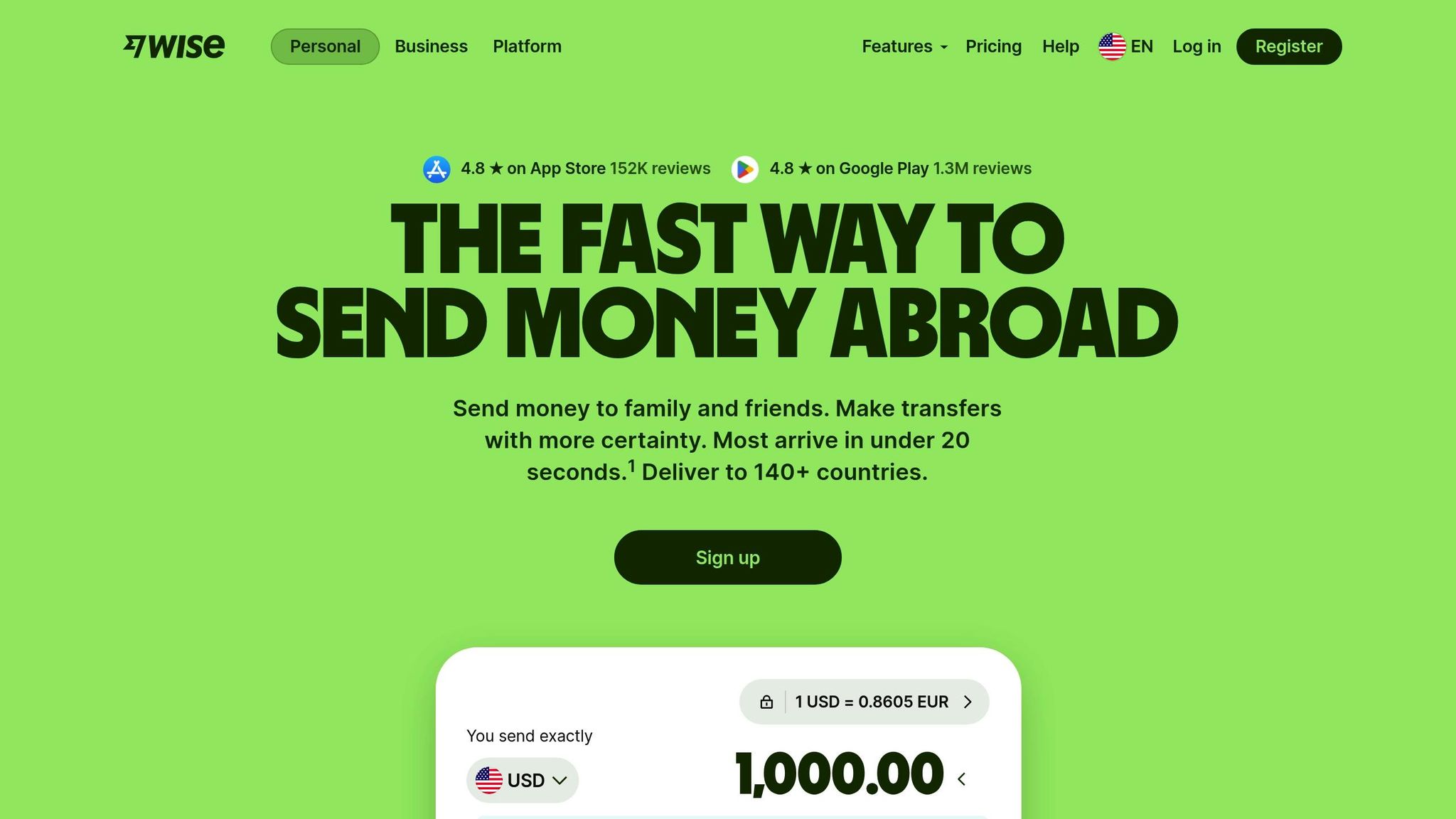
Wise (formerly known as TransferWise) stands out as a go-to platform for digital nomads, thanks to its clear fee structure and use of the mid-market exchange rate. Unlike traditional banks that often tack on hidden markups, Wise ensures transparency in its pricing, charging between 0.35% and 2%, depending on the currency pair and payment method.
Multi-Currency Account Perks
Wise offers a multi-currency account that acts like a local account in over 10 countries. With this feature, you get local banking details for places like the US, UK, European Union, Australia, New Zealand, Singapore, Canada, Turkey, Romania, and Hungary. This setup is a game-changer for avoiding international transfer fees.
For instance, if you’re a US-based freelancer working with a UK client, they can pay you in British pounds using your UK account details. When you’re ready, you can convert those pounds to US dollars at the real exchange rate without worrying about hidden fees.
Payment Tools and Features
Wise doesn’t just stop at multi-currency accounts. Its Wise Business account comes packed with tools like invoicing, batch payments for handling multiple suppliers or contractors, and API integration for businesses needing automated payment solutions. The platform also offers virtual and physical debit cards, enabling you to spend in local currencies wherever you are.
Security and Compliance
When it comes to security, Wise takes no shortcuts. It complies with strict regulations, holding licenses from authorities like the Financial Conduct Authority (FCA) in the UK and FinCEN in the US. To protect your funds, Wise keeps them in segregated accounts, separate from the company’s operational assets, ensuring added peace of mind.
Things to Keep in Mind
While Wise shines in areas like currency conversion and transfers, it’s not a full-fledged merchant payment processor like Stripe. This means you can’t use it to accept customer payments directly through e-commerce websites. Wise is better suited for business-to-business transactions, freelancer payments, and personal money management.
Another limitation is the sending cap, which varies by country. For most verified business accounts, the limit ranges from $1 million to $2 million, which might not meet the needs of larger-scale operations.
2. Payoneer
Payoneer has built a reputation as a trusted partner for cross-border payments, serving over 5.3 million active users globally since its launch in 2005. Headquartered in New York and listed on NASDAQ under the ticker PAYO, the company reported an impressive $949.5 million in revenue for 2024, handling more than $80 billion in transaction volume across 190+ countries and territories. This makes it a go-to option for freelancers and online sellers managing international payments.
Banking Without Borders
Payoneer provides local banking details in key markets like the US, EU, UK, and Japan, eliminating the need for a physical presence. This allows clients to pay you as if you were a local, cutting down on international wire transfer costs and simplifying the payment process.
The platform also supports holding balances in multiple currencies, including USD, EUR, GBP, JPY, CAD, AUD, and CNH. This feature gives users the flexibility to receive payments in their client’s preferred currency and convert funds strategically when exchange rates are favorable.
A Marketplace-Friendly Platform
Payoneer’s integration with major freelance and e-commerce platforms like Amazon, Airbnb, Upwork, Fiverr, eBay, and Walmart adds to its appeal. Payments from these platforms are often processed without additional fees, offering significant savings for freelancers and online sellers who rely on these marketplaces.
Understanding the Fees
Payoneer’s fee structure is clear but varies depending on the transaction type. Standard accounts come with no monthly maintenance fees, though an annual inactivity fee of $29.95 applies if no transactions are made within 12 months (this fee is waived if you receive $2,000 or more annually).
Currency conversion fees range from 0.5% to 2.75% above the mid-market rate. Same-currency withdrawals typically cost around $1.50, while cross-currency withdrawals can incur fees of up to 3%. For those using the Payoneer Mastercard, standard ATM withdrawal and foreign transaction fees apply.
Tools for Businesses
Beyond individual use, Payoneer offers a suite of business-focused tools. These include professional invoicing options and mass payout services. For companies hiring global talent, Payoneer’s Workforce Management service simplifies hiring and payment processes across 160+ countries, ensuring compliance with local labor and tax laws.
Security and Compliance
Payoneer adheres to strict regulatory standards. It is registered as a Money Service Business with FinCEN in the US and as an Electronic Money Institution in the EU. It also holds money transmitter licenses in over 48 US states. Security measures include two-factor authentication, encryption, and fraud monitoring to protect users.
However, it’s worth mentioning that between 2013 and 2018, Payoneer processed transactions that violated OFAC sanctions, leading to fines totaling $2.64 million in 2021. Since then, the company has revamped its compliance processes to meet stricter standards.
Drawbacks to Keep in Mind
While Payoneer simplifies cross-border transactions, its fees for frequent currency conversions can add up. Additionally, it doesn’t support direct merchant payment processing, which may limit its use for some businesses.
3. Revolut Business and Personal
Revolut, a fintech platform based in London, provides tailored financial solutions for both individuals and businesses. With its advanced tools, it’s particularly suited for mobile professionals, including digital nomads, who need to manage cross-border transactions seamlessly.
Personal Accounts for Individual Nomads
Revolut’s personal accounts come in both free and premium tiers, giving users flexibility based on their needs. These tiers adjust features like currency exchange limits and ATM withdrawal allowances, making it easier for digital nomads to handle finances across multiple currencies. This is especially useful for those working and earning in different countries.
Business Solutions for Freelancers and Companies
For businesses, Revolut offers multi-currency accounts with local banking details in key markets such as the US, UK, and EU. The platform also provides tools like customizable payment links, API integrations, and tiered plans designed to accommodate businesses of varying sizes. These features are particularly helpful for digital nomads and freelancers managing international transactions. Additional tools like team management and expense tracking make it a practical choice for businesses with global operations.
Global Reach and Regulatory Compliance
Revolut operates under strict regulatory guidelines, ensuring user security and compliance with local financial standards. In the US, accounts are FDIC-insured, while in Europe, full deposit protection is offered. This commitment to regulatory compliance adds an extra layer of confidence for users relying on the platform for their financial needs.
Advanced Features for Digital Professionals
Revolut includes a range of tools aimed at supporting modern digital professionals. Features like automatic transaction categorization, real-time expense monitoring, and detailed spending analytics make managing finances easier. Business users can issue virtual or physical cards with adjustable spending limits, while mobile app analytics simplify expense tracking. Additionally, integration with popular accounting software helps streamline financial management for businesses.
Limitations and Considerations
While Revolut offers many advantages, it may not meet every user’s requirements. Customer support is primarily app-based, with extended support available only on premium tiers. Some advanced business features, like detailed reporting and multi-user access, are reserved for higher-tier plans. The fee structure for certain transactions can be complex, and merchant processing fees apply to card payments. These factors should be carefully evaluated, especially if additional platforms are being considered.
4. Airwallex
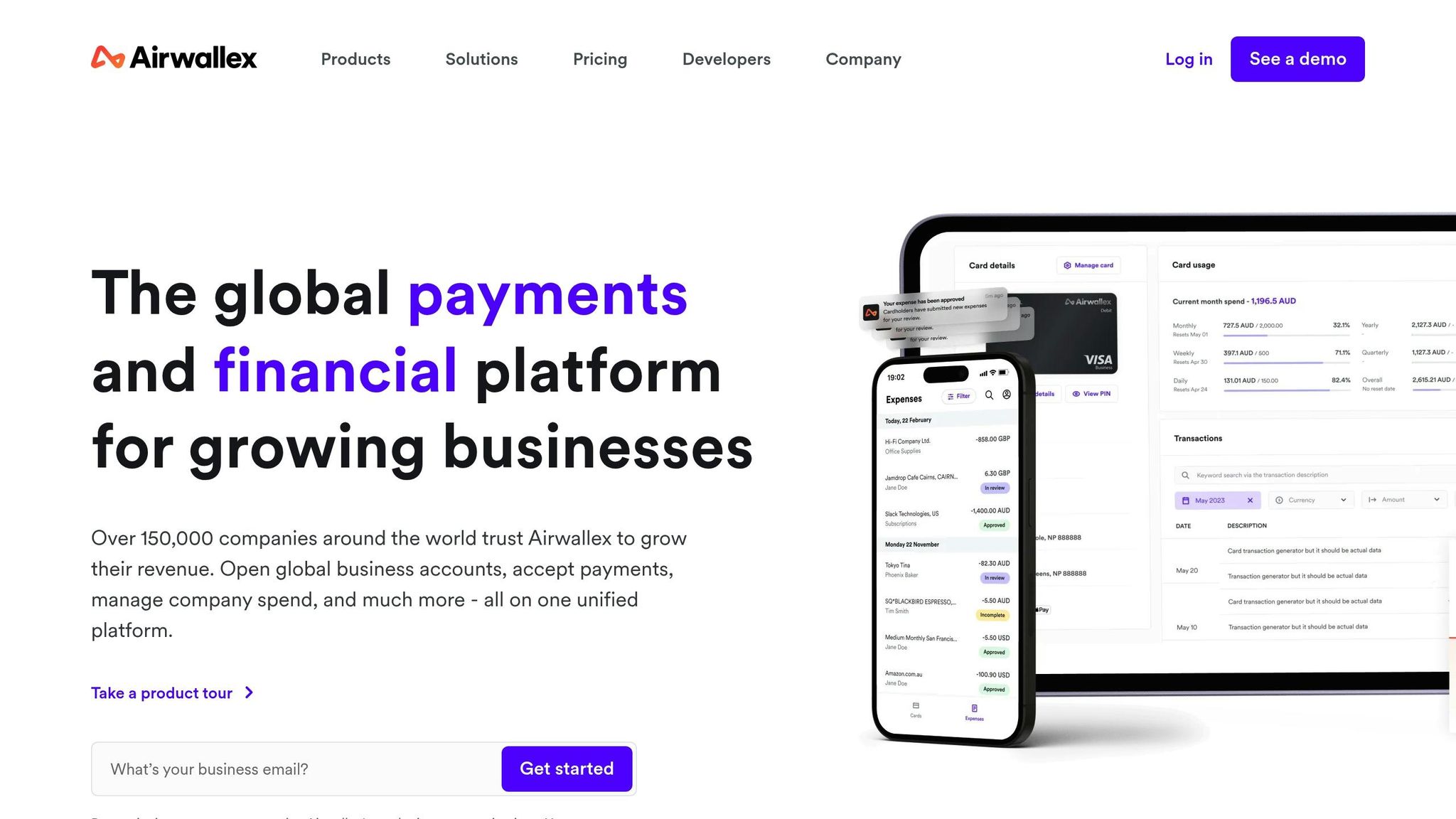
Airwallex provides a financial platform specifically designed for businesses navigating the complexities of international operations. Originally founded in Australia and now headquartered in Singapore, Airwallex tackles the challenges of cross-border payments, offering solutions tailored to the needs of global businesses.
Payment Solutions Designed for Businesses
Airwallex is built with businesses in mind, making it an excellent choice for digital nomads running companies or freelancers managing frequent international transactions. The platform offers multi-currency business accounts with local banking details in several countries, eliminating the need for multiple bank accounts and simplifying financial operations.
Its merchant payment processing system allows businesses to accept payments in a wide range of currencies while settling funds in their preferred currency. This flexibility is particularly useful for digital nomads catering to a global clientele.
Competitive Pricing and Exchange Rates
Airwallex stands out with its transparent fee structure and competitive pricing, making it cost-effective for frequent international transactions. It also provides wholesale foreign exchange rates for higher payment volumes, which can translate into significant savings for businesses handling large-scale cross-border payments.
Seamless Integrations and API Functionality
The platform’s API capabilities integrate effortlessly with popular accounting software like QuickBooks, Xero, and NetSuite. This compatibility helps businesses streamline their financial workflows and simplifies the setup process for managing online operations.
Global Compliance and Market Reach
Airwallex operates within strict regulatory frameworks, ensuring compliance with financial standards across multiple jurisdictions. Its extensive global infrastructure spans key regions, including Asia, Europe, and North America, helping businesses reduce transaction times and costs when dealing with international markets.
Advanced Tools for Complex Financial Needs
For businesses with more sophisticated financial requirements, Airwallex offers advanced treasury management tools to address currency fluctuation risks. Detailed analytics and reporting features provide insights into international payment trends, while the ability to issue virtual and physical cards in multiple currencies gives teams greater control over expenses. These tools are particularly beneficial for digital nomads managing international business operations, ensuring they can handle currency risks effectively.
Potential Drawbacks
While Airwallex delivers robust payment solutions, it does have some limitations. Setting up an account generally requires formal business registration, which may not work for individual digital nomads without a registered business. Additionally, the platform’s advanced features could feel overwhelming for users seeking simpler payment options. Customer support is another consideration, as it’s only available during standard business hours, which might not align with the needs of users in different time zones.
5. Veem
Veem is a payment platform tailored for businesses, offering secure international transactions that cater specifically to digital nomads and remote professionals.
Compliance and Security
Veem operates under strict licensing and regulatory standards, ensuring that every transaction meets top-tier security protocols. This guarantees a trusted environment for handling international payments.
Banking Integrations
Veem simplifies cross-border payments through direct bank integrations. By connecting directly with banks, it ensures secure, seamless, and compliant financial transfers. This feature is especially valuable for remote professionals looking for a dependable way to manage international transactions.
Considerations
Veem’s primary focus on business payments, combined with its emphasis on security, compliance, and efficient banking integrations, makes it an excellent choice for remote professionals handling substantial cross-border payments.
sbb-itb-39d39a6
6. Skrill and Neteller
Skrill and Neteller, both part of the Paysafe Group, are popular digital wallet services catering to various online payment needs. They support multiple currencies and offer international access, making them appealing options for digital nomads.
Fee Structures and Currency Options
Skrill charges fees for currency conversions but allows free fund receipts for bank transfers. While maintaining an account is free, withdrawal fees differ based on the method used. Neteller follows a similar fee model, with costs varying depending on currency pairs and withdrawal methods. Both platforms operate within regulatory standards, ensuring compliance and transparency.
Global Reach and Regulatory Compliance
Both Skrill and Neteller adhere to strict regulatory requirements in multiple regions. Skrill, for instance, is licensed by the Financial Conduct Authority in the United Kingdom and complies with European regulatory frameworks. Neteller holds equivalent credentials, particularly in industries like gaming and entertainment.
However, it’s worth noting that these services may not be available in all regions. For instance, access in the United States is restricted due to regulatory constraints. Digital nomads should confirm service availability in their current or future locations to avoid disruptions.
Banking Features and Merchant Services
Skrill offers features like bank account integration in select markets and supports merchant services, including payment gateways and recurring billing. Neteller, on the other hand, provides a prepaid Mastercard, which can be used for ATM withdrawals and in-store purchases directly from the account balance.
Things to Keep in Mind for Digital Nomads
Both Skrill and Neteller are widely accepted on online marketplaces and freelance platforms. However, there are some limitations to consider. Business banking features are somewhat restricted, fees can be higher for large transactions, and geographic restrictions or strict account monitoring might pose challenges for frequent travelers. Be sure to review the terms and conditions to ensure the platform aligns with your specific needs.
7. Crypto Payments and Stablecoins
For digital nomads navigating international transactions, cryptocurrency payments offer a modern solution. These payments provide flexibility and cost efficiency, making them an attractive alternative to traditional banking. With the total market value of cryptocurrencies exceeding $2.7 trillion, crypto payments bring advantages like borderless transfers and independence from conventional financial systems.
Transaction Costs and Network Considerations
Bitcoin transaction fees typically range from $0.50 to $2.50, but they can skyrocket during times of high network activity. For instance, fees once surged to $127.97 during a network congestion event. To address such fluctuations, Layer 2 scaling solutions like the Lightning Network for Bitcoin and platforms like Optimism and Arbitrum for Ethereum handle transactions off the main blockchain. This approach dramatically lowers both costs and processing times. These advancements pave the way for stablecoins, which combine reliable pricing with the benefits of cross-border payments.
Stablecoins and Payment Processing
Stablecoins are designed to maintain consistent value while enabling smooth global transactions. Leading payment processors have started integrating cryptocurrency options. For example, PayPal’s "Pay with Crypto" feature charges a 0.99% transaction fee, which is up to 90% cheaper than traditional international credit card fees. Additionally, crypto payment gateways simplify the process for merchants by instantly converting cryptocurrency into fiat currency, removing the need for direct crypto handling. Integrated platforms further enhance this process, making transactions even more efficient.
Global Accessibility and Banking Integration
Beyond cost savings, blockchain transactions offer unique benefits like irreversibility, which protects merchants from chargebacks. Meanwhile, the integration of cryptocurrencies into unified payment platforms is expanding rapidly. These platforms bridge the gap between fiat and digital payments, streamlining cross-border commerce and cutting down fees. Companies like B2BINPAY highlight the growing adoption of crypto payments, having processed $5.1 billion in incoming transactions and completed 6.7 million transactions by 2025. This demonstrates the increasing scale and practicality of cryptocurrency in global commerce.
Pros and Cons
Here’s a quick look at how each platform stacks up when it comes to meeting the global transaction needs of digital nomads.
Wise is known for its straightforward mid-market currency conversion with no hidden fees, making it a budget-friendly option for frequent currency exchanges. On the downside, it falls short when it comes to advanced business tools like local receiving accounts or integrations with online marketplaces.
Payoneer stands out for its extensive global reach and seamless marketplace integrations, which are great for freelancers and small businesses. However, it comes with higher costs – credit card payments can incur fees as high as 3.99%, and currency conversion markups range from 0.5% to 2% above base rates.
Revolut shines with its consumer-oriented features, such as budgeting tools and crypto support, making it a good fit for digital nomads managing smaller transactions or looking for an all-in-one solution for personal and business banking. That said, its relatively new business banking setup might not meet the needs of users requiring more mature enterprise features.
Here’s a simplified breakdown of the platforms:
| Platform | Key Strength | Main Limitation |
|---|---|---|
| Wise | Transparent mid-market conversion | Limited advanced business features |
| Payoneer | Global reach and marketplace integrations | Higher transaction fees (up to 3.99%) |
| Revolut | Consumer features and crypto support | Newer business infrastructure |
Each platform brings something different to the table for managing cross-border finances. The choice ultimately depends on your transaction volume, geographic focus, and specific business needs. Consider these factors carefully to find the best alternative to PayPal and Stripe for your financial operations.
Conclusion
Choosing the right payment processor depends largely on your role and specific financial needs as a digital nomad. Here’s how to align each platform with your situation:
If you’re a freelancer working with international clients, Wise is an excellent choice. Its transparent mid-market exchange rates and low fees make it ideal for managing income across multiple currencies without constant conversion expenses.
For agencies and service providers managing high transaction volumes, Payoneer stands out. While its fees are higher, the platform’s local receiving accounts in major markets like the US, UK, and EU make it a strong option for scaling operations. The convenience and faster processing it offers can outweigh the cost.
E-commerce sellers should explore Airwallex or Veem. Both platforms offer advanced tools like recurring billing and automated invoicing, which are crucial for online retail. Additionally, their competitive rates on larger transactions can help you save on operational costs.
For US-based nomads, it’s important to stay compliant with tax regulations. If your foreign financial accounts exceed $10,000, you’ll need to report them via FBAR. Additionally, make sure to convert international payments to USD on the payment date for accurate reporting.
Take time to review your transaction patterns and pinpoint areas where you could cut 3-5% in fees from currency conversions, transaction charges, and withdrawal costs.
Diversifying your payment methods is another smart strategy. Relying on two or three platforms not only provides backup during outages but also allows you to choose the most cost-effective option for different transaction types.
While crypto-based payment solutions are gaining popularity among tech-savvy nomads, platforms like Wise and Payoneer still deliver the reliability and regulatory compliance that most businesses need for smooth and secure operations.
Ultimately, evaluate your unique transaction needs to select the platform – or combination of platforms – that best supports your international financial goals.
FAQs
What are the benefits of using platforms like Wise and Payoneer instead of PayPal or Stripe for digital nomads?
Platforms like Wise and Payoneer bring distinct perks for digital nomads, standing out compared to traditional options like PayPal or Stripe. One major benefit is their lower fees for international transfers, which can be a game-changer when managing money across borders. Plus, their support for multi-currency accounts helps cut down on conversion costs and streamlines handling payments in different currencies.
These platforms also tend to be more accessible in various regions, with fewer usage restrictions, making them a reliable option for those on the move. On top of that, they emphasize security in global transactions, giving users confidence when managing finances across multiple countries. For digital nomads, the combination of quicker transfers and flexible account management tools makes these platforms a smart fit for a lifestyle that thrives on mobility.
What factors should digital nomads consider when choosing a payment processing platform that fits their needs and transaction volumes?
Digital nomads have unique financial needs, so choosing the right payment processing platform is crucial. Start by looking at your transaction volume. If you process a lot of payments, a flat-rate subscription model might save you money. On the other hand, if your transactions are less frequent, a platform with per-transaction fees could be a better fit.
You’ll also want to examine the platform’s currency options and fee structure. For those dealing with international clients or multiple currencies, it’s important to find a platform that offers competitive exchange rates and keeps conversion fees low. If your work involves cryptocurrency payments or advanced e-commerce features, make sure the platform supports those needs as well.
In short, focus on platforms that align with your transaction habits, have clear pricing, and offer the tools you need to manage your finances easily – no matter where you are in the world.
What challenges come with using cryptocurrency for international payments, and how can digital nomads address them?
Cryptocurrency has opened up new possibilities for international payments, offering flexibility and convenience. However, it’s not without its challenges. Issues like price volatility, irreversible transactions, and a lack of legal protections can make using crypto risky, potentially leading to unexpected financial setbacks or complications.
To navigate these challenges, digital nomads can take a few smart precautions. Using stablecoins is a great way to avoid the rollercoaster of crypto price swings. Opting for reliable exchanges with robust security measures can help safeguard your funds. Additionally, keeping thorough transaction records ensures you’re staying compliant with local laws. By following these practices, you can tap into the benefits of crypto payments while keeping the risks in check.
