
Estonian e-Residency offers digital entrepreneurs the ability to manage an EU-based company online, but it’s not the all-in-one solution many expect. While it simplifies some aspects of business operations, common challenges include:
- Tax complexities: It doesn’t grant tax residency, and users often face double taxation or compliance issues with international tax laws.
- Banking hurdles: Accessing EU banking services can be tough, with many banks requiring in-person visits or additional documentation.
- Regulatory barriers: Certain industries need additional licenses, and upcoming 2025 rules will make it harder to qualify for EU VAT IDs without a local presence.
- Operational limitations: Managing physical goods, hiring internationally, and complying with local laws often complicate daily business tasks.
For non-EU citizens, these challenges are even more pronounced, adding extra layers of complexity. While e-Residency works well for specific business models, it demands careful planning and professional guidance to avoid costly mistakes.
What Estonian e-Residency Actually Provides
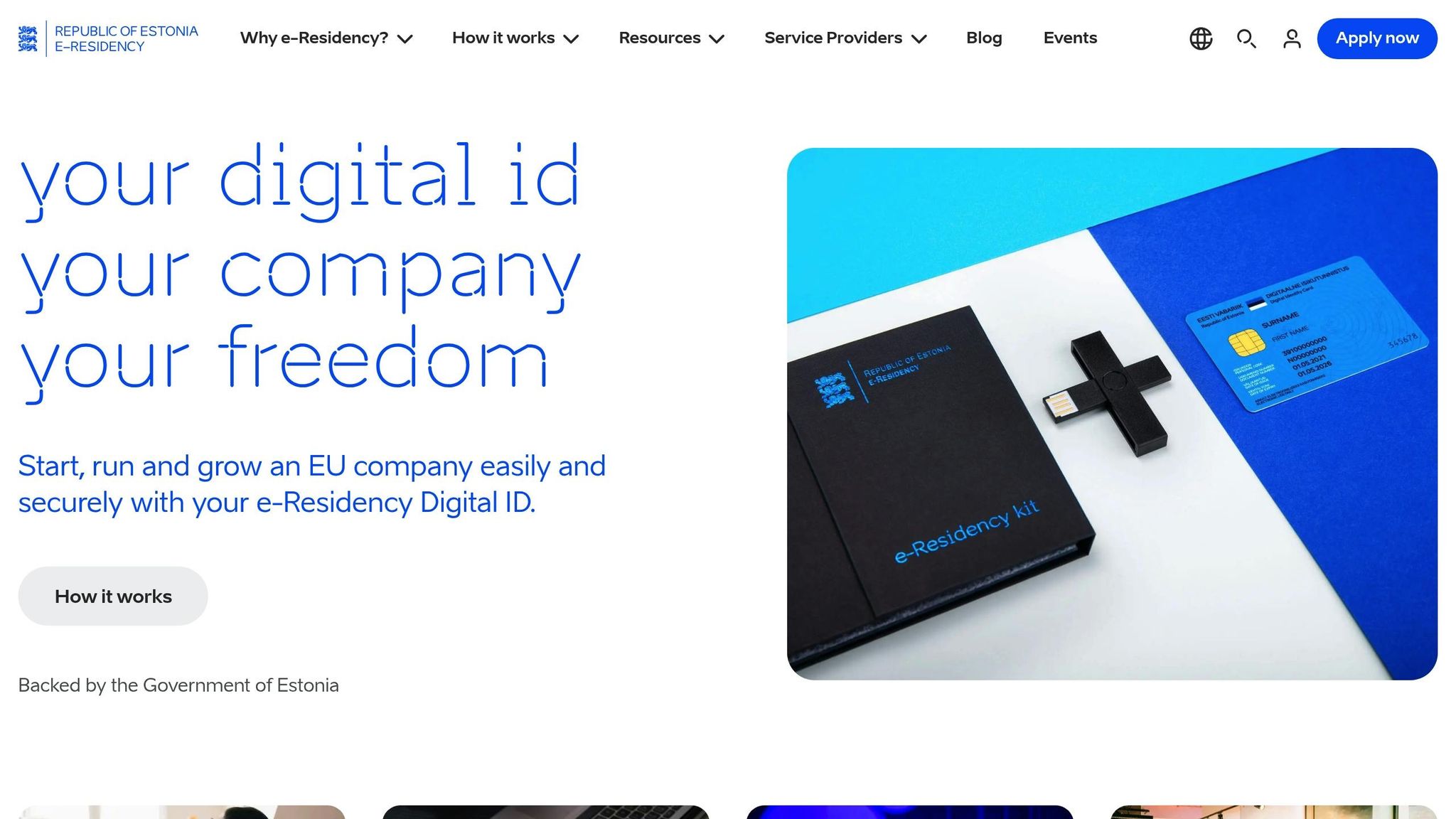
Estonian e-Residency is a digital identity program designed to give non-residents access to Estonia’s online government services and the ability to register an EU-based company. It’s important to note that this program grants a secure digital ID for online services – it does not provide physical residency, citizenship, or the right to live in Estonia.
The program was developed to support borderless entrepreneurship, making it easier for global entrepreneurs to access the EU’s single market through Estonia’s efficient digital infrastructure. It’s a way to do business in Europe without needing to physically be there or deal with complex bureaucratic hurdles.
Core Features of e-Residency
The e-Residency program offers a suite of digital services that align with Estonia’s paperless approach to governance. At its core is the e-Residency card, which allows for secure digital authentication. This card enables certified digital signatures, identity verification, and access to Estonia’s online services.
One of the standout features for entrepreneurs is the ability to establish and manage an Estonian private limited company (OÜ) entirely online. The process – registering with Estonia’s Commercial Register, obtaining a company registration number, and setting up the legal framework for operating in the EU – can be completed in just a few hours to a couple of days.
Once your company is set up, you can handle all operations online, including filing reports, submitting tax declarations, and managing documents. Beyond the convenience, having an Estonian company gives you access to EU market opportunities. You can conduct business across all EU member states, issue invoices with EU VAT numbers (though recent changes have introduced some limitations), and potentially take advantage of EU trade agreements.
Banking integration is another key feature, but it’s not always as seamless as it sounds. While the program provides pathways to banking services, navigating this aspect can be more challenging than expected. Despite its strengths, there are several misunderstandings about what e-Residency truly offers.
Common Myths About e-Residency
Understanding what e-Residency does and doesn’t provide is crucial, as many misconceptions about the program persist.
One common myth is that e-Residency grants tax residency or citizenship in Estonia. However, the program is strictly designed for online business operations. It doesn’t allow you to live or work in Estonia, nor does it automatically make you an Estonian tax resident. Your tax obligations depend on where you live and conduct your business activities.
Another misconception is that forming an Estonian company means you’ll only pay Estonian corporate taxes. In reality, international tax laws determine tax residency based on factors like where you spend most of your time, where your economic ties are strongest, and where your business is managed. Simply having an Estonian company does not exempt you from tax responsibilities in your home country.
Some believe e-Residency guarantees easy access to banking services across Europe. While it does open doors, many international banks are cautious about working with e-Resident companies, particularly those owned by non-EU citizens. This can make securing banking services more complex than anticipated.
There’s also a belief that e-Residency ensures complete business freedom within the EU. While it does simplify many aspects of running a business, certain industries – like financial services, healthcare, and some professional services – require additional licenses, local presence, or compliance with specific regulations. An Estonian company alone won’t automatically meet these requirements.
Lastly, the idea that e-Residency is a universal solution for all international businesses is misleading. While it’s a great fit for some entrepreneurs and business models, it’s not suitable for everyone. Factors like your business type, target markets, tax situation, and ability to navigate regulatory requirements all play a role in determining whether e-Residency is the right choice for you.
Main Problems Digital Nomads Face with e-Residency
Estonian e-Residency offers digital nomads the allure of seamless business operations, but it also comes with a host of challenges. These hurdles arise from the complex interplay of international tax laws, banking regulations, and the realities of managing a business while constantly on the move. Let’s dive into the key issues.
Tax Residency Problems
One of the most common misunderstandings among digital nomads is equating e-Residency with tax residency. These are entirely separate concepts, and confusing them can lead to serious headaches.
Your tax residency is based on where you live, work, and maintain financial ties – not where your company is registered. For instance, if you’re a U.S. citizen running an Estonian company while traveling, the IRS still expects you to pay taxes on your worldwide income. The fact that you hold an Estonian digital ID doesn’t change that.
This misunderstanding can lead to double taxation. You might end up paying corporate taxes in Estonia while also owing personal income taxes in your home country or in countries where you spend significant time. While Estonia has tax treaties with many nations, navigating those agreements often requires specialized knowledge.
Then there’s the 183-day rule, which complicates matters further. Many countries consider you a tax resident if you spend 183 days or more within their borders in a year. But what if you spend 100 days in Thailand, 90 in Portugal, 80 in Mexico, and the rest scattered elsewhere? You might assume you’re off the hook for tax residency, but some countries have rules that could still tie you to tax obligations.
Substance requirements are another growing concern. Tax authorities are increasingly scrutinizing businesses that lack a genuine presence in their country of registration. If you’re running an Estonian company but managing everything from your laptop in Bali, authorities in other countries might argue that your business should be taxed where it’s actually operated – not in Estonia.
Banking and Financial Access Problems
Taxes aren’t the only hurdle. Accessing financial services as a digital nomad can be a logistical nightmare, even with Estonia’s digital business solutions. Banking regulations often clash with the nomadic lifestyle.
Many banks require in-person account opening and enforce geographic restrictions. Estonian banks like LHV and Swedbank have tightened their policies, often demanding physical presence, detailed business plans, proof of real operations, and even local references. Additionally, account usage is sometimes restricted to specific regions, and frequent international logins can trigger freezes, disrupting your ability to make payments.
The compliance burden is heavier than ever. Banks now demand extensive documentation about your business activities, the source of your funds, and your travel patterns. Under the Common Reporting Standard (CRS), Estonian banks are required to share your account details with tax authorities in your country of tax residency – assuming they can figure out where that is.
Even payment processors like Stripe and PayPal come with their own set of challenges. Geographic restrictions and compliance requirements can block access. Just because you have an Estonian company doesn’t mean you’ll automatically gain access to all EU-based payment services, especially if you’re working outside the EU.
Legal and Business Restrictions
Running a business through Estonian e-Residency comes with legal constraints that can limit its practicality for digital nomads.
Physical presence requirements can be a roadblock. While you can register your company online, certain activities – like opening specific business accounts, signing major contracts, or addressing legal disputes – often require you to be physically present or have local representation.
Professional licensing restrictions can also limit your options. Regulated professions often require local licenses, and having an Estonian company doesn’t exempt you from those requirements abroad.
The promise of EU market access isn’t as straightforward as it seems. While having an EU-based company offers certain advantages, doing business in specific EU countries often requires additional registrations, local tax IDs, or compliance with country-specific rules. For example, selling services to German clients might require you to register for German VAT and comply with German commercial laws.
Intellectual property (IP) complications can arise if you’re creating or managing IP while traveling. Where was your software developed? Which country’s laws protect your copyrights or trademarks? If you’re writing code in Vietnam, managing a team in the Philippines, and selling to U.S. clients via your Estonian company, determining IP ownership and protection can become a legal maze.
Employment law issues also crop up when hiring team members. Estonian labor laws apply to employees of Estonian companies, but hiring someone in Brazil or Poland means navigating their local employment regulations, social security systems, and tax requirements. Many nomads find that their simple Estonian company setup isn’t equipped to handle international hiring.
Finally, data protection and privacy compliance adds another layer of complexity. As an Estonian company, you’re subject to GDPR, but working from countries with entirely different data protection laws can create compliance challenges. Managing client data across multiple jurisdictions requires careful legal planning – something the e-Residency program doesn’t fully address.
All these legal challenges reveal why Estonian e-Residency might not live up to its promise of effortless global mobility for digital nomads.
New Rules and Changes Coming in 2025
Estonia’s e-Residency program is set to undergo major updates in 2025, bringing changes to costs, access, and overall benefits. These adjustments could present new hurdles for digital entrepreneurs, particularly in terms of finances and regulations.
Higher Costs and Added Restrictions
Starting in 2025, digital nomads will see increased fees and stricter administrative processes. Costs related to registration, notarization, and documentation are expected to rise. Additionally, enhanced verification measures may lead to longer processing times for some applicants. New annual reporting and tax compliance requirements could mean hiring local professionals, which adds to the overall expense. On top of that, changes to corporate income tax on distributed profits may place a heavier tax burden on those frequently withdrawing profits from their businesses.
Loss of EU VAT IDs for e-Resident Companies
A significant change will impact VAT registration. Later in 2025, non-EU e-residents who own Estonian companies will face tougher rules for obtaining an EU VAT identification number. To qualify, businesses must show clear economic activity in Estonia, such as maintaining a local office, employing staff, or having a customer base in the country. Without an EU VAT ID, businesses may struggle with managing VAT for cross-border transactions and invoicing EU-based clients, leading to increased administrative complexity.
Transition Rules for Current e-Residents
Existing e-residents will have a transition period to maintain their current VAT registration if they meet the older requirements. However, they’ll eventually need to comply with the new criteria. Companies that fail to meet these updated standards by the end of the transition period risk losing their VAT registration. Regular reviews will ensure companies demonstrate adequate local presence. For those looking to avoid these stricter rules, transferring company registration to another EU country might be an option. However, this process could involve legal assistance and additional costs.
These upcoming changes mark a shift in Estonia’s e-Residency program. What was once seen as a seamless solution for borderless business is evolving into a more regulated framework, reflecting the growing complexities of running a digital business in today’s world.
sbb-itb-39d39a6
Real-World Problems with e-Residency
While regulatory and banking hurdles are significant, they’re just the tip of the iceberg. Day-to-day operational challenges often make managing a business through Estonian e-Residency far more complex than it initially seems.
Daily Business Challenges
For digital nomads running an Estonian company, routine business tasks can quickly become headaches. Banking is a prime example. While setting up a company online is straightforward, opening a business bank account often isn’t. Many banks require either an in-person visit or a lengthy remote verification process.
Without a proper business account, essential transactions can be delayed. Some entrepreneurs resort to using personal accounts temporarily, but this can lead to compliance issues down the line.
Payment processing adds another layer of complexity. Many payment processors either require a local bank account or impose higher fees on businesses without a robust local presence. This can disrupt cash flow and make collecting payments from international clients more cumbersome.
For businesses dealing with physical goods, the challenges grow even more. Import and export logistics can be a nightmare to manage remotely. Customs documentation, VAT compliance, and product liability are just a few of the issues that often require local expertise. On top of that, time zone differences can delay resolving urgent matters like shipping or customs clearances.
Accounting and bookkeeping are no walk in the park either. Estonian tax regulations come with their own documentation standards, which can differ significantly from those in other countries. Handling multiple currencies and international transactions only adds to the complexity, often requiring more resources than expected to maintain compliance.
These operational hurdles are even more pronounced for non-EU citizens, who face additional challenges.
Why Non-EU Citizens Struggle Most
Non-EU citizens often find themselves dealing with extra layers of difficulty when it comes to Estonian e-Residency. Beyond the standard program limitations, specific restrictions can make things more complicated for them compared to their EU counterparts.
For starters, visa and travel constraints are a major issue. E-Residency provides a digital identity, but it doesn’t grant physical residency or travel rights. Non-EU digital nomads still need the appropriate visas to work in EU countries, which can make face-to-face meetings or business-related tasks requiring physical presence much harder to coordinate.
Opening a business bank account can also be more challenging. Non-EU citizens often have to meet additional documentation requirements, which can drag out the process significantly.
Taxation is another area where non-EU e-residents face disadvantages. Unlike EU citizens, they may not benefit from certain tax treaties. This increases the risk of double taxation, where the same income is taxed in multiple jurisdictions, making careful tax planning a necessity.
Looking ahead, upcoming regulatory changes in 2025 could create further obstacles. New rules will require businesses to demonstrate economic activity in Estonia, which might be difficult for nomadic entrepreneurs to fulfill. This could limit their eligibility for certain benefits tied to the program.
With these compounded challenges, seeking professional assistance becomes less of an option and more of a necessity.
Why You Need Professional Help
Navigating the complexities of Estonian e-Residency, coupled with international tax rules and cross-border regulations, is no small feat. Trying to manage it all on your own can lead to costly mistakes.
Effective tax planning requires a deep understanding of Estonian corporate tax laws, the tax rules in your home country, and any other local regulations that apply. Juggling multiple jurisdictions often calls for specialized expertise to avoid missteps.
Compliance is another area where things can go wrong. Missing filing deadlines, mishandling VAT registrations, or submitting incorrect documentation can lead to penalties. Professional oversight ensures these details are managed correctly.
Experts can also help you evaluate whether Estonian e-Residency is even the right fit for your business. In some cases, alternative business structures may be simpler and more cost-effective, reducing the burden of regulatory and compliance issues.
At Global Wealth Protection, we focus on helping digital entrepreneurs navigate these intricate international business structures. Instead of offering a one-size-fits-all solution, we work to craft a business framework tailored to your operational needs and long-term goals. With the right guidance, you can avoid costly errors and streamline your tax and compliance strategies.
Pros and Cons of e-Residency
Understanding the benefits and limitations of e-Residency helps reveal whether it’s the right fit for your business.
Advantages of e-Residency
Estonia’s e-Residency program offers several perks, especially for digital entrepreneurs. Its advanced digital infrastructure makes administrative tasks much easier.
You can manage a company based in the EU entirely online, no matter where you are. This eliminates the need for a physical presence in daily operations.
Another standout feature is Estonia’s corporate tax system. Profits are only taxed when distributed as dividends, giving you the freedom to reinvest earnings into your business without immediate tax obligations.
Having access to the EU single market enhances your business’s credibility with European clients and partners. An EU business address can help you connect with payment processors, secure funding, and build relationships that might otherwise be difficult to establish.
The program is particularly well-suited for certain types of businesses. Solopreneurs, freelancers, and small companies in fields like IT, marketing, publishing, and consulting often find this digital-first approach aligns perfectly with their needs. The reduced bureaucracy compared to traditional setups is a significant advantage.
For cryptocurrency and blockchain startups, Estonia’s forward-thinking stance on digital currencies provides a supportive regulatory environment.
However, these benefits come with notable challenges that entrepreneurs must consider.
Disadvantages of e-Residency
Despite its advantages, e-Residency has its share of challenges. Banking restrictions and the complexity of managing taxes across multiple jurisdictions often require ongoing expert support.
The 2025 regulatory changes could further complicate things. New rules will require businesses to demonstrate economic activity within Estonia, introduce higher costs, and remove EU VAT ID eligibility for many e-resident companies. These changes are expected to create additional barriers for businesses.
There are also operational challenges to consider. Time zone differences can slow down urgent matters, payment processing fees may be higher, and managing physical goods becomes significantly harder when operating remotely.
For non-EU citizens, additional hurdles exist. These include visa requirements for EU travel, extra documentation for banking, and limited access to certain tax benefits, all of which add layers of complexity.
Weighing the pros and cons side by side can help clarify these trade-offs.
Side-by-Side Comparison
| Advantages | Disadvantages |
|---|---|
| Simplified digital administration | Banking access often requires in-person visits or long processes |
| Manage an EU-based company from anywhere | Complex tax obligations across jurisdictions |
| Corporate tax applies only to distributed dividends | 2025 regulatory changes may increase costs and restrictions |
| Access to EU single market and payment processors | Higher fees for payment and banking services |
| Ideal for IT, consulting, and digital businesses | Time zone differences can delay urgent tasks |
| Favorable cryptocurrency and blockchain regulations | Extra restrictions for non-EU citizens |
| Builds credibility with European clients | Requires ongoing expert assistance |
| Reduces bureaucracy for routine tasks | Managing physical goods is more complicated |
While e-Residency offers a range of benefits for digital entrepreneurs, it also comes with challenges that need to be carefully evaluated based on your business model and goals.
Conclusion: Should You Get Estonian e-Residency?
Estonian e-Residency isn’t the one-size-fits-all solution many digital nomads might hope for. While it does provide real advantages for specific business models, it also comes with limitations that can trip up entrepreneurs who don’t fully understand its scope.
The upcoming changes in August 2025 strip away one of the program’s major draws: EU VAT IDs for companies without a substantial presence in Estonia. This shift makes e-Residency
"non-viable for digital nomads, at least those digital nomads which plan to invoice at least one customer in the EU".
For many entrepreneurs, this adjustment significantly reduces the appeal of the program.
Additionally, non-EU citizens face extra challenges, such as the absence of physical residency rights and navigating complex tax rules. These hurdles often require professional expertise to avoid missteps. The reality is that e-Residency demands ongoing attention, and managing these obligations can become time-consuming and costly.
Before diving into e-Residency, take a step back to evaluate your business needs. Does your business model rely heavily on access to the EU market? Are you prepared to handle the regulatory and tax changes on the horizon? These are critical questions to answer before committing.
If you’re uncertain about how e-Residency fits into your international business strategy, seeking advice from experts who understand the global regulatory landscape is a smart move. Services like Global Wealth Protection can help you align your business structure with international compliance requirements, saving you from potential pitfalls.
The bottom line? Make your decision based on a clear understanding of your specific needs and goals – not on the program’s marketing promises. A well-informed approach will save you headaches down the road.
FAQs
What tax challenges should digital nomads be aware of with Estonian e-Residency?
Digital nomads using Estonia’s e-Residency program often encounter a range of tax complexities. A major concern is tax residency. Just because you’ve registered your business in Estonia doesn’t mean your taxes will automatically be managed there. Your personal residency and the amount of time you spend in other countries could mean you’re liable for taxes elsewhere. This situation might even lead to double taxation, unless there’s a treaty in place to prevent it.
On top of that, recent regulatory shifts have affected some of the program’s perks. For instance, in certain cases, Estonian companies may no longer be eligible for an EU VAT ID, which can create hurdles for digital nomads conducting business across borders. To navigate these challenges effectively, it’s crucial to work with a tax professional who can tailor advice to your unique situation.
How might future regulatory changes affect the benefits of Estonian e-Residency for non-EU citizens?
While we can’t pinpoint the exact regulatory shifts that might occur in 2025, it’s clear that the advantages of Estonian e-Residency depend heavily on both Estonia’s policies and international regulations. Adjustments to tax laws, banking standards, or residency requirements could influence how non-EU citizens leverage the program to run their businesses.
If you’re thinking about applying for e-Residency, it’s smart to keep up with announcements from the Estonian government. Pair that with advice from a professional who can guide you through any potential changes and how they might affect your plans. This way, you can ensure the program remains a good fit for your goals as a digital nomad or entrepreneur.
What types of businesses benefit most from Estonia’s e-Residency program, considering its limitations?
Estonia’s e-Residency program is a great option for entrepreneurs aiming to tap into the EU market without the need to physically relocate. It’s especially appealing for businesses with a fully online presence, like consulting firms, IT services, or e-commerce ventures, where a digital-first approach aligns perfectly with the program’s offerings.
That said, it’s crucial to be aware of its limitations. While the program simplifies the process of setting up and running an EU-based company, hurdles like restricted access to banking, tax residency issues, and navigating international regulations can pose challenges for certain types of businesses. Take the time to assess your business needs carefully to see if this program aligns with your goals.
