
Latin America is becoming a go-to destination for remote entrepreneurs seeking residency options. Why? Short flights from the U.S., tax systems that often exclude foreign income, and affordable living costs make it a practical choice. Countries like Panama, Paraguay, and El Salvador offer residency programs with perks like minimal physical presence requirements, pathways to citizenship, and significant tax savings.
Here’s a quick breakdown:
- El Salvador: Digital Nomad Visa ($1,460/month income requirement, Bitcoin-friendly, family-inclusive).
- Panama: Friendly Nations Visa ($5,000 bank deposit, minimal presence needed) or Business Investor Visa ($160,000 investment).
- Paraguay: Permanent Residency Program ($70,000 investment for a 3-year pathway to citizenship).
These programs are designed to provide flexibility for entrepreneurs earning income internationally, with benefits like reduced taxes, modern infrastructure, and thriving communities. Whether you’re after lower costs, tax advantages, or long-term residency, Latin America offers tailored solutions for remote professionals.
Top Latin American Residency Programs for Remote Entrepreneurs
Latin America has become a hotspot for remote workers and entrepreneurs, offering residency programs tailored to their unique needs. These programs come with varying requirements, benefits, and timelines, making it easier to find one that aligns with your lifestyle and business goals. Below is a closer look at some of the standout options.
El Salvador Digital Nomad Visa
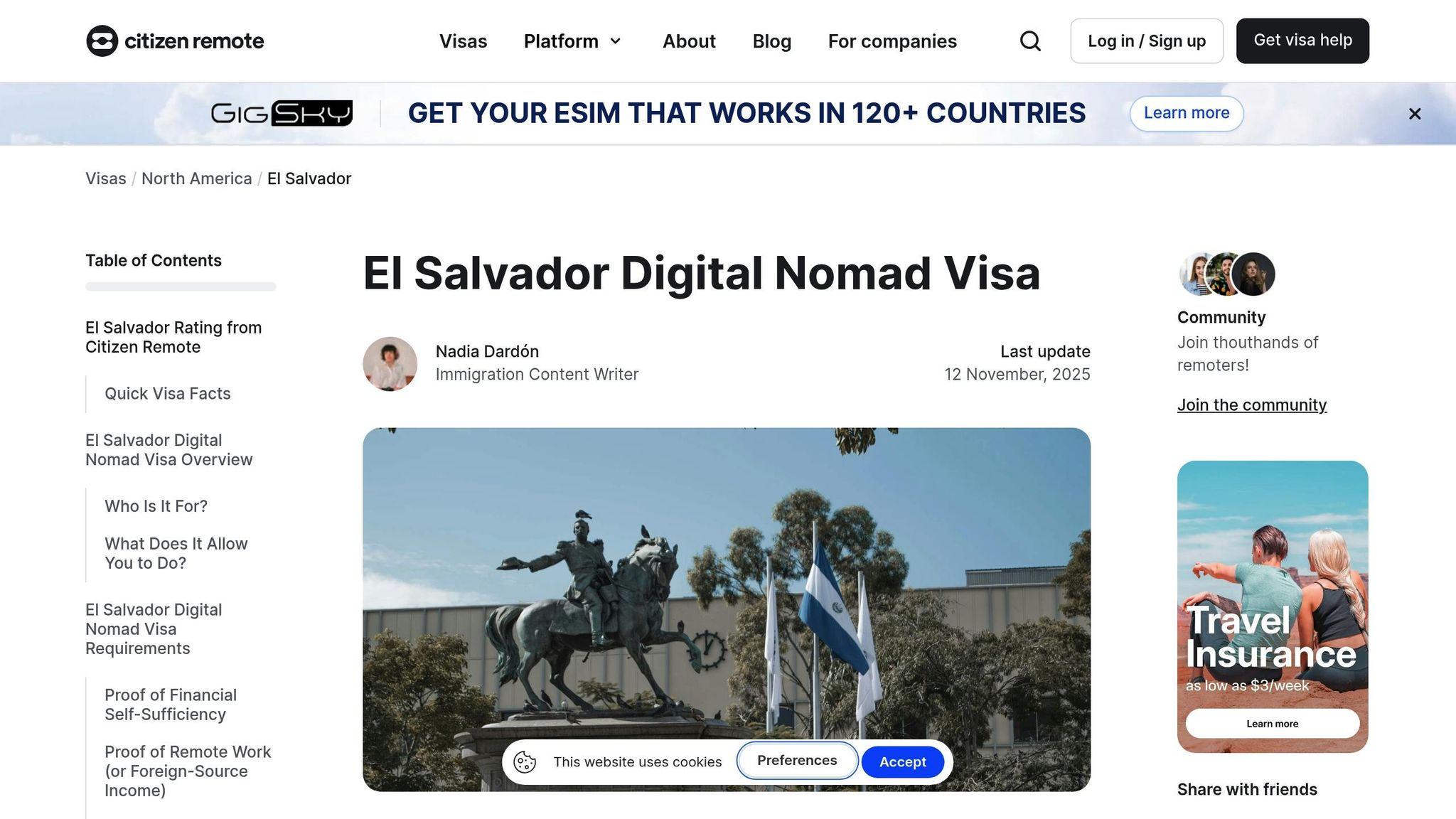
El Salvador introduced its digital nomad visa in April 2025, aiming to attract remote workers and their families. The visa starts with a term of one to two years and can be renewed for up to four years, making it a great choice for those seeking medium-term residency without a long-term commitment.
The income requirement is $1,460 per month, making it more accessible than many similar programs globally. To apply, you’ll need proof of remote work, a valid passport, health insurance in El Salvador, and a clean criminal record. The application process is straightforward, and the country has actively positioned itself as a top destination for digital nomads.
El Salvador has made significant strides in reducing violent crime and improving its infrastructure, including better Wi-Fi in major cities and tourist areas. The country’s acceptance of Bitcoin as legal tender is another draw for entrepreneurs interested in cryptocurrency.
Beyond business, El Salvador offers a rich lifestyle. From lush rainforests and dynamic cities to year-round pleasant weather and world-class surfing, the country has plenty to offer. The affordable cost of living means you can enjoy a comfortable lifestyle while keeping expenses low. Plus, the visa extends to dependents, making it a family-friendly option.
Panama’s Friendly Nations Visa and Business Investor Visa
Panama is a top choice for entrepreneurs, thanks to its business-friendly policies and two main residency options: the Friendly Nations Visa and the Business Investor Visa. Both benefit from Panama’s territorial tax system, which means income earned outside the country is not taxed locally.
The Friendly Nations Visa is available to citizens from about 50 countries, including the United States, most of the European Union, Taiwan, and South Korea. Financially, it requires a $5,000 deposit in a Panamanian bank account, plus $2,000 for each dependent. Applicants must also establish an economic tie, such as starting a business or investing locally.
One of the visa’s standout features is its flexibility – you only need to spend one day per year in Panama to maintain your residency. This makes it ideal for frequent travelers or those managing businesses in multiple countries. While the visa provides an easy path to permanent residency, gaining citizenship is more complex and can take over a decade. Additionally, Panama does not allow dual citizenship, requiring applicants to renounce their current nationality.
For those looking to invest, the Business Investor Visa requires a $160,000 investment in a Panamanian business. This option is open to entrepreneurs from any country, offering a pathway to expand operations into Latin America.
Panama City boasts modern infrastructure and amenities comparable to major cities in North America, yet the cost of living can be as low as $1,500 per month for a comfortable urban lifestyle. While citizenship is technically possible after five years of residency, the process is lengthy and often unpredictable.
Paraguay Permanent Residency Program
Paraguay’s residency program has gained traction among remote entrepreneurs for its simplicity and tax advantages. Like Panama, Paraguay operates under a territorial tax system, meaning foreign-sourced income is not taxed. The country also has a low tax burden, with a VAT of about 10% on local purchases.
The program offers two options based on your investment level. If you invest $70,000 or more, you can secure three years of permanent residency, which can eventually lead to citizenship. For investments under $70,000, you start with temporary residency before transitioning to permanent residency and, later, citizenship. The timeline to citizenship typically ranges from five to six years, depending on your investment.
Paraguay’s residency program requires just one day per year of physical presence, making it a great fit for entrepreneurs who need the flexibility to travel. On top of that, the cost of living in Paraguay is significantly lower than in the United States or Europe, allowing remote workers to stretch their budgets while enjoying a straightforward path to residency and citizenship with minimal red tape.
Benefits of Residency Programs for Remote Entrepreneurs
Latin American residency programs offer much more than just a new passport stamp. They’re tailored to help location-independent professionals streamline their tax obligations, enhance their quality of life, and create long-term wealth strategies – all while maintaining the freedom to work from wherever they choose.
Tax Advantages with Territorial Tax Systems
One of the standout perks for remote entrepreneurs is the territorial tax system adopted by several Latin American countries. Under this approach, only income earned within the country is taxed locally, while foreign-sourced income remains tax-free. For example, Panama and Paraguay both follow this model, which can result in substantial tax savings. Imagine a remote entrepreneur earning $150,000 annually from U.S.-based clients. By establishing residency in one of these countries, they could significantly reduce their local tax burden while still fulfilling U.S. federal tax obligations. This tax-friendly setup not only supports asset protection but also aligns seamlessly with the lifestyle perks many Latin American countries offer.
Affordable Living and Greater Mobility
These residency programs also provide access to a high standard of living at a fraction of the cost found in the U.S. or Western Europe. Cities like Panama City offer modern amenities without the hefty price tag of major North American urban centers. Additionally, many residency programs grant visa-free travel to multiple destinations, making it easier to explore new markets, attend international conferences, or simply experience different cultures. The combination of lower living expenses and increased mobility allows entrepreneurs to allocate more resources toward growing their businesses, investing, or building long-term wealth.
Long-Term Residency and Citizenship Opportunities
Beyond immediate financial and lifestyle benefits, these programs also pave the way for permanent residency and citizenship. Latin American residency options often include structured investment pathways that lead to citizenship within 2 to 10 years. For instance, seven out of eight Latin American countries offering golden visa programs provide clear routes to citizenship through investments in real estate, financial instruments, or other productive assets. Many of these investments can even be recovered once residency requirements are met.
Argentina stands out with the fastest route to citizenship in the Western Hemisphere, requiring just two years of permanent residency. Paraguay’s SUACE Investor Permanent Residency Program is another popular choice, offering permanent residency for an investment of $70,000 spread over 10 years. Moreover, the 2025 Global Digital Nomad Report highlights that 14 countries in the Americas – including Brazil, Mexico, Ecuador, El Salvador, and Uruguay – allow individuals on Digital Nomad Visas to transition to permanent residency. This added flexibility boosts travel freedom and unlocks strategic opportunities for tax planning, asset management, and global business operations, making it an attractive option for entrepreneurs with international ambitions.
sbb-itb-39d39a6
How to Apply for Residency
Applying for residency in Latin America requires careful preparation and attention to detail. While the process may vary slightly by country, understanding the general requirements and steps can make it much easier to navigate. Residency offers benefits like asset protection and business opportunities, and most programs follow a similar structure, even if the specifics differ.
Eligibility Requirements and Documentation
The key to a smooth residency application lies in having all your paperwork in order. While each country has unique requirements, most residency programs in Latin America ask for a core set of documents.
- Passport: Ensure your passport is valid for at least six months and provide multiple copies.
- Criminal Record Check: Submit a police report covering the last three to five years, issued within the past six months and properly apostilled.
- Proof of Funds: Requirements depend on the type of residency. For investment-based visas, you’ll need to prove the legal source of your funds with documents like bank statements, tax returns, or business records. For example:
- Panama’s Business Investor Visa requires a minimum investment of $160,000 in a local company.
- Costa Rica’s Rentista Visa calls for proof of $2,500 in monthly income or a $60,000 deposit in a Costa Rican bank.
- Health Insurance: You’ll need coverage valid in your new country. Some nations accept international policies, while others require you to purchase local insurance.
- Entrepreneurial Proof: For entrepreneur-focused visas, you may need a business plan or evidence of an operational and profitable business. Requirements vary:
- Chile’s Startup Visa mandates a tech-based, scalable business.
- Nicaragua’s Entrepreneur Residency Visa requires proof that a $30,000 investment will create jobs for at least two locals.
Additionally, all documents must be translated into the local language – usually Spanish or Portuguese – and notarized. Costa Rica, for instance, requires 13 specific documents, including an apostilled birth certificate and police reports from the past three years.
Once your documents are ready, you can move to the application process.
Application Process and Timelines
With your paperwork in hand, the next step is to follow the application process. Many countries require you to work with a local immigration attorney, who can guide you through the regulations and ensure your application is complete.
- Panama: For the Digital Nomad Visa, you must apply through an immigration lawyer, with a $300 application fee. Document preparation can take weeks, depending on how quickly you gather and translate your records. Once submitted, processing typically takes 60–90 days for programs like the Qualified Investor Visa, which offers permanent residency through options like a $300,000 real estate investment (valid through October 2026).
- Mexico: The Temporary Resident Visa for business ownership requires proof of shares worth at least 1.4 million pesos (around $80,000) in a Mexican company or equivalent assets.
- Brazil: Entrepreneur Visa applicants must invest a minimum of R$500,000 (about $100,000) individually or R$600,000 through a company. For innovation-focused businesses creating 10 local jobs, the threshold drops to R$150,000.
- Colombia: The M-6 Business Investment Visa requires a $35,600 investment and mandates 180 days of annual presence. Processing takes 90–120 days, and after five years, you can transition to a permanent R-visa.
Hiring a local attorney is highly recommended. They can help ensure your documents are properly formatted, translated, and submitted, saving you time and reducing stress.
Maintaining Compliance with Residency Requirements
Getting your residency approved is just the beginning – you’ll need to stay compliant with ongoing requirements to maintain your status. This is especially important for preserving tax benefits and other advantages.
- Physical Presence: Many programs require you to spend a certain amount of time in the country. For example:
- Panama’s Business Investor Visa requires a visit at least once every two years.
- Brazil’s real estate investment route demands 30 days of annual presence, while business investors cannot remain abroad for more than six consecutive months.
- Colombia’s investment visa mandates 180 days of annual presence.
- Chile’s Startup Visa requires at least 185 days of presence during the initial visa period.
- Nicaragua’s Entrepreneur Residency Visa expects regular presence, though it doesn’t specify an exact minimum.
Failing to meet these requirements could lead to your residency being revoked.
- Income and Investment Maintenance: You’ll need to keep meeting financial thresholds. For instance, Paraguay’s SUACE Investor Permanent Residency Program spreads its $70,000 investment over 10 years, requiring adherence to a payment schedule. In Brazil, business investors must continue operating their businesses and creating jobs.
- Job Creation: If your residency is tied to employment promises, these must be upheld. For example, Panama’s Business Investor Visa requires employing five locals, while Brazil’s reduced investment route demands 10 local hires.
Renewal processes differ by country. Mexico’s Temporary Resident Visa can lead to permanent residency after four years, or two years if married to a Mexican citizen. Colombia’s M-visa holders must renew after five years before transitioning to permanent R-visa status.
Lastly, some programs restrict local employment. Digital nomad and entrepreneur visas often prohibit working for local companies or earning local income beyond approved activities. For example, Panama’s territorial tax system exempts foreign-sourced income but generally bars local employment under entrepreneur visas.
Keeping detailed records of your travel, business activities, and finances will make renewals much easier. Staying organized can save you from unnecessary headaches down the road.
Choosing the Right Residency Program
Picking the right residency program is all about finding what fits your unique situation. Your decision should align with your financial goals, business structure, tax preferences, and lifestyle. With so many programs available across Latin America, understanding the key differences between them can help you make a well-informed choice.
Comparison of Major Residency Programs
Here’s a snapshot of some popular residency programs. While the details can vary depending on the country, this table highlights the main factors remote entrepreneurs often consider when evaluating their options:
| Country | Program Type | Investment/Income Requirements | Physical Presence Required | Tax System | Path to Citizenship |
|---|---|---|---|---|---|
| El Salvador | Digital Nomad Visa | No minimum investment; tailored for remote workers | Minimal or flexible presence required | Operates on a territorial tax system | Not typically designed for citizenship |
| Panama | Investor Visas | Requires a local investment | Periodic visits needed | Territorial taxation on foreign income | Citizenship available after several years |
| Paraguay | SUACE Investor Program | Gradual investment commitments allowed | Regular presence recommended | Territorial tax system is a key benefit | Moderate residency period required |
| Costa Rica | Rentista Visa | Proof of steady income or investment deposit | Specific presence requirements may apply | Taxes limited to local income | Extended residency period required for citizenship |
| Brazil | Entrepreneur Visa | Significant investment aimed at business ventures | Annual stay requirements imposed | Worldwide income subject to taxation | Moderate residency period for citizenship |
| Colombia | Business Investment Visa | Lower investment threshold compared to others | Substantial annual presence required | Worldwide taxation applies | Offers a pathway to long-term residency |
| Chile | Startup Visa | Focused on tech-driven, scalable businesses | Initial presence required | Worldwide tax system in place | Citizenship achievable after a set residency period |
| Mexico | Temporary Resident Visa | Requires investment in local assets or businesses | Flexible presence requirements | Worldwide income is taxed | Citizenship pathway varies by individual case |
| Nicaragua | Entrepreneur Residency Visa | Financial investment with job creation required | Regular presence expected | Tax benefits depend on specific program terms | Citizenship pathway is less defined |
Programs with territorial tax systems – where foreign-sourced income isn’t taxed – are particularly appealing for remote entrepreneurs earning internationally. Investment requirements and physical presence obligations vary greatly, with some programs offering lower entry costs and more freedom for frequent travelers. Pathways to citizenship also differ, depending on the residency period and program specifics. These distinctions allow you to tailor your choice to your entrepreneurial goals.
Recommendations for Entrepreneurs
When choosing a residency program, consider how it matches your financial situation, business model, and lifestyle needs. For remote entrepreneurs earning from international clients, programs with territorial tax systems can offer significant tax advantages. If simplicity and low entry costs are priorities, digital nomad visas may be a great fit, even if they don’t lead to permanent residency or citizenship. For those planning to establish a local business or hire a team, look into programs designed to support these efforts.
Some countries are also known for their quality of life and political stability, which can make them more appealing depending on your personal preferences. Balancing these factors with your financial strategies and long-term goals is key.
Before making a final decision:
- Compare each program’s tax structure with your income sources.
- Think about where you’d genuinely enjoy spending time – financial benefits won’t matter much if the living conditions don’t suit you.
- Factor in all costs, including legal fees, documentation, and ongoing compliance expenses.
It’s a smart move to consult with professionals who specialize in international tax planning and asset protection. They can help you choose a residency program that enhances your tax strategy and fits into your broader wealth management goals.
FAQs
What tax advantages can remote entrepreneurs gain from residency programs in Latin America?
Many residency programs in Latin America come with enticing tax perks for remote entrepreneurs. One standout benefit is that several countries in the region don’t tax income earned abroad. In other words, if your business operates outside their borders, that income could be exempt from local taxes – a potential game-changer for cutting costs.
On top of that, some nations in Latin America boast simpler tax systems and generally lower tax rates. This makes them a smart choice for entrepreneurs looking to streamline their tax planning while embracing the freedom of living and working overseas.
What are the key differences in residency requirements and pathways to citizenship for remote entrepreneurs in El Salvador, Panama, and Paraguay?
Residency options and paths to citizenship differ greatly among El Salvador, Panama, and Paraguay, particularly for remote entrepreneurs seeking flexibility and benefits.
In El Salvador, the process is relatively simple for individuals with a steady income. The country offers a Digital Nomad Visa, which allows entrepreneurs to live and work remotely while enjoying attractive tax incentives. To obtain citizenship, you’ll need to complete five years of residency and demonstrate basic Spanish proficiency.
Panama stands out with its Friendly Nations Visa, a favorite among U.S. citizens. This program streamlines the residency process, offering a fast track to permanent residency. After five years, residents can apply for citizenship. Panama’s appeal lies in its favorable tax policies and business-friendly atmosphere.
Paraguay provides one of the easiest and most affordable residency programs in the region. Entrepreneurs can secure permanent residency by depositing around $5,000 into a Paraguayan bank account. Citizenship is attainable after just three years, making it one of the quickest routes available.
Each country brings distinct advantages, so it’s essential to weigh your business objectives, lifestyle needs, and long-term plans to determine the best fit for you.
What factors should remote entrepreneurs weigh when choosing between digital nomad visas and investor visas in Latin America?
Remote entrepreneurs weighing their options between digital nomad visas and investor visas in Latin America should focus on their specific goals and circumstances. Factors like the application process, tax obligations, and long-term residency opportunities are crucial to consider.
If short-term flexibility is a priority, digital nomad visas might be the way to go. These typically require proof of foreign income and are designed for those who plan to work remotely without making significant local investments. On the flip side, investor visas usually demand a financial commitment, such as purchasing real estate or investing in a business. However, they often open doors to permanent residency or even citizenship, offering a stable, long-term solution.
By clarifying what matters most – whether it’s a quick and affordable setup or a pathway to permanent residency – you can choose the visa that aligns best with your professional goals and personal lifestyle.
