
Tallinn, Estonia, is a top choice for remote workers and entrepreneurs. Why? The city offers affordable living, fast internet, and a government that operates almost entirely online. Estonia’s e-Residency program lets you register and run an EU-based business remotely, making it a game-changer for global entrepreneurs.
Key Highlights:
- Remote Work-Friendly: Affordable rents, fast fiber-optic internet, and free public Wi-Fi.
- E-Residency Benefits: Start and manage an EU-based company online from anywhere.
- Tax Perks: Estonian companies are taxed only on distributed profits, encouraging reinvestment.
- Business Setup: Register a company online quickly with a €120 application fee.
- U.S. Entrepreneurs: Gain access to European markets while maintaining compliance with U.S. tax rules.
- Community: Active expat and startup networks, plus co-working spaces with flexible options.
Tallinn merges digital convenience with a welcoming environment for professionals, making it an ideal hub for remote work and global business.
Estonia’s E-Residency Program Explained
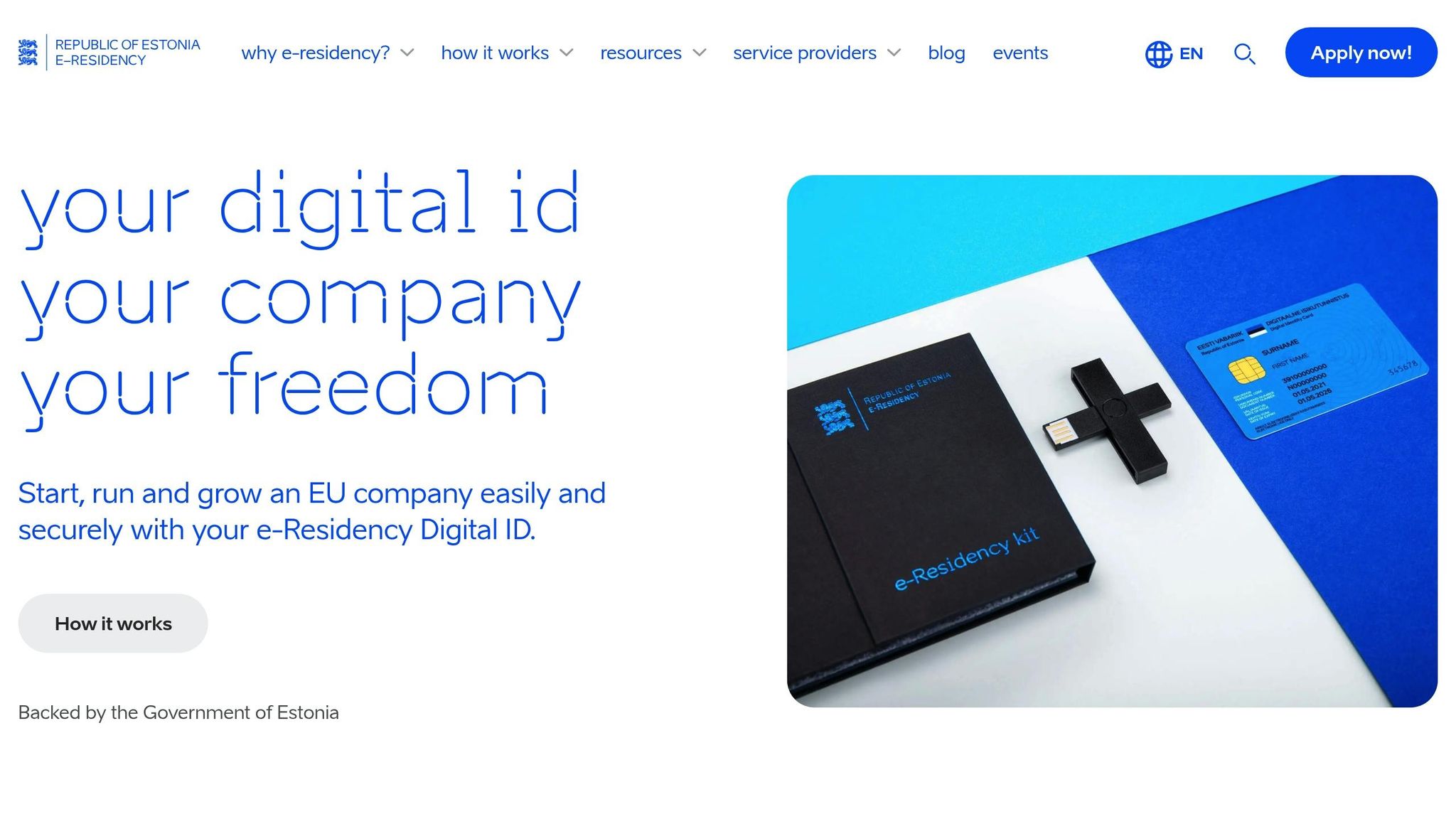
Estonia’s e-Residency program has been a game-changer since its launch in 2014, offering a digital form of citizenship that has drawn interest from entrepreneurs across the globe. This forward-thinking initiative enables individuals to tap into Estonia’s cutting-edge digital infrastructure and establish EU-based companies entirely online, without the need to relocate.
What E-Residency Is and How It Works
E-Residency isn’t the same as physical residency or citizenship. Instead, it’s a secure digital identity issued by the Estonian government, giving access to a suite of advanced digital services. Think of it as your personal gateway to Estonia’s online business ecosystem, allowing you to run an EU-based company from just about anywhere in the world.
With a smart ID card, e-Residents can authenticate themselves securely, sign documents digitally, and communicate with Estonian government services – all from their computer. This digital identity is integral to managing everything from registering a company to filing taxes, all through Estonia’s e-Governance platform.
The program is especially appealing to global entrepreneurs, freelancers, and digital nomads looking to establish a legitimate business presence in the European Union. For anyone seeking reliable legal frameworks and market access, Estonia’s e-Residency offers a streamlined solution.
Once you have your digital identity, joining Estonia’s online business community is a straightforward process.
How to Apply and Recent Program Updates
Applying for e-Residency is simple. Anyone over the age of 18 with a legitimate business interest in Estonia or the EU can apply. The process requires submitting a few key documents, including a passport copy, a background check from your home country, and a compliant photo. There’s also an application fee of €120 (around $130), with additional costs for picking up your smart ID card.
Applications typically take a few weeks to process. Once approved, you’ll need to collect your ID card in person at a designated location, such as an Estonian embassy or consulate. Recent updates to the program have made the process even smoother, with enhanced security measures ensuring a more seamless experience.
These improvements make the program particularly appealing for U.S. entrepreneurs looking to expand their reach into European markets.
Main Benefits for U.S. Entrepreneurs
For American entrepreneurs, Estonia’s e-Residency program offers a host of advantages that go beyond simply registering a business. Operating as an EU-based entity boosts credibility and provides easier access to European customers and partners.
The process of setting up a private limited company (OÜ) in Estonia is both quicker and more affordable compared to traditional methods that often involve mountains of paperwork and hefty legal fees. The online approach eliminates much of the administrative hassle, saving both time and money.
Banking has also become more accessible for e-Resident companies. Estonian banks like LHV and Swedbank offer accounts to these businesses, though you’ll typically need to complete a video interview and provide detailed documentation about your operations. Additionally, the ability to use digitally binding signatures recognized across the EU simplifies tasks like contract negotiations and other essential business dealings.
Taxation is another area where the program shines. Estonian companies are taxed only on distributed profits, meaning that any earnings reinvested back into the business remain untaxed. This can be a strategic advantage for entrepreneurs who operate without a fixed location. However, it’s worth noting that U.S. citizens are still subject to taxes on their worldwide income, so consulting a tax professional is a good idea.
Finally, Estonia’s advanced digital infrastructure significantly reduces the time spent on administrative tasks like reporting, tax filings, and compliance. The credibility of being registered as an EU company can also open doors to new opportunities in international business.
Using E-Residency for Asset Protection and Wealth Management
Estonia’s e-Residency program offers more than just a way to register a business – it provides entrepreneurs with tools to protect their assets and manage wealth efficiently. By leveraging Estonia’s advanced digital infrastructure, e-Residency becomes a strategic option for safeguarding international assets while benefiting from operational flexibility and privacy.
Setting Up Companies and Banking
With e-Residency, setting up a company in Estonia is straightforward. You can register an OÜ (the Estonian equivalent of a limited liability company) online by selecting a name, outlining your business activities, and meeting basic governance requirements – all for relatively low fees. Once established, your OÜ operates as a legitimate EU entity, allowing you to hold assets, sign contracts, and conduct business across European markets.
Banking has also become more accessible for e-Residents. Several Estonian banks now offer tailored services for companies registered through the program. While the process of opening an account can take a few weeks and requires submitting the necessary documents, it provides access to EU banking systems. This can simplify payment processing with European providers, reducing potential obstacles for digital businesses.
Tax Rules, Compliance, and Reporting Requirements
Estonia’s tax system is designed to encourage reinvestment. Corporate income tax is only applied when profits are distributed, meaning businesses can reinvest earnings without immediate tax burdens – a significant advantage for companies planning to expand or fund new initiatives.
However, U.S. citizens face additional compliance requirements due to America’s worldwide taxation rules. For instance, reporting obligations under Controlled Foreign Corporation (CFC) guidelines and other regulations for foreign entities must be addressed. Additionally, once a company’s annual revenue exceeds a certain threshold, VAT at the standard EU rate becomes applicable. Estonian companies are also required to maintain proper accounting records and file annual reports, a process made easier by the country’s digital systems. It’s also essential to follow OECD guidelines for related-party transactions.
Given these complexities, specialized support can be critical in navigating compliance and maximizing the program’s benefits.
How Global Wealth Protection Can Help

Managing the interplay between Estonian e-Residency and U.S. tax obligations can be challenging, but expert guidance can make all the difference. Global Wealth Protection specializes in helping entrepreneurs optimize international business structures. They assist clients in integrating an Estonian company into broader strategies, such as pairing it with a U.S. LLC or incorporating offshore entities in jurisdictions like Anguilla to bolster asset protection.
Through their GWP Insiders membership program, Global Wealth Protection provides access to jurisdiction-specific strategies, tax-saving techniques, and updates on regulatory changes. Private consultations help clients decide whether an Estonian company should serve as their primary business entity or as part of a more comprehensive international setup. For high-net-worth individuals, the firm offers additional services like offshore trusts and foundations to complement the benefits of e-Residency. Their Global Escape Hatch action plans also help clients prepare for relocations while ensuring compliance across multiple jurisdictions.
Tallinn’s Digital Infrastructure and Remote Work Setup
Tallinn stands out as one of Europe’s most forward-thinking cities when it comes to digital advancements. Its strong focus on technology has created an environment where remote professionals, entrepreneurs, and startups can thrive. This digital-first approach ensures smooth and efficient operations, making the city a top choice for those working remotely.
Co-Working Spaces and Tech Infrastructure
The city boasts a range of co-working spaces equipped with everything a modern professional needs: high-speed internet, flexible memberships, and dedicated meeting rooms. Many of these spaces also feature multilingual staff, making it easier for international professionals to handle day-to-day business tasks without language barriers.
Cost of Living and Daily Expenses
Tallinn offers an affordable lifestyle that doesn’t compromise on quality. Housing, utilities, and public transportation come at a lower cost compared to many other European cities. Whether you opt for a centrally located apartment or shared housing, you can enjoy the perks of urban living while staying within budget.
Networking and Community Resources
What truly sets Tallinn apart is its sense of community. The city is home to active expat and startup groups that regularly host meetups and events. These gatherings provide excellent opportunities to build connections, exchange ideas, and quickly integrate into the city’s dynamic professional network.
With cutting-edge digital infrastructure, a cost-effective lifestyle, and a welcoming professional community, Tallinn has solidified its reputation as a top destination for remote workers.
Living in Tallinn: Lifestyle and Practical Considerations for Americans
Tallinn offers a unique blend of modern living and centuries-old traditions, making it an intriguing destination for American expats. The city seamlessly combines contemporary amenities with a rich historical backdrop, providing a distinctive lifestyle experience.
Daily Life Quality and Practical Services
Life in Tallinn strikes a balance between urban convenience and a deep connection to nature. Residents often enjoy outdoor activities such as mushroom and berry foraging, which not only enriches the local cuisine but also fosters a sense of community and connection to the land. These elements create a welcoming environment for newcomers to adapt and integrate into the local way of life.
Local Customs and Integration Tips for Americans
Familiarity with Estonian customs can make the transition to life in Tallinn much smoother. Estonian culture is a fascinating mixture of Finno-Ugric traditions and Nordic and Baltic influences, creating a society that values both its heritage and forward-thinking innovation. While locals may initially seem reserved, they tend to warm up as relationships develop.
Punctuality is highly regarded, and formal greetings are the norm. When meeting someone, a firm handshake, direct eye contact, and the use of titles like Härra (Mr.), Prova (Mrs.), or Preili (Miss) are expected until invited to use first names.
The sauna is a cornerstone of Estonian social life. With over 100,000 saunas in a country of just 1.3 million people, this tradition is deeply ingrained. In winter, outdoor hot tubs paired with snow dips are popular for both socializing and fostering business relationships.
Dining etiquette is another area where understanding local customs can help. Be punctual, and if delayed, make sure to call ahead. Formal table manners are observed: wait to be invited to sit, hold off on eating until the hostess begins or says head isu (good appetite), and leave a 10% tip for good service at restaurants.
Cultural events provide a great way to connect with the community. The UNESCO-listed Song and Dance Festival, held every four years, draws nearly 100,000 performers and attendees. The next festival, scheduled for July 3–6, 2025, offers a vibrant window into Estonia’s Singing Revolution heritage.
Though many Estonians are fluent in English, around 25% of the population speaks Russian. However, starting a conversation in Russian with someone unexpectedly may come across as impolite. Learning a few basic Estonian phrases is a thoughtful way to show respect and effort toward integration.
When it comes to sensitive topics like politics or religion, it’s best to avoid them unless invited to discuss. In business settings, social meals are typically free of work-related discussions, and moments of silence during conversations are seen as thoughtful pauses rather than awkward gaps. These subtle cultural nuances can make a big difference in building meaningful connections in Tallinn.
sbb-itb-39d39a6
Why Tallinn and E-Residency Work Well Together
Tallinn’s cutting-edge infrastructure, combined with Estonia’s forward-thinking, digital-first government, makes it an excellent choice for U.S. entrepreneurs looking to establish legitimate businesses, tap into international markets, and operate seamlessly from anywhere in the world.
The e-Residency program in Estonia allows American entrepreneurs to set up EU-based companies entirely online. This pairs perfectly with Tallinn’s tech-savvy ecosystem, where essential services – like banking and government transactions – are securely handled through digital platforms. Beyond the ease of setting up a business, Tallinn also provides key advantages in terms of protecting assets.
As part of the EU, Tallinn offers businesses a stable environment with competitive corporate tax policies, access to European markets, and the ability to diversify operations while ensuring financial security through well-structured international entities.
Another major draw is the city’s lower operating costs, which allow entrepreneurs to allocate more resources toward growing their businesses compared to pricier European capitals.
Tallinn also boasts a large English-speaking professional community, which helps eliminate language barriers. Meanwhile, Estonia’s transparent regulatory system and established banking networks give American entrepreneurs peace of mind when navigating compliance requirements.
To make the most of Tallinn’s business-friendly environment, professional support is readily available. For instance, Global Wealth Protection offers specialized assistance with e-Residency applications and international business structuring, ensuring entrepreneurs can maximize the benefits while staying compliant with both Estonian and U.S. regulations.
Together, Tallinn and e-Residency open the door to global entrepreneurship with ease and efficiency.
FAQs
What makes Estonia’s e-Residency program a better option for starting a business in the EU?
Estonia’s e-Residency program provides a groundbreaking way for entrepreneurs to start and manage a business in the European Union – all without being physically present. Forget the hassle of in-person visits, stacks of paperwork, and dealing with local bureaucracies. With e-Residency, you can establish and operate your company entirely online, no matter where you’re located.
This program lets you register a business in just a few days, manage it remotely, and tap into the EU market – all from the comfort of your home. It’s a time-saving, cost-effective solution that removes many of the traditional roadblocks of starting a business. For digital nomads and global entrepreneurs, it’s a practical way to access the EU’s vast opportunities without the need to relocate.
What tax considerations should U.S. entrepreneurs keep in mind when using Estonia’s e-Residency to start a business?
U.S. entrepreneurs must report worldwide income to the IRS regardless of Estonia’s e-Residency status. Estonia’s e-Residency allows digital business formation but doesn’t change U.S. tax obligations or provide tax residency. Estonian companies pay 20% corporate tax only on distributed profits, but U.S. owners may face immediate taxation under Controlled Foreign Corporation (CFC) rules. You’ll need to file Forms 5471, 8865, and FBAR for foreign business interests. Consider potential double taxation, transfer pricing rules, and compliance costs. Consult tax professionals familiar with both jurisdictions before proceeding.
Tax Considerations for U.S. Entrepreneurs Using Estonia’s e-Residency
For U.S. entrepreneurs tapping into Estonia’s e-Residency program to start a business, understanding the tax landscape is crucial. Estonia operates a distinctive corporate tax system: profits are only taxed when distributed, at a flat rate of 20%, while reinvested earnings remain tax-free. This setup can offer flexibility for businesses focused on growth.
However, U.S. citizens face worldwide taxation, meaning income earned through an Estonian business may still be taxable in the United States. To mitigate the risk of double taxation, entrepreneurs can often claim foreign tax credits for the taxes they’ve already paid in Estonia. But here’s the catch – navigating dual tax residency rules and ensuring compliance with both U.S. and Estonian tax laws can get complicated.
One important detail to keep in mind: the Foreign Earned Income Exclusion (FEIE) generally doesn’t apply to income from a foreign corporation. Seeking advice from a qualified tax professional is a smart move to ensure you’re meeting all obligations and making the most of available tax benefits.
What are the main steps to apply for Estonia’s e-Residency, and how long does the process take?
Apply online at e-estonia.com by completing the application form, paying the €100 fee, and submitting required documents (passport copy, photo, motivation statement). Schedule an appointment at an Estonian embassy, consulate, or authorized pickup location for identity verification and biometric data collection. The review process takes 3-8 weeks after your appointment. Once approved, collect your digital ID card from your chosen pickup location. The entire process typically takes 6-12 weeks from application to receiving your e-Residency card, which then allows you to digitally establish and manage Estonian businesses online.
How to Apply for Estonia’s e-Residency
Getting started with Estonia’s e-Residency is a simple process. Begin by filling out an online application where you’ll need to provide your personal details, upload a scanned copy of your ID, and include a short explanation of your reasons for applying. If you’ve got all your documents ready, this step should take around 30 minutes.
After submitting your application, it will go through a review process, which typically takes 3 to 8 weeks. In some cases, the timeline might extend up to 30 days if additional details are needed. Once approved, you’ll be notified to pick up your e-Residency kit. You can choose a convenient location, like an Estonian embassy or consulate, for collection.
This program is designed with ease in mind, making it an appealing choice for entrepreneurs and remote workers aiming to establish a global footprint.
