
If you’re a remote professional or entrepreneur considering a move abroad, the Dubai Virtual Working Program might be worth exploring. It offers a renewable visa for remote workers, allowing you to live in Dubai while working for an overseas employer or running your own business. Here’s a quick rundown of what you need to know:
- Key Benefits:
- Zero personal income tax: Dubai doesn’t tax your earnings, but U.S. citizens must still file with the IRS.
- Business-friendly setup: Access Free Zone, Mainland, or Offshore company structures with perks like full foreign ownership and minimal setup time.
- Global connectivity: Dubai’s location bridges Eastern and Western markets, ideal for expanding your professional network.
- Family inclusion: You can sponsor your spouse and children under 18, with access to top-tier schools and healthcare.
- Eligibility:
- Minimum monthly income of $5,000.
- Valid passport and proof of remote employment or business ownership.
- Health insurance that meets UAE standards.
- Application Process:
- Prepare and authenticate documents like bank statements, employment letters, and insurance details.
- Submit your application online and complete medical exams and biometric scans for your Emirates ID.
- Expect processing to take a few weeks, with expedited options available.
- Lifestyle:
- Safe, modern city with high-speed internet, efficient public transport, and a multicultural environment.
- Family-friendly amenities, international schools, and recreational options.
- Costs vary: Metro passes are affordable, but tuition and housing can be expensive.
Dubai’s program stands out for its straightforward application, family-friendly policies, and tax advantages. However, it’s essential to weigh your financial stability, career goals, and family needs before deciding. If you’re ready for a global lifestyle with access to thriving markets, this program could be a great fit.
Eligibility Requirements and Application Steps
Who Can Apply
The Dubai Virtual Working Program has specific criteria to ensure applicants can sustain themselves while contributing to the city’s vibrant economy. To qualify, you’ll need to demonstrate a minimum income through recent bank statements or employment contracts. A valid passport with sufficient remaining validity is also required – passports from countries like the United States are generally accepted.
You’ll need to provide proof of remote employment or active business operations. If you’re employed, an official letter from your employer confirming your remote work arrangement and salary details is necessary. If you’re self-employed or a business owner, documents like business registration certificates or client contracts will suffice. Additionally, you must have health insurance that complies with UAE regulations for the duration of your stay. While not mandatory, including educational qualifications or certifications can strengthen your application.
Once you meet these requirements, you’re ready to begin the straightforward online application process outlined below.
How to Apply
Start by preparing all the necessary documents. This includes employment verification letters, bank statements, a copy of your passport, health insurance details, and any relevant certificates. Ensure these documents are authenticated before submission. Then, submit your application through Dubai’s official government portal and pay the required fee.
Your application will undergo a review process, including background checks. If additional details are needed, you’ll receive a notification with instructions and deadlines for submitting the requested information.
After your documents are approved, you’ll need to schedule a medical examination at an authorized center in Dubai. This step involves routine health screenings. Following the medical exam, you’ll apply for your Emirates ID by providing biometric data and photographs at a designated center. The Emirates ID will serve as your official identification card in the UAE.
The entire process – from submitting your application to receiving your Emirates ID – typically takes several weeks. For those in a hurry, expedited processing options may be available for an extra fee. Keep in mind that various charges apply, including fees for the visa, medical examination, Emirates ID, and processing. These are separate from any costs related to setting up a business presence in Dubai.
Tax and Asset Protection Benefits
Tax Benefits for U.S. Citizens
Dubai offers a significant advantage with no personal income tax on residents’ earnings. However, U.S. citizens are still required to file annual tax returns with the Internal Revenue Service (IRS) and report their worldwide income, no matter where they live.
For those living abroad, the Foreign Earned Income Exclusion (FEIE) can help reduce tax burdens. U.S. citizens who qualify under the bona fide residence test or the physical presence test (spending 330 days outside the U.S. within 12 months) can exclude up to $120,000 of foreign earnings from their taxable income. Entrepreneurs running location-independent businesses also benefit from Dubai’s free zones, where corporate tax exemptions are available. That said, setting up your business in Dubai requires careful planning and expert advice to ensure compliance with U.S. tax laws and regulations.
These tax opportunities, combined with Dubai’s overall financial perks, make it an attractive choice for remote workers and entrepreneurs alike.
How Dubai Residency Supports Asset Protection
Dubai residency doesn’t just offer tax advantages – it also enhances the security of your assets. The UAE’s legal system provides protections that make it difficult for creditors to enforce foreign judgments without following proper legal procedures. This adds a layer of security for individuals concerned about safeguarding their wealth.
In addition, Dubai allows foreign nationals to own real estate in designated areas, granting strong ownership rights. This not only serves as a potential store of value but also acts as a hedge against currency fluctuations. When paired with international business structures and other asset protection tools, Dubai residency can become a key part of a broader financial strategy.
Because asset protection involves intricate legal and financial considerations, consulting with qualified legal and tax professionals is essential to develop a plan tailored to your unique needs.
Living in Dubai: Lifestyle and Family Options
Daily Life and Amenities in Dubai
Dubai offers a vibrant, modern lifestyle with a strong international flavor. As a global hub, English is the go-to language for business and everyday communication, making it especially welcoming for expatriates.
One of Dubai’s standout features is its safety and security. The UAE consistently ranks among the safest countries in global indexes, thanks to its low crime rates and well-maintained public spaces. Women can feel safe walking alone at night, and incidents of violent crime are extremely rare – something that resonates strongly with many American families.
When it comes to infrastructure and connectivity, Dubai doesn’t disappoint. The city boasts a clean, efficient, and air-conditioned metro system – an absolute necessity during the sweltering summer months when temperatures can soar to 110°F (43°C). For those working remotely, high-speed internet is widely available, with fiber connections often reaching speeds of 1 Gbps or more.
The cost of living varies depending on your choices. While high-end dining and accommodations can be pricey, everyday essentials like groceries, utilities, and public transportation are generally affordable. For example, a monthly metro pass costs about $54, and ride-sharing services like Uber and Careem are widely available.
Adapting to Dubai’s multicultural environment is often easier than expected. With over 85% of the population being expatriates, the city blends Western customs with local traditions seamlessly. International cuisine is available at nearly every corner, and shopping malls feature familiar brands alongside local offerings. Entertainment is diverse, ranging from Broadway-style performances to major sporting events.
Dubai’s healthcare system is another highlight, meeting international standards. Many doctors are trained in the U.S. or Europe, and private insurance plans provide comprehensive coverage, ensuring peace of mind for residents.
All these amenities make Dubai an attractive choice for families seeking a smooth transition to life abroad.
Bringing Your Family
Dubai’s residency programs extend to dependents, including spouses and children under 18, making it a family-friendly destination for remote professionals. This inclusive approach allows families to experience life abroad together.
To sponsor dependents, applicants must demonstrate a minimum monthly income of $5,000. This ensures families can comfortably manage living expenses while covering visa and insurance costs for their loved ones.
For families with children, educational opportunities are both abundant and of high quality. Dubai is home to a range of international schools offering American, British, and International Baccalaureate curricula. Schools like the American School of Dubai and Dubai American Academy cater specifically to U.S. families, helping children maintain academic continuity.
Annual tuition fees range from $8,000 to $25,000, depending on the school and grade level. However, many schools have waiting lists, so applying early is crucial. The school year runs from September to June, aligning with most global academic calendars.
Healthcare for families is equally robust. Medical care for children includes access to internationally trained pediatricians and specialists, with dental and vision care often included in family insurance plans. Health insurance is mandatory for all residents, ensuring comprehensive coverage.
The family visa process typically takes 2-4 weeks once the primary applicant’s visa is approved. Each family member requires an Emirates ID, a medical examination, and insurance coverage. While the process is straightforward, gathering documents like birth and marriage certificates in advance will help avoid delays.
Dubai also offers a variety of family-friendly lifestyle perks. From pristine beaches and lush parks to entertainment hubs like the Dubai Mall – which features an aquarium, ice rink, and indoor theme park – there’s no shortage of activities. Families can also explore cultural attractions and numerous recreational facilities across the city.
Dubai’s location is another bonus for families. Its proximity to the Middle East, Asia, and Africa opens up exciting travel opportunities. School breaks often turn into memorable family vacations to destinations that would be harder and costlier to reach from the U.S.
sbb-itb-39d39a6
Program Details and Comparison with Other Options
Long-term Planning Factors
The Dubai Virtual Working Program offers a renewable visa tailored for remote workers. To maintain eligibility, participants must periodically verify their income, update health insurance details, and provide current business documentation. While Dubai boasts zero personal income tax, U.S. citizens still need to file annual IRS returns, making careful tax planning a must for long-term compliance.
Managing responsibilities across jurisdictions can be tricky. Remote professionals must adhere to varying record-keeping rules and may need to establish banking relationships in the UAE. It’s important to note that this visa is strictly for remote work or entrepreneurship. If someone decides to transition into a local UAE job, they’ll need a different visa, which could lead to gaps in their legal residency status.
On the plus side, extended residency in Dubai can open doors to better banking services. Some international banks require a minimum residency period before offering perks like multi-currency accounts or international investment opportunities. These factors provide a framework for comparing Dubai’s program to other digital nomad visa options.
Dubai vs Other Digital Nomad Visas
When compared to similar programs, Dubai’s approach stands out for its focus on family inclusion and simplified application procedures. The program allows remote professionals to include their immediate family members under a single application, making it particularly appealing for those balancing work and family life.
While other digital nomad visas might offer longer initial durations, different income thresholds, or varying tax benefits, they often come with more complex application processes or restrictions on family eligibility. Dubai’s program, by contrast, emphasizes straightforward renewals and leverages its well-developed infrastructure to support remote workers. This setup helps applicants align their professional ambitions with lifestyle and family needs.
For anyone considering their options, it’s essential to evaluate key factors like renewal requirements, tax obligations, necessary documentation, and access to financial services. These elements will help determine if Dubai’s program is the right fit for their long-term career goals and personal priorities.
Is the Dubai Virtual Working Program Right for You?
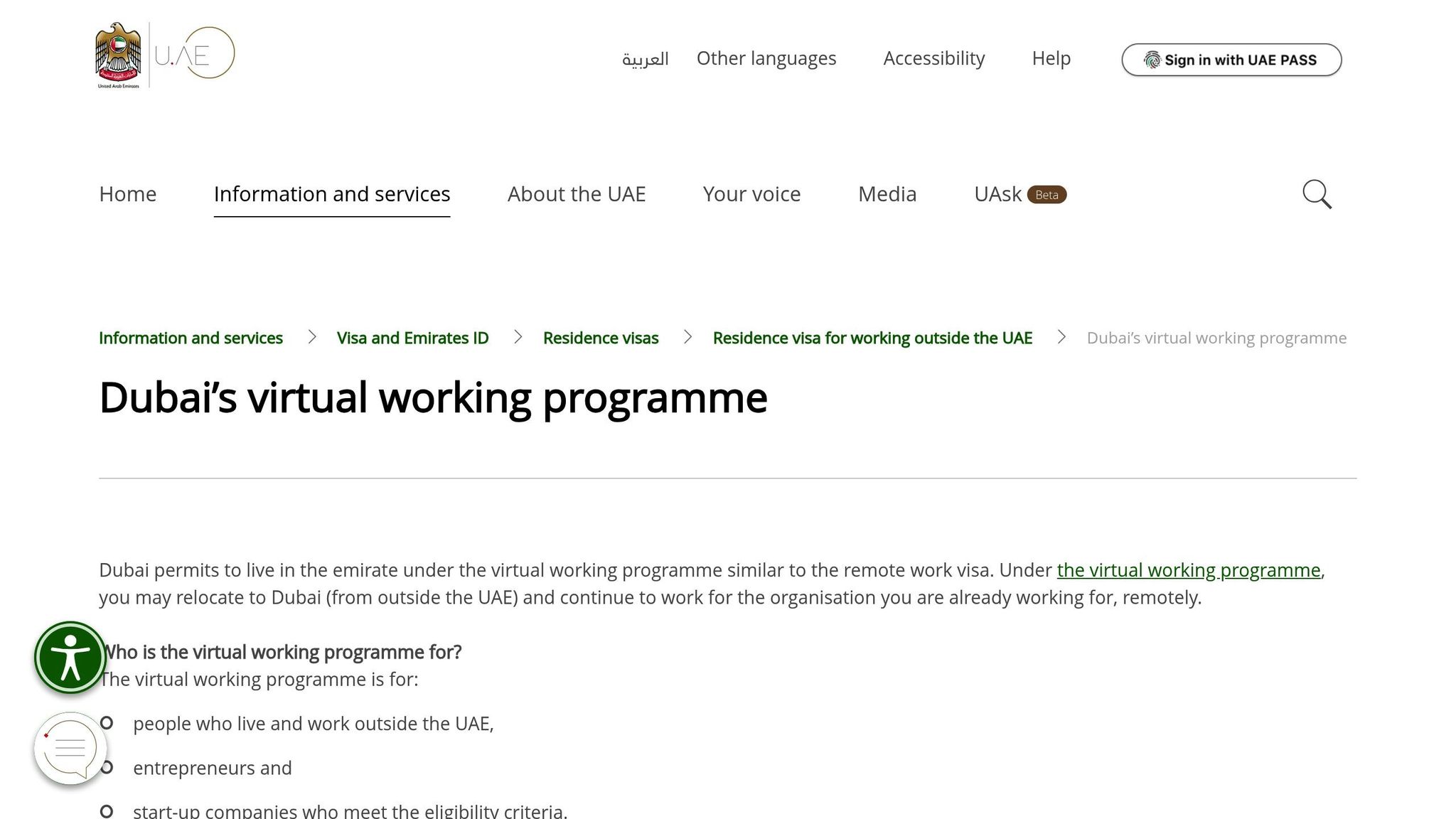
The Dubai Virtual Working Program is designed for remote professionals looking for tax-free residency, reliable infrastructure, and flexible work options. But is it the right fit for you? That depends on several factors.
First, consider your financial situation. This program works best for those with a strong financial foundation who can take advantage of Dubai’s banking services, business opportunities, and its location as a hub for connecting with clients across Europe, Asia, and Africa. Keep in mind that while Dubai doesn’t impose personal income tax, U.S. citizens are still required to file returns with the IRS, which could influence your tax planning. Beyond the financial aspects, think about how this move aligns with your family life and career aspirations.
For families, the program allows relocation together, but there’s more to consider. Dubai’s cost of living, school options, and lifestyle adjustments are important factors to weigh. From a professional standpoint, the program offers a prime opportunity for consultants, digital entrepreneurs, and online business owners targeting global markets. Dubai’s time zone and connectivity are major advantages. However, if your work relies heavily on real-time collaboration with U.S.-based teams, the time difference could pose challenges.
Planning for the long term is equally important. The program’s renewable structure provides flexibility without requiring a permanent commitment. That said, you’ll need to manage documentation and maintain health insurance. Ask yourself whether Dubai aligns with your professional goals over the next few years and if the program’s requirements fit your lifestyle.
Ultimately, the success of your experience with the Dubai Virtual Working Program depends on how well it matches your financial stability, family needs, and career objectives. Does it check the right boxes for you?
FAQs
What challenges might U.S. citizens face with taxes while using the Dubai Virtual Working Program?
U.S. citizens taking part in the Dubai Virtual Working Program may face hurdles with tax compliance, thanks to U.S. laws that require them to report and pay taxes on their global income, no matter where they reside. This raises concerns about double taxation, even though Dubai doesn’t impose personal income taxes.
On top of that, participants must deal with complex reporting requirements, like filing IRS Form 1040 and disclosing any offshore accounts. Navigating these obligations demands careful planning to stay aligned with U.S. tax laws and any corporate tax rules that might apply in Dubai. Working with a qualified tax advisor can make the process smoother and help sidestep potential issues.
How does the cost of living in Dubai compare to major U.S. cities, and what should families budget for when relocating?
Dubai’s cost varies significantly by lifestyle. Housing costs 20-40% less than NYC/SF but similar to Miami/Austin. International schools ($15,000-$30,000/year) are major expenses. Groceries cost 10-20% more, dining out is comparable. No income tax but higher utility costs. Healthcare is excellent but expensive without insurance. Car ownership is affordable with cheap gas. Families should budget $8,000-$15,000/month for comfortable living including housing, schools, and insurance.
Cost of Living in Dubai
Living in Dubai is generally more affordable than in major U.S. cities like New York or San Francisco. In fact, the overall cost of living in Dubai can be 30-40% lower than in New York City, though this depends heavily on your lifestyle and housing choices. Expenses can vary significantly based on factors like family size, the type of housing you choose, and personal spending habits.
For a family of four, monthly living costs typically fall between $3,800 and $8,200, covering essentials such as rent, utilities, groceries, and transportation. Housing is usually the biggest expense, with annual rents starting at about $9,500 for a studio apartment and reaching $34,000 or more for a three-bedroom villa. If you have children, you’ll also need to factor in private school tuition, which can be a substantial cost. Additionally, don’t forget to budget for healthcare and leisure activities, which are key parts of life in Dubai.
One of Dubai’s biggest draws is its tax-free income environment, paired with a high standard of living. However, careful budgeting is essential to ensure you’re prepared for major expenses like housing, education, and other day-to-day needs.
How can remote professionals successfully transition to and thrive in Dubai’s business environment?
To make a successful shift to Dubai’s business scene, remote professionals should start by diving into local laws, visa requirements, and cultural norms. Familiarize yourself with Dubai’s virtual working program and make sure you’re fully aligned with visa regulations to avoid any hiccups.
Networking plays a huge role in settling in. Get involved with local business communities, attend networking events, and check out co-working spaces to build your professional circle. Dubai’s cutting-edge infrastructure and global connectivity make adjusting easier, but it’s wise to plan ahead for essentials like housing, transportation, and setting up financial accounts.
On top of that, take advantage of Dubai’s business-friendly policies and tax perks. These can help boost your career growth while you immerse yourself in the city’s vibrant lifestyle and endless opportunities.
