
Running a location-independent business means freedom, but it also comes with challenges like taxes, legal liability, and compliance across borders. Choosing the right business structure can make or break your success. Here’s what you need to know:
- U.S. LLCs: Flexible and protective, LLCs are ideal for separating personal and business assets. They offer tax benefits through pass-through taxation but may require extra compliance for U.S. citizens abroad.
- International Business Companies (IBCs): Perfect for global entrepreneurs, IBCs provide privacy and tax efficiency but face stricter compliance rules and banking challenges.
- European E-Residency Programs: Estonia’s program lets you manage an EU-based business entirely online. Great for service-based businesses but doesn’t grant physical residency or tax exemptions.
- Sole Proprietorships: Simple and low-cost to set up, but they leave personal assets exposed to business risks.
- Corporations: Offer strong liability protection and credibility but involve higher costs and administrative requirements.
Quick Comparison
| Structure | Best For | Liability Protection | Tax Complexity | Setup Cost |
|---|---|---|---|---|
| U.S. LLC | Entrepreneurs needing flexibility | Strong | Moderate | $100–$300 |
| IBC | Global business operations | Strong | High | Varies by country |
| E-Residency (Estonia) | EU market access | Moderate | Moderate | $150 application fee |
| Sole Proprietorship | Testing ideas, low-risk ventures | None | Low | $49+ |
| Corporation | Scaling, raising capital | Strong | High | $200–$350+ |
Each structure has pros and cons, so align your choice with your goals, income, and risk tolerance. For many, LLCs strike the right balance of protection and simplicity. If you’re operating globally, consider IBCs or e-residency options for smoother international business management.
Key Factors for Choosing a Business Structure
When setting up a business, especially as a digital nomad or remote entrepreneur, your choice of structure can influence everything from tax obligations to asset protection. Picking the right structure is about finding one that works globally, safeguards your assets, and ensures tax efficiency. This decision shapes not only your day-to-day operations but also your long-term financial outcomes.
Tax Implications
Tax considerations often play a leading role in selecting a business structure. For U.S. citizens, taxation applies to worldwide income, regardless of where you live or work. This makes strategic planning essential to avoid unnecessary tax burdens.
One major relief for qualifying entrepreneurs is the Foreign Earned Income Exclusion (FEIE). In 2024, the FEIE allows up to $126,500 of income to be excluded, with this amount increasing to $130,000 in 2025. However, qualifying requires meeting strict residency tests and meticulously documenting travel patterns.
If you’re a U.S. sole proprietor, keep in mind that you’re subject to a 15.3% self-employment tax. For some, forming a foreign corporation can help sidestep this tax while still benefiting from the FEIE.
Operating across multiple jurisdictions can also introduce the risk of double taxation. Tax treaties between countries can mitigate this, but understanding which treaties apply to your situation is critical. Interestingly, over 70% of international businesses report regulatory compliance as one of their toughest challenges.
For larger businesses, the Foreign-Derived Intangible Income (FDII) provision offers a reduced U.S. tax rate of 13.125% for income derived from selling products or services to foreign customers. If your business generates significant international revenue, this could lead to considerable savings.
While tax strategy is key, protecting your assets is just as important.
Asset Protection and Privacy
Liability protection varies widely depending on your business structure, making it a crucial consideration. Sole proprietorships, for instance, provide no liability protection, leaving you personally responsible for business debts – a risky scenario, especially in international operations.
LLCs, on the other hand, separate personal and business assets, though the degree of protection depends on the state where the LLC is formed. Corporations offer even stronger liability protection by existing as separate legal entities, though they come with more extensive compliance requirements.
If you’re looking for enhanced protection, International Business Companies (IBCs) are worth considering. They often include features that shield personal assets from business liabilities while offering greater privacy. This can be particularly valuable when operating in regions with complex or unpredictable legal systems.
Strong liability protection is essential to securing your financial stability. Once you’ve addressed tax and liability, the next step is to choose the right jurisdiction.
Jurisdiction Selection
Selecting the right jurisdiction is about finding a balance between legal stability, tax efficiency, and operational ease. A jurisdiction with a stable regulatory environment and business-friendly policies provides a solid foundation for your operations.
Tax systems vary significantly by country. Some countries use territorial tax systems, taxing only income earned within their borders, while others impose worldwide taxation. Understanding these differences can help you optimize your tax burden.
Access to banking and financial services is another critical factor. Jurisdictions offering multi-currency accounts and seamless international wire transfer options can enhance your business’s flexibility. Incorporating in a jurisdiction known for transparency and established business practices can also bolster your credibility with clients, partners, and financial institutions.
Compliance requirements differ depending on the jurisdiction. Some jurisdictions demand minimal reporting, while others require detailed documentation and regular audits. Companies that excel in meeting these regulatory demands are 36% more likely to outperform their global competitors.
The legal system of the jurisdiction also plays a role. Common law systems, which rely on judicial precedent, offer flexibility but may require deeper legal interpretation. Civil law systems, based on written statutes, generally provide more predictable outcomes.
Finally, access to professional support – like experienced legal, accounting, and administrative experts – can make a significant difference in how smoothly your business operates. This sets the stage for exploring specific structures, such as U.S. LLCs, which will be discussed further.
US LLCs for Location-Independent Entrepreneurs
U.S. LLCs provide a mix of flexibility, strong asset protection, and tax advantages, making them an appealing option for location-independent entrepreneurs. They’re particularly effective for safeguarding assets while maintaining global operational freedom. Thanks to pass-through taxation, any profits or losses are reported directly on the owners’ personal tax returns, avoiding the double taxation that often affects traditional corporations.
Benefits of U.S. LLCs
An LLC separates personal and business assets, which is especially important for international operations. It also offers tax flexibility, allowing it to be treated as a sole proprietorship, partnership, or even as an S- or C-corporation, depending on what suits your situation. Single-member LLCs are usually considered disregarded entities for tax purposes, while multi-member LLCs are taxed as partnerships.
Additionally, LLCs are low-maintenance. Unlike corporations, they don’t require formal board meetings or extensive record-keeping, freeing entrepreneurs to focus on growing their businesses. However, U.S. citizens managing LLCs from abroad may face extra tax and regulatory challenges.
Considerations for Americans Abroad
Operating an LLC from outside the U.S. comes with its own set of hurdles for American citizens. The Foreign Earned Income Exclusion (FEIE) allows you to exclude up to $126,500 of earned income in 2024. That said, U.S. citizens abroad are still subject to a 15.3% self-employment tax on LLC income.
If your LLC has a foreign bank account with a balance exceeding $10,000 at any point during the year, you’ll also need to file an FBAR (FinCEN Form 114). Starting in 2024, new FinCEN Beneficial Ownership Information Reporting requirements will apply. On top of this, you’ll need to consider the local tax laws in your country of residence, as these could lead to double taxation if not carefully managed. These complexities make it crucial to select the right state for forming your LLC.
State Selection: Wyoming vs. Delaware
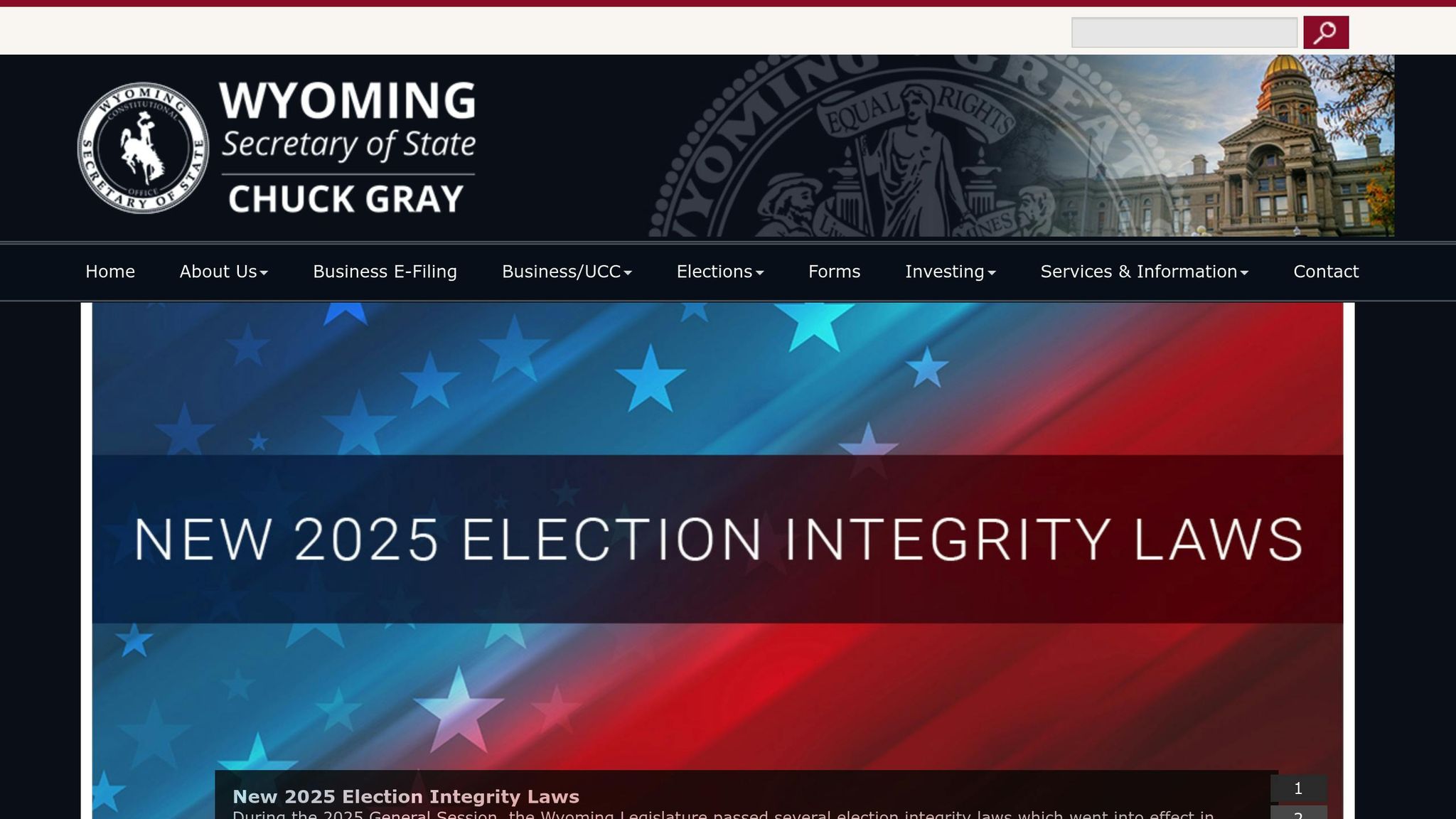
Choosing the right state for your LLC can make a big difference, especially when it comes to balancing costs, privacy, and regulatory requirements. Wyoming and Delaware are two popular choices for entrepreneurs.
Wyoming is a favorite for its strong privacy protections, excellent asset protection (including statutory charging order protection for single-member LLCs), and low fees. The state charges a $102 formation fee and a $62 annual report fee, with no state income tax or franchise tax.
Delaware, on the other hand, is renowned for its business-friendly legal system and established corporate framework. Over half of publicly traded U.S. companies are incorporated there, and it’s home to more than 1.5 million registered entities. However, Delaware’s advantages come at a higher cost. The formation fee is $90, and the annual franchise tax is $300. Delaware is often the go-to choice for businesses planning to attract venture capital or transition to a corporation for fundraising, while Wyoming is better suited for entrepreneurs prioritizing lower costs and privacy.
When comparing costs, Wyoming’s first-year expenses are about $164, whereas Delaware’s exceed $390. Both states allow non-U.S. residents to form LLCs and offer online filing systems that accept credit card payments. Your choice between Wyoming and Delaware should align with your broader business goals – whether you’re looking for cost savings and privacy or the legal prestige that Delaware offers.
International Business Companies (IBCs) and Offshore Corporations
For location-independent entrepreneurs, International Business Companies (IBCs) and offshore corporations present an alternative to U.S. LLCs. These entities are designed to provide privacy, tax efficiency, and flexible operations for individuals conducting business exclusively outside the U.S. Unlike U.S. LLCs, IBCs operate as traditional corporations managed by shareholders and are generally prohibited from conducting business within their country of incorporation. This makes them particularly appealing for entrepreneurs focused solely on international markets. Similar to U.S. LLCs, IBCs aim to protect assets and streamline tax strategies, but they do so within a fully global framework.
Benefits of IBCs
The key advantages of IBCs revolve around tax savings and privacy. Many jurisdictions offering IBCs impose little to no local taxes on income earned outside their borders. These entities also come with minimal reporting obligations and simplified compliance processes, allowing for greater operational ease. Additionally, their corporate structure ensures a clear separation between personal and business assets, enhancing asset protection.
In certain jurisdictions, IBCs may also simplify banking arrangements, especially for entrepreneurs juggling accounts across multiple countries. However, stricter international compliance rules have somewhat reduced this advantage over time. Choosing the right jurisdiction for an IBC depends on aligning its benefits with your business goals.
Top Jurisdictions for IBCs
Some jurisdictions stand out as popular hubs for IBC formation, each offering distinct perks:
- British Virgin Islands (BVI): With over 360,000 registered corporations as of 2024, BVI is the largest offshore jurisdiction by volume. It offers strong confidentiality protections, with beneficial ownership details disclosed only to authorities and registered agents.
- Seychelles: As of February 2024, Seychelles has registered over 43,000 IBCs. It offers competitive setup costs, fast formation (often within 1–3 days), and robust privacy measures.
- Belize: Known for being cost-effective, Belize imposes minimal ongoing compliance requirements and often waives the need for annual returns. It combines English common law protections with modern corporate legislation tailored for international businesses.
Other notable jurisdictions include the Marshall Islands, Anguilla, Cyprus, Bermuda, Panama, and the UAE. Each offers unique advantages based on factors like setup costs, annual fees, reporting requirements, banking access, and international reputation. Entrepreneurs should carefully evaluate these factors to find the jurisdiction that best suits their needs.
Risks and Compliance Challenges
While IBCs offer numerous benefits, they also come with significant compliance challenges that demand careful attention.
One major issue is banking de-risking, where banks are increasingly hesitant to open accounts for offshore companies. Even when accounts are approved, extensive due diligence can lead to delays lasting months. Additionally, substance regulations now require many offshore companies to demonstrate actual business activity in their jurisdiction of incorporation. For instance, the EU’s Economic Substance Requirements mandate that companies performing certain activities have a physical office, local employees, and conduct decision-making locally.
Privacy, once a hallmark of IBCs, has also diminished. Many jurisdictions now require beneficial ownership reporting, with registers accessible to law enforcement.
Reputational risks are another concern. Offshore companies may face skepticism from clients, suppliers, or partners, and jurisdictions appearing on international watchlists can complicate banking and operational relationships.
Lastly, tax compliance has grown increasingly complex. While IBCs often avoid significant local taxes, entrepreneurs must still meet tax obligations in their home country and any other markets where they operate. For U.S. citizens, this includes extensive reporting requirements for foreign corporations, such as Forms 5471 and 8865, with severe penalties for non-compliance.
To navigate these challenges, entrepreneurs must align their business structure with regulatory demands and operational goals. Success with an IBC requires thorough planning, diligent compliance management, and access to experienced legal and tax professionals across relevant jurisdictions.
sbb-itb-39d39a6
European E-Residency Programs
For entrepreneurs aiming to tap into the EU market while staying location-independent, European e-residency programs offer a streamlined way to establish and manage businesses. At the forefront is Estonia’s e-Residency program, a trailblazer in the digital identity space. This initiative allows non-Estonians to access services like company formation, banking, payment processing, and taxation – all online. With this digital identity, entrepreneurs can set up and manage EU-based companies entirely remotely.
The program has gained significant traction among global entrepreneurs. By December 2023, more than 120,000 individuals from over 170 countries had become e-residents, collectively founding over 33,000 companies that generated €15 billion in revenue. Impressively, e-residents now contribute to 38% of Estonian startups, showcasing the program’s role in fostering entrepreneurship within the country.
Entrepreneurs from a variety of industries have leveraged this program to their advantage. For instance, Georg Klausner of Mansiontech OÜ shared:
"E-Residency is the best option to set up a company for multiple founders without bureaucracy: our business was up and running cheaply within days."
Post-Brexit, UK-based entrepreneurs have also turned to e-residency to maintain access to EU markets. For example, David Fortune registered Saher Europe, the European branch of his security consultancy, through the program.
Features of E-Residency
Estonia’s e-Residency program provides a secure digital identity, enabling global entrepreneurs to authenticate themselves online and sign documents digitally. For a $150 application fee, participants gain access to Estonia’s advanced digital infrastructure, which operates around the clock. This allows e-residents to manage their businesses entirely online, free from geographical limitations. The program is particularly suited for entrepreneurs in sectors like IT, marketing, publishing, and consulting, where digital operations thrive.
Key features include:
- Remote business management: E-residents can handle company registration, apply for business banking, access payment service providers, and file tax declarations – all online.
- Banking access: Establishing business banking relationships within the EU is often smoother for companies registered under the program.
- Flexibility for digital businesses: Entrepreneurs like Kirsten Meisinger, who runs her strategic marketing business SEO SEAL, and Georg (from Austria) and Ian (from Brazil), co-directors of Mansiontech OÜ, have successfully managed their companies remotely thanks to e-residency.
Limitations of E-Residency
While the benefits are compelling, e-residency does come with certain limitations. The most notable is that e-residency is not physical residency – it does not grant the right to live, work, or travel in Estonia or the EU. Additionally, it does not exempt participants from international tax obligations; entrepreneurs must still adhere to tax laws in their home countries.
Other constraints include:
- Sector-specific suitability: The program is ideal for service-based and digital businesses but is less practical for industries like manufacturing or retail, which require a physical presence.
- Jurisdictional restrictions: Due to EU sanctions, first-time applicants from Russia and Belarus currently face restrictions. Moreover, individuals from jurisdictions labeled as "high risk and non-cooperative" by the Financial Action Task Force (FATF) may also face challenges in accessing international banking.
- Exclusions for certain applicants: Those with criminal intentions or ineligible for international banking are barred from participating.
For entrepreneurs, the key to success lies in aligning their business models with the program’s digital-first framework while ensuring compliance with international tax and regulatory requirements.
Sole Proprietorships vs. Corporations: A Direct Comparison
When deciding between a sole proprietorship and a corporation, entrepreneurs who work remotely face a clear trade-off: simplicity versus protection. Each structure caters to different needs, and understanding the key distinctions in cost, liability, taxes, and growth opportunities can guide you toward the best fit for your business.
| Factor | Sole Proprietorship | Corporation |
|---|---|---|
| Setup Cost | As low as $49 | $200–$350+ |
| Personal Liability | Unlimited – personal assets at risk | Limited – owners not personally liable |
| Tax Treatment | Personal income tax rates plus 15.3% self-employment tax | Corporate tax rates (may face double taxation) |
| Raising Capital | Generally challenging | Can raise funds through stock sales |
| Business Continuity | Tied to the owner’s decision or lifespan | Perpetual lifespan |
Sole Proprietorship: Simplicity vs. Risk
Sole proprietorships are the easiest and most affordable way to start a business. They’re ideal for entrepreneurs looking to test ideas quickly, with minimal paperwork and startup costs – sometimes as low as $49. This makes them particularly appealing for those experimenting with new ventures.
However, the simplicity of this structure comes with a significant downside: personal liability. If the business faces legal or financial trouble, your personal assets could be at risk. Additionally, sole proprietors are subject to a 15.3% self-employment tax on net income. That said, U.S. citizens working abroad might benefit from the Foreign Earned Income Exclusion, which allows them to exclude up to $130,000 from taxable income in 2025.
The U.S. Small Business Administration highlights the practicality of sole proprietorships for certain entrepreneurs:
"Sole proprietorships can be a good choice for low-risk businesses and owners who want to test their business idea before forming a more formal business."
Corporations: Complexity with Protection
While sole proprietorships are known for their simplicity, corporations offer robust protection and greater opportunities for growth. A corporation is a separate legal entity, which means your personal assets are shielded from business liabilities. This is particularly valuable for remote entrepreneurs managing international contracts or operating in industries prone to litigation. As noted:
"Corporations offer the strongest protection to its owners from personal liability."
Corporations also tend to be viewed as more credible by clients and partners, which can help in landing larger contracts or partnerships. They have an edge when it comes to raising capital, as they can sell stock to investors. Studies have shown that corporations are more likely to secure loans and achieve higher success rates compared to sole proprietorships.
However, this added protection and credibility come at a cost. Incorporation fees typically range from $200 to $350 or more, and maintaining a corporation requires ongoing administrative tasks like filing annual reports, holding board meetings, and keeping detailed records. For remote entrepreneurs juggling time zones and jurisdictions, these requirements can be a challenge.
Taxation is another factor to consider. C-corporations face the possibility of double taxation, where profits are taxed at both the corporate level and again as shareholder dividends. On the other hand, S-corporations can bypass this issue with pass-through taxation, allowing profits to be taxed only once. Properly structuring salaries and dividends can also help reduce self-employment taxes.
Ultimately, the right choice between a sole proprietorship and a corporation depends on your business goals. If you’re launching a low-risk venture or testing an idea, a sole proprietorship offers a simple and affordable entry point. But if you’re building a larger operation or need to protect personal assets, the added complexity of a corporation might be worth it. Balancing simplicity, protection, and growth potential is key for any entrepreneur navigating today’s borderless business landscape.
Conclusion
Selecting the right business structure is a pivotal decision for location-independent entrepreneurs. It impacts everything from taxes to legal liabilities and compliance requirements. As we’ve discussed, there’s no universal solution – the right choice depends on your unique situation, risk tolerance, and long-term vision.
When weighing your options, consider factors like liability protection, operational control, growth potential, and tax efficiency. For many remote business owners, an LLC strikes a good balance. It offers substantial liability protection, operational simplicity, and tax advantages. As attorney Bob Zeglarski explains:
"I recommend the LLC for most companies and clients simply because it has the best tax treatment".
This aligns with the earlier analysis that LLCs often provide a practical middle ground between protection and simplicity. However, your decision should reflect your specific goals and financial projections. For instance, a sole proprietorship generating $100,000 annually could face $15,300 in self-employment taxes, while restructuring as an S-Corp might reduce that to $7,650 – a significant difference.
It’s also wise to regularly revisit your business structure, especially after hitting major milestones or experiencing changes in income. The world of location-independent entrepreneurship is evolving, with new opportunities emerging through offshore jurisdictions, e-residency programs, and innovative corporate setups. Staying informed and seeking professional guidance ensures your structure keeps pace with your ambitions.
Ultimately, choosing the right structure today sets the stage for seamless growth and expansion, helping you thrive in a borderless business environment.
FAQs
What tax obligations should U.S. citizens know about when running a location-independent business abroad?
U.S. citizens running businesses overseas must report their worldwide income to the IRS, no matter where they live or earn. Thankfully, there are ways to help lower your U.S. tax bill. For instance, the Foreign Earned Income Exclusion (FEIE) lets you exclude a portion of your foreign-earned income from taxation. Additionally, the Foreign Tax Credit (FTC) allows you to offset taxes you’ve already paid to foreign governments.
There are also specific reporting requirements to keep in mind. If you have foreign financial accounts with a total value exceeding $10,000, you’ll need to file an FBAR (Report of Foreign Bank and Financial Accounts). Similarly, certain foreign assets may require disclosure under FATCA regulations. Staying on top of these rules is essential to avoid penalties and ensure you remain in good standing with the IRS while enjoying the freedom of running a global business.
What should I consider when choosing a jurisdiction for setting up an International Business Company (IBC)?
When setting up an International Business Company (IBC), picking the right jurisdiction is crucial to make the most of benefits like reduced taxes and smoother operations. To make an informed choice, focus on factors such as the economic and political stability of the location, its tax policies (like zero-tax perks or exemptions for offshore businesses), and the compliance requirements you’ll need to meet.
You’ll also want to weigh practical considerations, including incorporation costs, available banking options, processing times, and whether the jurisdiction offers favorable tax treaties. Locations with straightforward setup procedures, reliable legal systems, and business-friendly policies are often the go-to choice for entrepreneurs who value flexibility and a borderless way of doing business.
What are the main differences between Estonia’s e-Residency program and forming a U.S. LLC for location-independent entrepreneurs?
Estonia’s e-Residency program allows entrepreneurs to set up and run a company entirely online, without ever needing to step foot in Estonia. With administrative costs of about €100 per year and access to efficient digital tools for business management, it’s an attractive choice for digital nomads looking for a simple, borderless way to operate.
On the other hand, starting a U.S. LLC comes with different requirements. You’ll need a registered agent in the state where you incorporate, and the administrative and compliance costs tend to be higher. However, U.S. LLCs provide direct entry into the U.S. market, strong legal protections, and greater credibility when working with American clients or partners.
The main difference boils down to priorities: Estonia’s e-Residency caters to entrepreneurs aiming for a global, fully digital setup with minimal physical presence, while a U.S. LLC is better for those focused on tapping into the U.S. market and its legal framework.
