
If you’re a U.S. taxpayer with foreign financial accounts or assets, you may need to file FBAR (FinCEN Form 114) and/or Form 8938 (Statement of Specified Foreign Financial Assets). These forms are not interchangeable, and failing to file can result in significant penalties. Here’s a quick breakdown:
- FBAR: Required if the total value of your foreign accounts exceeds $10,000 at any point in the year. It’s filed separately with FinCEN and focuses on foreign bank accounts.
- Form 8938: Required if your foreign assets exceed thresholds that vary based on your filing status and residency (e.g., $50,000 for single U.S. residents). It’s filed with your IRS tax return and covers a broader range of assets, including foreign stocks and partnerships.
Quick Comparison
| Feature | Form 8938 | FBAR |
|---|---|---|
| Filing Agency | IRS (with tax return) | FinCEN (separate filing) |
| Threshold (Single, U.S.) | $50,000 (year-end) or $75,000 | $10,000 (anytime) |
| Threshold (Expats, Single) | $200,000 (year-end) or $300,000 | $10,000 (anytime) |
| Assets Covered | Broad (e.g., stocks, funds) | Narrow (bank accounts only) |
| Filing Deadline | Tax return deadline | April 15 (auto extension to Oct 15) |
When Both Are Needed: If your foreign accounts exceed $10,000 and your total foreign assets surpass Form 8938 thresholds, you must file both forms.
Penalties for Non-Compliance: FBAR violations can result in fines up to $10,000 per account (non-willful) or 50% of the account balance (willful). Form 8938 penalties start at $10,000, increasing by $10,000 every 30 days of noncompliance, up to $60,000.
Takeaway: Know your obligations and file both forms if required. When in doubt, consult a tax professional to avoid costly mistakes.
What is FBAR (FinCEN Form 114)
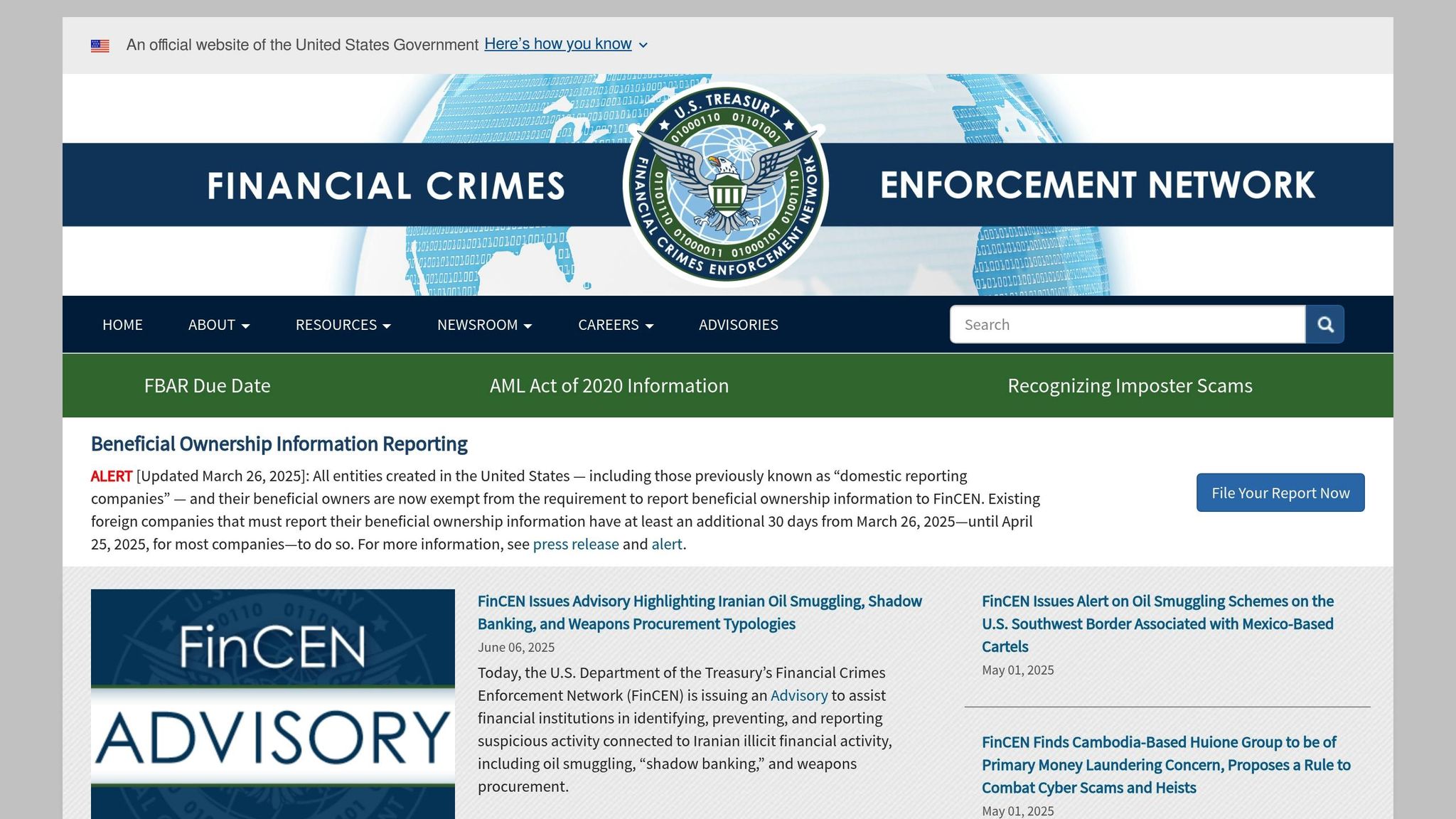
The Report of Foreign Bank and Financial Accounts (FBAR) is a required form that U.S. persons must use to report their foreign financial accounts to the Financial Crimes Enforcement Network (FinCEN). This form is part of the Bank Secrecy Act (BSA) and plays a key role in monitoring offshore financial activities.
Why FBAR Exists
FBAR exists to promote transparency in offshore accounts and to combat tax evasion and money laundering. It helps the government investigate financial fraud and disrupt terrorist financing. Offshore accounts are often beyond the reach of the IRS, so the U.S. government relies on FBAR disclosures to track these accounts. The information collected allows FinCEN to identify individuals who might be hiding income abroad and enforce penalties for non-compliance.
Who Files FBAR
You must file an FBAR if you’re a U.S. person with a financial interest in or authority over foreign financial accounts. The term "U.S. person" includes citizens, residents, corporations, partnerships, limited liability companies, trusts, and estates. Filing is required when the total value of your foreign accounts exceeds the reporting threshold, even if the accounts didn’t generate taxable income. Foreign financial accounts can include checking and savings accounts, investment accounts, and other types of financial instruments held at institutions outside the United States.
How to File FBAR
FBAR filing is done exclusively through the BSA E-Filing System – paper submissions aren’t accepted. The system is fully electronic and accessible 24/7. Individuals can file without registering, but institutions must create an account with a User ID and password.
The standard filing deadline is April 15, with an automatic extension until October 15. It’s a good idea to submit your form at least 48 hours before the deadline to avoid technical issues. To file, start by creating a BSA E-Filing account, gather your financial details, complete the form, and submit it electronically. Be sure to keep all related records for at least five years.
Next, we’ll take a closer look at Form 8938, which focuses on a different aspect of offshore financial reporting.
What is Form 8938
Unlike FBAR, which has a narrower focus, Form 8938 covers a wider range of foreign assets to ensure tax compliance.
Form 8938, Statement of Specified Foreign Financial Assets, is used by U.S. taxpayers to report foreign financial assets to the IRS. Often referred to as the FATCA report, this form – regulated by the Foreign Account Tax Compliance Act – requires reporting a variety of assets, including foreign bank accounts, stocks, mutual funds, and partnership interests. Taxpayers must disclose the maximum value of each foreign financial asset during the tax year.
Why Form 8938 Exists
Form 8938 was introduced to help the IRS monitor foreign assets owned by U.S. taxpayers. It plays a key role in tax enforcement, making it more difficult for taxpayers to conceal income-generating assets overseas. Unlike FBAR, which focuses on preventing financial crimes like money laundering, Form 8938 is specifically aimed at enforcing tax compliance.
The IRS has a strong interest in foreign asset reporting due to past instances of undisclosed overseas holdings. This form provides transparency into foreign investments that might generate taxable income, ensuring taxpayers accurately report their worldwide income.
Who Files Form 8938
Form 8938 must be filed by specified individuals or specified domestic entities if their foreign financial assets exceed certain thresholds. This includes U.S. citizens, resident aliens, and some nonresident aliens.
The reporting thresholds depend on your filing status and residency:
| Taxpayer Category | Threshold on Last Day of Tax Year | Threshold at Any Time During Tax Year |
|---|---|---|
| Unmarried, living in the U.S. | $50,000 | $75,000 |
| Married filing jointly, living in the U.S. | $100,000 | $150,000 |
| Married filing separately, living in the U.S. | $50,000 | $75,000 |
| Unmarried, living abroad | $200,000 | $300,000 |
| Married filing jointly, living abroad | $400,000 | $600,000 |
| Specified domestic entities | $50,000 | $75,000 |
Specified domestic entities include certain corporations and partnerships that are closely held by individuals, where at least 50% of their income is passive or 50% of their assets produce passive income. Domestic trusts with specified individuals as beneficiaries may also fall under this category.
If you are not required to file an income tax return for the year, you don’t need to file Form 8938, even if your foreign assets exceed the thresholds.
Once you determine eligibility based on these thresholds, Form 8938 must be submitted along with your annual tax return.
How to File Form 8938
Form 8938 is filed as part of your annual federal income tax return, unlike FBAR, which is filed separately. Attach it to your Form 1040 or other applicable return, ensuring it’s submitted by the tax deadline, including any extensions.
The form requires detailed information about each asset, such as its location and account number. Values must be reported in U.S. dollars, using the exchange rate at the end of the year.
To complete the form, you’ll need records of all foreign financial assets – this includes bank accounts, investments, pensions, and insurance policies. Both the end-of-year and peak values of these assets must be reported.
Failure to comply can result in penalties up to $60,000, with the possibility of additional criminal charges.
Examples of foreign financial assets include stocks or securities issued by non-U.S. entities, interests in foreign corporations or partnerships, and financial instruments or contracts involving non-U.S. issuers. Stocks issued by foreign corporations and interests in foreign trusts or estates are also included.
Main Differences Between Form 8938 and FBAR
Both Form 8938 and FBAR are required for reporting foreign financial assets, but they serve different purposes and have unique requirements. Let’s break down how they compare in terms of filing obligations and the types of assets they cover.
Filing Requirements Compared
The filing requirements for these forms are distinct. Form 8938 applies to specified individuals and domestic entities with interests in certain foreign financial assets. In contrast, FBAR is required for U.S. persons who hold a financial interest in, or have signature authority over, foreign financial accounts.
For Form 8938, you are considered to have an interest in an asset if its income, gains, losses, or other tax implications must be reported on your income tax return. FBAR, however, focuses on ownership or signature authority over foreign accounts.
The reporting thresholds also differ significantly. FBAR has a single threshold: if the total value of all foreign accounts exceeds $10,000 at any point during the year, you must file. Form 8938, on the other hand, uses varying thresholds based on your filing status and residency. For example, thresholds are higher for expats compared to U.S. residents.
Territorial treatment also sets the two apart. For Form 8938, U.S. territories are excluded from the definition of the United States. Meanwhile, FBAR includes accounts in U.S. territories.
Now, let’s dive into the specific types of assets each form requires you to report.
What Gets Reported on Each Form
Form 8938 covers additional asset types that FBAR does not. For example, it includes foreign hedge funds, private equity funds, and partnership interests. If you own foreign stocks or securities directly (outside of a brokerage account), they must be reported on Form 8938 but are not required on FBAR.
FBAR captures certain accounts that don’t appear on Form 8938. For instance, financial accounts held at foreign branches of U.S. banks must be reported on FBAR but not on Form 8938. Additionally, if you have signature authority over an account without owning it, FBAR mandates reporting, whereas Form 8938 generally does not.
Neither form requires you to directly report foreign real estate. However, if foreign real estate is owned through a foreign entity, that entity must be reported on Form 8938, with the maximum value reflecting the underlying real estate.
Side-by-Side Comparison: Form 8938 vs. FBAR
| Feature | Form 8938 | FBAR |
|---|---|---|
| Filing Agency | IRS (filed with your tax return) | FinCEN (separate filing) |
| Threshold (U.S. Residents – Single) | $50,000 (year-end) or $75,000 (anytime) | $10,000 (anytime) |
| Threshold (U.S. Residents – Married) | $100,000 (year-end) or $150,000 (anytime) | $10,000 (anytime) |
| Threshold (Expats – Single) | $200,000 (year-end) or $300,000 (anytime) | $10,000 (anytime) |
| Threshold (Expats – Married) | $400,000 (year-end) or $600,000 (anytime) | $10,000 (anytime) |
| Filing Deadline | Tax return deadline (with extensions) | April 15 (automatic extension to October 15) |
| Foreign Bank Accounts | ✅ | ✅ |
| Foreign Stocks (Direct) | ✅ | ❌ |
| Foreign Partnership Interests | ✅ | ❌ |
| Accounts with signature authority only | ❌ | ✅ |
| Foreign Branch of U.S. Bank | ❌ | ✅ |
For Form 8938, include it with your tax return by the extended deadline. FBAR, on the other hand, must be filed separately by April 15, with an automatic extension to October 15.
sbb-itb-39d39a6
When You Need Both Forms
Many U.S. taxpayers encounter situations where they must file both Form 8938 and FBAR. Knowing when both forms are required is crucial for staying compliant with reporting obligations.
Filing Both Forms
Filing one form doesn’t mean you’re off the hook for the other. Each form has its own requirements, and they need to be evaluated independently.
Taxpayers often need to file both forms when they hold a variety of foreign assets. The key difference lies in the thresholds and the types of assets covered. Meeting the requirement for one form doesn’t automatically mean you meet the other.
Here are some examples of when dual filings are necessary:
- John, a single U.S. citizen living in Singapore, has a foreign bank account with $15,000, foreign stocks worth $150,000, and a mutual fund valued at $90,000. He must file both forms because his bank account exceeds the $10,000 FBAR threshold, and his total assets surpass the FATCA threshold.
- Sarah inherited €100,000 (approximately $110,000) and kept the funds in a French account. The amount exceeds both the FBAR and Form 8938 thresholds, requiring her to file both forms.
- Sumitha has six separate accounts totaling $54,000. Although no single account exceeds $10,000, the combined total triggers both reporting requirements.
Each of these cases highlights how diverse foreign asset portfolios can lead to dual filing obligations.
Penalties for Missing Deadlines
Failing to file either form can lead to serious consequences. Penalties for non-compliance can be steep, especially in cases involving tax evasion or hidden assets.
- FBAR penalties: Non-willful violations can result in fines of up to $10,000 per violation. Willful violations are much harsher, with penalties reaching the greater of $100,000 or 50% of the account balance. These penalties apply per account, so multiple unreported accounts can lead to exponentially higher fines.
- Form 8938 penalties: The starting penalty for failing to file Form 8938 is $10,000. If the failure continues for more than 90 days after receiving an IRS notice, additional penalties accrue. Continued non-compliance can result in significantly higher fines.
Given these risks, it’s clear that compliance is not optional.
Getting Professional Help
Because the penalties are severe, professional guidance is invaluable. If you’re unsure about your obligations, consult a tax professional who understands FBAR and Form 8938 requirements to avoid costly mistakes.
Some best practices for staying compliant include:
- Thorough asset review: Keep detailed records of all foreign financial accounts, such as bank statements, account opening documents, and yearly maximum balance statements.
- Understand thresholds: The $10,000 FBAR threshold applies to the total of all foreign accounts at any point during the year. For Form 8938, thresholds vary depending on whether you’re single or married filing jointly.
- Document retention: Maintain records for at least five years. These documents can serve as a defense in case of audits or disputes.
For those managing complex international tax situations – like location-independent entrepreneurs and investors – specialized services can make all the difference. Firms like Global Wealth Protection offer expertise in international compliance, including tax optimization and private consultations. They can help you navigate the intricate requirements of Form 8938 and FBAR, ensuring you meet your obligations while refining your overall tax strategy.
Conclusion
It’s essential for U.S. taxpayers with foreign financial assets to understand the differences between Form 8938 and FBAR. While both are critical for compliance, they come with distinct filing thresholds, requirements, and reporting obligations that must be carefully assessed.
The consequences of non-compliance can be steep. Penalties for failing to file either form are severe, with hefty fines for violations of both FBAR and Form 8938 regulations.
Given the complexity of these rules, seeking professional advice can make all the difference. Tax professionals can help untangle the nuances of FBAR and Form 8938, ensuring accurate compliance while minimizing the risk of costly errors. They can evaluate your specific financial situation, determine which forms you need to file, and assist with programs like the Streamlined Filing Compliance Procedures if you’ve fallen behind. For entrepreneurs and investors handling international assets, specialized services like Global Wealth Protection offer tailored support to navigate these obligations while optimizing your tax strategy through expert consultations.
"Better to report everything and risk over-compliance than to omit a single asset and risk costly penalties." – Reid Kopald, EA
The bottom line? Always report all foreign financial assets. Investing in professional guidance is a small price to pay compared to the penalties for non-compliance. With the right support, you can confidently meet both FBAR and Form 8938 requirements.
FAQs
What are the penalties for not filing Form 8938 or FBAR, and how can they be avoided?
Failing to file Form 8938 can hit you with penalties starting at $10,000 per year. If you ignore the issue after the IRS notifies you, you could face additional fines of $10,000 per month, capped at $50,000. On top of that, willful violations might lead to criminal charges, including hefty fines and even up to one year in prison.
For FBAR, the penalties depend on whether the violation is willful or not. Non-willful violations can cost you up to $10,000 per account. However, willful violations are much harsher – penalties can be the greater of $100,000 or 50% of the account balance for each violation.
To steer clear of these penalties, make sure to file both forms on time, double-check your information for accuracy, and keep thorough financial records. If you’re uncertain about your filing requirements, it’s wise to consult a tax professional to ensure you’re meeting all obligations.
What are the differences in Form 8938 filing thresholds for U.S. residents and expatriates, and why do they matter?
For U.S. residents, filing Form 8938 is required if foreign assets exceed $50,000 at the end of the year or $75,000 at any point during the year. For expatriates, the thresholds are higher – unmarried individuals living abroad need to file if their foreign assets surpass $200,000 at year-end or $300,000 at any time during the year.
These differing thresholds reflect the distinct financial circumstances of expatriates, who are more likely to have larger foreign asset holdings. Knowing these limits is crucial for staying compliant and avoiding penalties tied to underreporting.
When would a taxpayer need to file both Form 8938 and FBAR, and how can they stay compliant?
Taxpayers may need to file both Form 8938 and FBAR if their foreign financial accounts surpass certain thresholds. Specifically, this applies if the total value of these accounts exceeds $10,000 at any point during the calendar year, and the taxpayer either owns or has signature authority over them.
Here’s the difference between the two:
- Form 8938: This is submitted to the IRS as part of your annual tax return.
- FBAR (FinCEN Form 114): This is filed separately with the Financial Crimes Enforcement Network.
To stay on top of these requirements, taxpayers should:
- Monitor account balances regularly to determine if they exceed the reporting thresholds.
- File both forms promptly, ensuring all details are accurate and complete.
Accuracy is critical, as errors or missed deadlines can lead to penalties. If you’re unsure about your filing obligations, reaching out to a tax professional can provide clarity and help you remain compliant.
