
Tax-Free Caribbean Countries for Investors

Caribbean residency and citizenship programs let investors legally minimize income, capital gains and inheritance taxes while gaining mobility and asset protection.
Building a Freedom Stack: Company, Residency, and Banking Explained

Combine an Anguilla offshore company, Latin American residency, and stable international banking to improve asset protection, tax planning, and global mobility.
Banking and Compliance for Location-Independent Entrepreneurs After KYC Tightening

Tighter KYC and AML rules are forcing remote entrepreneurs to provide more documentation, prove crypto sources, and build compliant multi-jurisdiction banking setups.
Residency in Paraguay vs Uruguay for Long-Term Freedom Seekers

Paraguay: fast, low‑cost residency with tax breaks and minimal presence. Uruguay: higher living standards and dual citizenship but stricter income rules.
How to Rotate Through 2–3 Countries a Year Without Triggering Tax in Any of Them
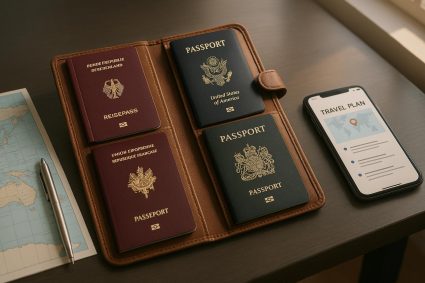
Plan visas, track days, avoid residency tests, and use territorial or zero-tax countries to minimize income tax; U.S. citizens still must report worldwide income.
When to Get a Real Address (and When a Virtual One Is Enough)

Learn when a physical address is legally required and when a virtual address suffices for privacy, mail handling, banking, and tax compliance.
How to Exit a High-Tax Country Without Getting Hit With an Exit Tax

Minimize or avoid exit taxes when leaving a high-tax country: plan 12–24 months ahead, restructure assets, use tax treaties, pick a low-tax residency, and consult experts.
Using a U.S. LLC as a Non-U.S. Person While Living Globally

How non-U.S. residents can form a U.S. LLC to protect assets, access U.S. banking, and manage taxes, with key compliance steps and state choices.
“I’m Paying Taxes Nowhere”: Common Myths and Real Audit Risks
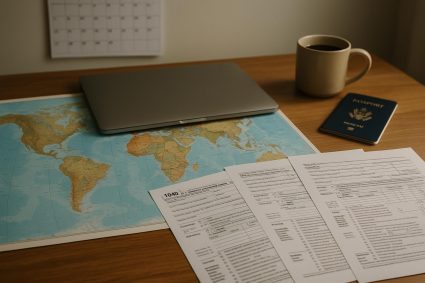
Debunks ‘paying taxes nowhere’ myths, explains tax residency rules, FATCA/FBAR transparency, audit risks for digital nomads, and lawful tax-reduction strategies.
Digital Nomads and Health Insurance: Residency Requirements Nobody Talks About

How residency and visa rules affect digital nomads’ health coverage—what countries require, why travel insurance often falls short, and how to choose global plans.
