
Double taxation is a major concern for U.S. digital nomads. If you live or work abroad, you might face taxes in both the U.S. and your host country. This happens because the U.S. taxes its citizens on worldwide income, regardless of where they live. But don’t worry – there are legal ways to reduce or even eliminate this burden.
Here’s what you need to know:
- Key tax rules: The U.S. requires citizens to report all income, even from foreign sources. Host countries may also tax you based on residency or local laws.
- Avoiding double taxation: Use tools like the Foreign Earned Income Exclusion (FEIE), the Foreign Tax Credit (FTC), or tax treaties to lower your tax bill.
- Important forms: File IRS Form 2555 for FEIE, Form 1116 for FTC, and ensure compliance with FBAR and FATCA for foreign accounts.
- Record-keeping: Track income, taxes paid, and travel dates to meet IRS requirements and avoid penalties.
How Double Taxation Works and U.S. Tax Rules
What Is Double Taxation?
Double taxation happens when the same income is taxed by two different countries. Tax expert Mel Whitney puts it simply: "Double taxation is simply what the name implies: income, whether corporate or personal, is taxed in two countries". For digital nomads, this means their earnings can be taxed by more than one jurisdiction, creating added financial challenges. On a personal level, this often affects individuals whose income is taxed both in their home country and the country where they live or work.
Common Causes of Double Taxation
Digital nomads face double taxation for several reasons:
- Tax Residency and the 183-Day Rule: Countries have different ways of determining tax residency. Some rely on physical presence, sometimes requiring 183 days in a year, while others consider factors like owning a home or holding local bank accounts. When these rules overlap, someone might be considered a tax resident in more than one country.
- Real-World Examples: Take Maria, a U.S. citizen who works remotely from Portugal for six months. Her stay makes her a tax resident in Portugal while she remains subject to U.S. taxes. This dual obligation illustrates how extended stays can lead to double taxation.
- Conflicting Tax Systems: Countries define taxable income differently. For instance, something tax-exempt in one country might be fully taxable in another.
- Permanent Establishment Rules: If a digital nomad’s business activities in a host country meet the criteria for a "permanent establishment", that country may claim the right to tax the business’s profits – even if those profits are already taxed elsewhere.
These overlapping rules create particular challenges for U.S. citizens navigating global tax systems.
U.S. Worldwide Income Tax Requirements
The U.S. takes a unique approach to taxation. Unlike most countries, the U.S. requires its citizens and green card holders to report all income – no matter where it’s earned. For digital nomads, understanding and complying with these rules is essential.
"As a US citizen, your tax obligations follow you worldwide." – Ines Zemelman, Accredited Enrolled Agent, Founder and President at TFX
This worldwide tax rule applies to all income types, including wages, freelance earnings, business profits, rental income, investment returns, and even cryptocurrency transactions. This obligation exists even if taxes have already been paid to a foreign government.
For freelancers, the situation can be even more complicated. In addition to income tax, the U.S. imposes a 15.3% self-employment tax, regardless of where the work is performed.
While these rules can feel overwhelming, there are ways to reduce or avoid double taxation altogether. These strategies will be discussed in the next section.
Legal Methods to Avoid Double Taxation
Digital nomads have several legal strategies to reduce or even eliminate double taxation. Knowing these options and picking the right approach for your specific situation can significantly lower your overall tax burden.
Using Tax Treaties
Tax treaties between the U.S. and other countries are a key tool for avoiding double taxation. These agreements clarify which country has the primary right to tax various types of income. They often include benefits like reduced withholding rates on dividends and interest, exemptions for specific income types, and tie-breaker rules for dual residency situations.
However, most treaties include "saving clauses", which allow the U.S. to tax its citizens as if the treaty didn’t exist. To benefit from these treaties, start by checking the IRS website for a list of countries that have tax treaties with the U.S.. If your host country has a treaty, review the relevant articles to see if you qualify for tax credits, exemptions, or reduced tax rates. For dual residents claiming treaty benefits as a resident of the other country, you need to file Form 1040-NR (U.S. Nonresident Alien Income Tax Return) and attach Form 8833 (Treaty-Based Return Position Disclosure).
In addition to treaties, the Foreign Earned Income Exclusion (FEIE) is another powerful way to reduce tax liability.
Applying the Foreign Earned Income Exclusion (FEIE)
The Foreign Earned Income Exclusion is a major tax break for U.S. digital nomads. According to tax expert Mel Whitney:
"The foreign earned income exclusion (FEIE) is one of the most valuable tax benefits available to US citizens and resident aliens who live and work abroad".
For 2025, eligible taxpayers can exclude up to $130,000 of foreign-earned income, with the exclusion amount adjusted annually for inflation. To qualify, you must have a tax home in a foreign country and meet either the Physical Presence Test (330 full days within a 12-month period) or the Bona Fide Residence Test (entire calendar year of residence).
| Criteria | Physical Presence Test | Bona Fide Residence Test |
|---|---|---|
| Time requirement | 330 full days in 12 months | Entire calendar year |
| Residency needed? | No | Yes |
| Travel flexibility | High | Lower |
| Best for… | Frequent movers | Long-term expats |
It’s important to note that the FEIE only applies to earned income, such as wages, salaries, and professional fees for personal services performed abroad. It does not cover passive income like dividends, interest, or capital gains. To claim the FEIE, you’ll need to file Form 2555 with your tax return. Additionally, you may qualify for the Foreign Housing Exclusion or Deduction, which can offset certain housing costs.
While the FEIE is great for shielding earned income, the Foreign Tax Credit (FTC) offers broader relief for other types of income.
Using the Foreign Tax Credit (FTC)
The Foreign Tax Credit is another effective way to avoid double taxation. It reduces your U.S. tax bill dollar-for-dollar based on the foreign income taxes you’ve already paid. Unlike the FEIE, the FTC applies to a wider range of income, including wages, self-employment income, interest, dividends, capital gains, rental income, and royalties.
This credit is particularly useful if you live in a high-tax country where foreign tax rates meet or exceed U.S. tax rates. As noted by Taxes for Expats:
"If you live in a high-tax country and pay more in foreign income taxes than you owe to the US, the FTC may completely eliminate your US tax bill and leave you with excess credits you can use in future years".
The FTC also offers flexibility. Unused credits can be carried back one year or forward for up to 10 years. Additionally, you can switch between the FTC and FEIE annually without restrictions, whereas the FEIE has a five-year re-election limitation if revoked. Another advantage of the FTC is that it keeps your income in your Adjusted Gross Income (AGI), which can help with IRA contributions and qualifying for the Child Tax Credit.
To claim the FTC, file IRS Form 1116.
U.S. Tax Compliance Requirements for Digital Nomads
Understanding how to avoid double taxation is just one part of the equation for digital nomads. Staying on top of U.S. tax compliance is equally critical. With unique challenges to navigate, careful planning and thorough documentation are essential to avoid penalties.
Here’s a breakdown of the key IRS forms, deadlines, and reporting requirements to help digital nomads stay compliant.
Required IRS Forms and Deadlines
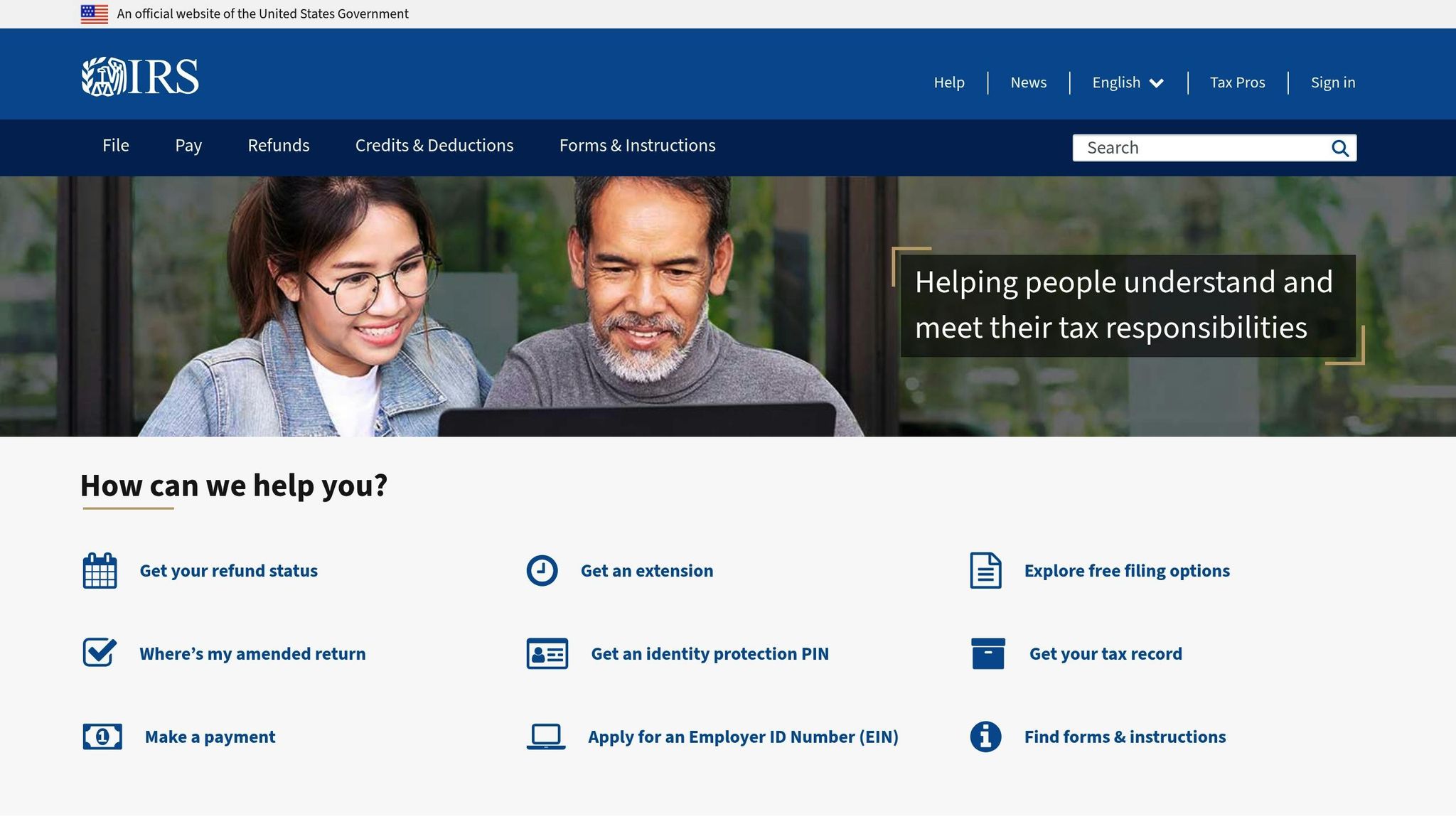
Digital nomads must file their annual U.S. tax return using Form 1040, along with additional forms based on their circumstances:
- Form 2555: To claim the Foreign Earned Income Exclusion (FEIE).
- Form 1116: To claim the Foreign Tax Credit (FTC).
- Schedule C: To report self-employment income.
- Schedule SE: To calculate self-employment tax.
U.S. expats automatically receive a filing extension from April 15 to June 15. If needed, you can request an additional extension to October 15 by filing Form 4868. However, any taxes owed must still be paid by April 15 to avoid late payment penalties.
Beyond filing tax returns, digital nomads must also report their foreign financial accounts and assets.
Reporting Foreign Bank Accounts and Assets
U.S. citizens living abroad must comply with two major reporting requirements for foreign accounts: FBAR and FATCA. While both focus on foreign financial assets, they differ in thresholds, deadlines, and where they are filed.
- FBAR (FinCEN Form 114): Required if the total value of all your foreign financial accounts exceeds $10,000 at any time during the year. This includes checking accounts, savings accounts, investment accounts, and accounts where you have signature authority. FBARs are filed directly with the Financial Crimes Enforcement Network (FinCEN) through their BSA E-Filing System.
- FATCA (Form 8938): This form is filed with your tax return and applies to higher thresholds. For single filers living abroad, you must file if your foreign financial assets exceed $200,000 on the last day of the tax year or $300,000 at any time during the year. For married couples filing jointly, the limits increase to $400,000 and $600,000, respectively.
Failure to comply with these requirements can result in heavy penalties. Non-willful FBAR violations can lead to fines of up to $10,000 per violation, while willful violations can result in penalties of the greater of $100,000 or 50% of the account balance. FATCA penalties start at $10,000 and can escalate to $50,000 for continued non-compliance.
| Requirement | Threshold | Filing Deadline | Where to File |
|---|---|---|---|
| FBAR (FinCEN Form 114) | $10,000 aggregate | April 15 (auto extension to Oct 15) | FinCEN BSA E-Filing System |
| FATCA (Form 8938) | $200,000/$300,000 (single abroad) | With tax return | Attached to Form 1040 |
Keeping Proper Records
Good record-keeping is the backbone of tax compliance, especially for digital nomads juggling multiple income streams and currencies. Maintaining organized records not only simplifies filing but also provides critical documentation if the IRS reviews your tax positions.
Here’s what to keep on hand:
- Income Records: Pay slips, invoices, and bank statements showing foreign income.
- Foreign Taxes Paid: Proof of foreign tax payments to claim credits or exclusions.
- Account Balances: Year-end balances for FBAR and FATCA reporting.
- Housing Expenses: Receipts for rent, utilities, and other costs if claiming the Foreign Housing Exclusion.
- Travel Logs: Passport stamps or daily location tracking to meet the Physical Presence Test.
Self-employed digital nomads should also maintain detailed logs of business activities, receipts for expenses, and mileage records for business-related travel. Be sure to document the purpose of each expense, as international taxpayers often face closer scrutiny from the IRS.
As Krystal Pino Leeds, Founder of Nomadtax, explains:
"A lot of nomads will read these treaties and attempt to make them fit their situation… It’s important to understand how [the treaty] is used in practice, so speaking with someone who is well-versed in these treaties is incredibly helpful".
sbb-itb-39d39a6
Offshore Asset Protection and International Business Structures
For digital nomads with significant income or assets, international business structures offer a way to safeguard wealth, maintain privacy, and optimize tax obligations. Setting up your online business as an LLC or similar legal entity can help limit personal liability for business debts and obligations. Below, we’ll explore common entity structures and their role in tax strategies.
Private US LLCs and Offshore Companies
US LLCs, particularly in states like Delaware or Wyoming, provide a layer of protection for personal assets while offering operational flexibility and access to U.S. banking and payment systems. These entities are designed to shield personal assets from business liabilities, making them a popular choice for entrepreneurs.
Offshore companies, on the other hand, can be established in jurisdictions with minimal reporting requirements and strong privacy laws. With ongoing fees averaging around $100–$200, these structures can help separate business activities from personal tax matters.
Where you set up your company matters. Financial hubs like Singapore and Hong Kong are ideal for businesses where reputation is a priority. For freelancers or affiliate marketers, simpler setups may suffice. Estonia’s e‑Residency program has also gained traction by offering low corporate tax rates and a fully digital business environment. Meanwhile, some nomads are turning to onshore jurisdictions like the UK (using LLP or Scotland LP structures), the USA (Delaware or Wyoming LLCs), or Puerto Rican companies for easier access to banking and payment systems.
Offshore Trusts and Private Interest Foundations
For those seeking advanced asset protection and estate planning, offshore trusts and private interest foundations provide robust options. These structures are particularly appealing to high-net-worth individuals looking to manage wealth across borders effectively.
An offshore trust establishes a fiduciary relationship where a trustee manages assets on behalf of beneficiaries. Unlike a corporation, a trust is not a separate legal entity but a legal arrangement governed by trust law. Trusts can be either revocable, offering flexibility, or irrevocable, which provides stronger asset protection. Additionally, trusts often maintain a high degree of privacy since public registration is typically not required.
Private interest foundations, however, operate as separate legal entities. They directly own assets and can enter into contracts. While these foundations are usually irrevocable, they provide long-term stability, which some individuals prefer for institutional wealth management.
Here’s a quick comparison of these two structures:
| Feature | Offshore Trust | Private Interest Foundation |
|---|---|---|
| Legal Structure | Legal relationship, not a separate entity | Separate legal entity |
| Asset Ownership | Trustee holds assets for beneficiaries | Foundation owns assets directly |
| Flexibility | Can be revocable or irrevocable | Usually irrevocable |
| Privacy | Often highly private | Varies by jurisdiction |
| Management | Managed by a trustee with fiduciary duties | Governed by a foundation council |
| Ideal For | Flexible asset protection and inheritance | Long-term wealth management |
Anna N’Jie-Konte, a certified financial planner and CEO of Poder Wealth Advisors, explains the complexity of private foundations:
"A private foundation is a completely separate entity that is going to require a lot more oversight, a lot more management, and, candidly, has a lot more scrutiny".
Combining International Structures with Tax Planning
To get the most out of these international structures, it’s crucial to pair them with strategic tax planning. Establishing tax residency in a favorable jurisdiction – where income earned abroad may not be taxed or where zero income tax applies – can significantly reduce overall tax obligations.
A common approach includes three steps: incorporating a company in an offshore jurisdiction, opening a corporate bank account (preferably in the same jurisdiction), and establishing tax residency in a country with favorable policies. This strategy not only creates a clear distinction between personal and business activities but also optimizes tax treatment.
Tax treaties between countries play a key role in avoiding double taxation and can provide additional benefits when structured correctly. Understanding how treaty networks interact with your chosen jurisdictions is essential for maximizing protection and minimizing liabilities.
However, forming an offshore company alone isn’t enough. Compliance with substance requirements is critical. Businesses must demonstrate genuine economic activity, maintain proper records, and conduct real operations to fulfill legal and tax obligations.
Given the complexities of international tax laws, reporting requirements, and cross-border compliance, it’s wise to consult professionals experienced in global taxation. A well-thought-out overseas business plan can help address potential challenges and ensure that your structures remain compliant and effective.
Comparing Double Taxation Avoidance Methods
When it comes to avoiding double taxation, the method you choose will depend largely on your income level, residency status, and the tax rates of the country where you live. The three primary options – Foreign Earned Income Exclusion (FEIE), Foreign Tax Credit (FTC), and tax treaties – each have their own advantages and limitations.
FEIE is often the go-to for expats living in low-tax countries compared to the U.S.. On the other hand, FTC tends to be more beneficial for those paying higher foreign taxes than they would in the U.S.. Tax treaties, meanwhile, help clarify tax obligations between countries and prevent double taxation altogether.
Here’s a breakdown to help you decide which method might work best for you:
Comparison Table: FEIE, FTC, and Tax Treaties
| Method | Eligibility | Key Benefits | Limitations | Best Use Case |
|---|---|---|---|---|
| Foreign Earned Income Exclusion (FEIE) | Must pass either the Physical Presence Test (330 full days abroad in 12 months) or the Bona Fide Residence Test (entire calendar year) | Excludes up to $130,000 annually from taxable income for 2025 | Doesn’t cover passive income; excluded income can’t be used for FTC | Ideal for employees or freelancers earning under $130,000 |
| Foreign Tax Credit (FTC) | Must pay income tax to a foreign government | Reduces U.S. tax liability dollar-for-dollar by the foreign taxes paid; covers both income and self-employment taxes | Can involve complex calculations; limited to the actual foreign taxes paid | Suitable for high-income earners in moderate to high-tax countries |
| Tax Treaties | Must live or work in a country with a U.S. tax treaty (over 60 countries have treaties) | Prevents double taxation; lowers withholding taxes; clarifies residency rules | Only applies to treaty countries; requires careful interpretation | Best for long-term residents in treaty countries with specific income types |
For self-employed expats earning high incomes in moderate-tax countries, FTC often provides the most benefit. This is because FTC can offset both income and self-employment taxes, even when some foreign taxes are still owed.
However, tax treaties can be tricky to navigate. As Krystal Pino Leeds, Founder of Nomadtax, points out:
"A lot of nomads will read these treaties and attempt to make them fit their situation… It’s important to understand how [the treaty] is used in practice, so speaking with someone who is well-versed in these treaties is incredibly helpful".
Some expats take a hybrid approach to maximize savings. For instance, they might use FEIE to exclude part of their earned income while applying FTC to investment or rental income. Others may exclude a portion of their income with FEIE and then apply FTC to the remaining taxable amount.
Ultimately, the right choice depends on your situation. FEIE offers a straightforward option for moderate earners, FTC provides more flexibility for those dealing with higher foreign taxes, and tax treaties offer additional clarity and protection for long-term residents in treaty countries. Understanding how these methods can work together is key to minimizing your tax burden.
Conclusion: Main Points for Digital Nomads
When it comes to avoiding double taxation, digital nomads have three key strategies to consider: the Foreign Earned Income Exclusion (FEIE), the Foreign Tax Credit (FTC), and tax treaties. Each option works best under specific conditions, and the right choice depends on factors like your income, where you live, and the tax rates in that country.
The FEIE allows you to exclude up to $130,000 of foreign earned income if you meet certain residency requirements. This approach is especially useful if you’re living in a country with lower tax rates than the U.S. If your income exceeds the FEIE limit or you’re based in a country with moderate to high taxes, the FTC can help by reducing your U.S. tax liability dollar-for-dollar based on the foreign taxes you’ve already paid. Tax treaties provide additional relief by clarifying which country has taxing rights, but it’s important to note that U.S. citizens are still taxed on their worldwide income due to the "saving clause" in most treaties.
Compliance with IRS rules is non-negotiable. U.S. citizens must file tax returns on their global income, regardless of where they live. Failing to report foreign accounts or missing deadlines can lead to hefty penalties that could wipe out any tax savings. Keeping meticulous records – such as travel dates, foreign tax payments, and income details – is critical for staying on the right side of the law.
As your financial situation becomes more complex, seeking professional advice is increasingly important. This is particularly true if you’re exploring advanced strategies like setting up offshore companies or trusts for asset protection.
In the bigger picture, tax optimization should be part of a broader plan for internationalization. Combining smart tax strategies with well-structured business setups and asset protection, as discussed earlier, can help you create a solid foundation for long-term financial security as a digital nomad.
FAQs
How can digital nomads determine if they qualify for the Foreign Earned Income Exclusion (FEIE) or the Foreign Tax Credit (FTC)?
To qualify for the Foreign Earned Income Exclusion (FEIE), you need to meet one of these two criteria:
- Physical Presence Test: You must spend at least 330 full days within a 12-month period outside the United States.
- Bona Fide Residence Test: You need to establish a bona fide residence in a foreign country for an uninterrupted period that includes an entire tax year.
The Foreign Tax Credit (FTC) works differently. It applies if you pay or accrue foreign taxes on income that is also taxed by the U.S. This credit allows you to reduce your U.S. tax bill by the amount of foreign taxes paid, helping to avoid double taxation.
Each option comes with its own set of rules and limitations. It’s crucial to evaluate your personal circumstances and, if necessary, seek advice from a tax professional to ensure you stay compliant with U.S. tax regulations.
What should digital nomads consider when deciding between a US LLC and an offshore company for tax purposes?
When choosing between a US LLC and an offshore company for tax purposes, digital nomads need to weigh factors like tax residency, income sources, and compliance requirements. A US LLC offers pass-through taxation, meaning profits are taxed directly at the owner’s level. However, for US citizens or residents, this may still include self-employment taxes. This setup is often a good fit for those with strong business ties to the United States.
In contrast, an offshore company can provide certain tax benefits, such as the possibility of avoiding US taxation if the owner is not a US resident and meets specific conditions. That said, establishing an offshore company demands careful planning to navigate complex tax residency rules, comply with international tax laws, and handle administrative requirements.
Important considerations include tax treaties, residency-based taxation rules, and the costs associated with maintaining each structure. To make the best choice for your financial and legal situation, consulting a tax professional is strongly advised.
What are the tax reporting requirements for U.S. digital nomads with foreign bank accounts, and what are the consequences of not complying?
U.S. digital nomads are required to file the Foreign Bank Account Report (FBAR) if the combined value of their foreign financial accounts exceeds $10,000 at any point during the calendar year. This includes accounts such as foreign bank accounts, brokerage accounts, and other financial holdings outside the United States.
Failing to meet FBAR requirements can lead to steep penalties. For non-willful violations, fines can go up to $12,921 per violation. However, willful violations carry much harsher consequences, with fines reaching the greater of $129,210 or 50% of the account balance. In extreme cases, violators could even face criminal charges and imprisonment. Staying informed and meeting these reporting obligations on time is essential to avoid these severe repercussions.
