
Concerned about privacy and security in business banking? You’re not alone. With cyberattacks rising 50% year-over-year and regulations like GDPR and CCPA imposing strict data protection standards, businesses need banking solutions that prioritize privacy and compliance.
Here’s a quick look at 6 privacy-focused banking options designed to protect your assets and data:
- Global Wealth Protection (GWP): Offshore banking with asset protection and privacy frameworks for digital entrepreneurs.
- Cayman National Bank: Strong legal protections and international compliance from the Cayman Islands.
- Swissquote Bank: Swiss privacy combined with global banking and multi-currency accounts.
- Deltec Bank & Trust: Bahamian-based bank offering wealth planning and robust security measures.
- Capital Security Bank (Cook Islands): Focused on privacy with strict legal safeguards and asset protection.
- Mercury Bank (US): Fintech platform with FDIC-insured accounts, encryption, and fraud prevention tools.
Quick Comparison
| Bank | Main Features | Legal Environment |
|---|---|---|
| Global Wealth Protection | Offshore privacy, tax minimization | Multiple jurisdictions |
| Cayman National Bank | FATCA/CRS compliance, no direct taxes | Cayman Islands |
| Swissquote Bank | Swiss privacy, multi-currency accounts | Swiss regulatory framework |
| Deltec Bank & Trust | Wealth planning, fiduciary services | Bahamian law |
| Capital Security Bank | Privacy-first jurisdiction, asset safety | Cook Islands regulations |
| Mercury Bank | Fintech tools, FDIC insurance | US regulatory framework |
Why it matters: Secure banking isn’t just about protecting your money – it’s about safeguarding your reputation, complying with laws, and meeting customer expectations. Start by identifying your needs, evaluating jurisdictions, and choosing a bank that aligns with your privacy goals.
What to Look for in Private Banking
Choosing a private bank with a strong focus on privacy is crucial in today’s regulatory environment. With GDPR penalties potentially reaching 4% of global revenue or €20 million, and HIPAA violations climbing as high as $250,000 for repeat offenses, understanding the essentials of private banking is more important than ever.
Security Infrastructure
Security is a cornerstone of modern private banking. Look for banks that prioritize:
- Advanced Encryption: Ensuring data is protected both at rest and during transmission.
- Multi-Factor Authentication: Including biometric verification and additional layers beyond standard passwords.
- Real-Time Monitoring: Systems that detect and respond to potential threats as they happen.
Regulatory Compliance
Your bank should meet all relevant privacy regulations. Here’s how some key regulations impact private banking:
| Regulation | Key Requirements | Banking Impact |
|---|---|---|
| GDPR | Data Protection Officer, Right to Erasure | Governs how EU customer data is managed |
| CCPA/CPRA | Consumer Data Rights, Opt-out Options | Protects privacy for California residents |
| GLBA | Financial Data Protection | Sets standards for U.S. banking operations |
| Bank Secrecy Act | Transaction Reporting | Oversees domestic and international transfers |
Access Control and Data Management
Effective data management is vital. As J.P. Morgan Private Bank U.S. emphasizes:
"At the Private Bank, protecting your assets and information is our priority. We invest in advanced technology and employ multiple defense layers for your safety."
Key features to look for include:
- Customizable Alerts: Notifications for important account activities in real-time.
- Data Masking: Protects sensitive data during processing.
- Access Limitations: Ensures only authorized personnel can view or modify account details.
Incident Response Capabilities
A strong incident response plan is non-negotiable. The best private banks offer:
- Trained Specialists: Teams prepared to handle breaches effectively.
- Regular Updates: Frequent system improvements and timely security patches.
Third-Party Risk Management
Banks must also manage risks from external vendors. According to Willis Towers Watson:
"’Privacy by design’ requirements now mean that following a breach, regulators will examine the measures an organisation took to safeguard personal data in order to determine fines."
Choose banks that:
- Conduct thorough vendor assessments.
- Enforce clear data handling protocols with third parties.
- Regularly audit external partners for compliance.
1. Global Wealth Protection (GWP)

Global Wealth Protection offers privacy-focused banking services tailored for business owners and digital nomads. Led by Managing Director Bobby Casey, GWP specializes in financial privacy and asset protection through a well-structured framework.
Core Banking Features
GWP’s services focus on three main pillars:
| Feature | Description | Key Advantages |
|---|---|---|
| Asset Protection | Offshore banking solutions with charging order protection | Avoids corporate income tax, franchise tax, and state taxes |
| Privacy Framework | Custom business structuring and legal residency options | Greater confidentiality for personal and business matters |
| International Access | Banking options in the US, Caribbean, and Europe | Geographic diversification and easy fund access |
These pillars form the foundation of GWP’s strategic services.
Asset Protection Strategy
GWP’s asset protection strategy revolves around offshore accounts and includes:
- Strategic Jurisdiction Selection: Choosing banking locations designed to maximize privacy.
- Legally Optimized Tax Structures: Structuring accounts to minimize tax exposure within legal frameworks.
- Corporate Structuring: Creating protected business entities that align with banking solutions.
"Having an offshore bank account is the first step towards establishing an asset protection plan."
This multi-layered approach supports seamless integration with other business services.
Business Integration Services
GWP combines banking with business structuring to meet the needs of digital entrepreneurs. As Bobby Casey puts it:
"We work with location independent entrepreneurs (digital nomads) and investors on properly structuring their business and residency. Our focus is on tax minimization and asset protection while creating privacy for our clients’ business and personal affairs."
Trust and Administration
For high-net-worth clients, GWP offers additional services to enhance privacy and streamline asset management, including:
- Trust Administration
- Estate Planning
- Company Management
2. Cayman National Bank
Cayman National Bank, part of the Republic Group, offers private banking services while meeting global regulatory standards. The bank operates under the supervision of the Cayman Islands Monetary Authority (CIMA). Below is an overview of its regulatory approach and privacy measures.
Regulatory Framework
The bank adheres to a structured regulatory framework, which includes:
| Compliance Area | Requirements | Impact on Business Owners |
|---|---|---|
| AEOI Standards | FATCA & CRS compliance | Requires tax residency reporting |
| AML/CTF Rules | Enhanced due diligence | Extensive documentation is necessary |
| Privacy Protection | Data security protocols | Protects sensitive financial details |
| Tax Transparency | International reporting | Facilitates automatic data exchange |
Privacy Features and Requirements
Cayman National Bank balances privacy with strict compliance guidelines:
"Cayman National is committed to protecting the privacy and security of your personal information."
Business owners working with the bank must meet specific requirements to maintain privacy and comply with regulations:
- Complete tax residency self-certification
- Submit Anti-Money Laundering (AML) documentation
- Keep accurate records for regulatory purposes
Compliance Considerations
In 2019, CIMA imposed a $1.6 million fine on Cayman National Bank for deficiencies in its AML practices.
Professional Guidance
It is advisable to consult an independent tax advisor to navigate CRS and FATCA reporting obligations.
Information Exchange Framework
To support transparency and compliance, Cayman National Bank engages in comprehensive information exchange practices, including:
- Automatic Exchange of Information (AEOI) protocols
- FATCA reporting to comply with U.S. tax requirements
- Common Reporting Standard (CRS) adherence
- Cooperation with international tax authorities
These measures aim to safeguard client privacy while promoting legal transparency and deterring tax evasion.
3. Swissquote Bank
Swissquote Bank, regulated by the Swiss Financial Market Supervisory Authority (FINMA), provides secure and globally compliant banking services. Its strong infrastructure and worldwide reach make it a solid option for business owners prioritizing privacy and reliable financial solutions.
Regulatory Framework and Privacy Protection
Swissquote operates under stringent Swiss banking laws while adhering to international requirements:
| Compliance Area | Features | Business Impact |
|---|---|---|
| FATCA Compliance | Reports U.S. accounts to the IRS | Ensures tax transparency |
| AEOI Standards | Verifies client tax status | Supports international compliance |
| FINMA Oversight | Swiss regulatory supervision | Strengthens security standards |
| Multi-jurisdictional | Aligns with global standards | Provides worldwide banking access |
This regulatory foundation supports Swissquote’s extensive international operations, detailed below.
International Banking Features
Swissquote’s global footprint spans key financial hubs like Switzerland, London, Luxembourg, Dubai, and Singapore. This network enables business owners to access privacy-focused, multi-currency banking, including:
- Multi-currency accounts in CHF, EUR, USD, GBP, AED, and ZAR
- Access to over 3 million financial products
- Competitive trading fees starting at CHF 5 per trade
- Custody fees capped at CHF 50 per quarter
Digital Banking Infrastructure
Swissquote invests heavily in digital security, ensuring advanced protection for client data and financial transactions.
Asset Protection Measures
Swissquote strengthens asset protection through several features:
| Protection Feature | Description | Benefit |
|---|---|---|
| FINMA Supervision | Swiss regulatory oversight | Ensures compliance |
| Multi-Currency Support | Allows diverse currency holdings | Reduces exposure to currency risks |
While these measures enhance security, expert advice is recommended for optimal account setup.
Professional Guidance Requirements
Although Swissquote complies with tax regulations and safeguards client privacy, it does not offer tax advisory services. Clients are encouraged to consult independent tax professionals for proper account structuring.
Account Management
Swissquote simplifies account management with features like online account opening, multi-currency packages, international debit cards, and multilingual support. Transparent fee structures ensure clarity, offering business owners both control and convenience.
4. Deltec Bank & Trust
Deltec Bank & Trust offers over 75 years of privacy-focused banking experience from The Bahamas. This institution stands out for its strong compliance practices and global banking services.
Regulatory Framework and Privacy Standards
Deltec combines Bahamian regulations with international standards to prioritize client privacy and compliance:
| Compliance Area | Features | Business Impact |
|---|---|---|
| FATCA/CRS Compliance | Full reporting standards | Meets global tax reporting requirements |
| AML Framework | Enhanced due diligence | Strengthens privacy and regulatory adherence |
| Fiduciary Capacity | Client-first mandate | Ensures top-tier care for client interests |
| Asset Protection | Off-balance sheet holdings | Adds an extra layer of deposit security |
| Regulatory Oversight | Licensed under Bahamian law | Demonstrates a strong regulatory foundation |
International Banking Capabilities
"As entrepreneurs and enterprises strive to expand their global footprints, they truly value partners that offer simple and highly secure cross-border transactions, along with solutions that help to improve their operational efficiencies."
Deltec supports businesses and individuals with a wide range of international banking services:
- Handles transactions in over 100 currencies
- Access to the Visa B2B Connect network across 118 countries
- Expertise in wealth planning
- International payment processing
- Diverse financing solutions
Security Infrastructure
Deltec prioritizes security with advanced measures to protect client assets and data:
| Security Measure | Implementation | Benefit |
|---|---|---|
| Encrypted Systems | Advanced encryption protocols | Safeguards sensitive data |
| Transaction Monitoring | Five licensed tools | Detects and prevents fraud |
| KYC Procedures | Rigorous verification | Reduces risk |
| Asset Segregation | Off-balance sheet holdings | Enhances asset protection |
Asset Protection Strategy
Deltec employs modern techniques to safeguard client assets. Key measures include:
- Fiduciary asset management
- Regular audits by independent professionals
- Adherence to international corporate governance standards
Professional Services
Deltec operates on a fee-based model, avoiding proprietary trading and commercial loans. This approach enhances its focus on wealth management and asset protection. Services include:
- Wealth planning
- Estate structuring
- Tax optimization
- Multi-currency management
- International payment solutions
The bank’s dedication to privacy and security is further supported by its alignment with the Corporate Governance Guidelines issued by the Central Bank of The Bahamas.
sbb-itb-39d39a6
5. Capital Security Bank (Cook Islands)
Capital Security Bank (CSB), established in 1997, is based exclusively in the Cook Islands. It specializes in private banking, focusing on privacy and securing client assets. Operating within a single jurisdiction, CSB demonstrates a strong commitment to secure and compliant banking practices.
Regulatory Framework
CSB is regulated by the Cook Islands Financial Supervisory Commission and operates under the Cook Islands Banking Act 2011. This legal framework emphasizes privacy and compliance, with several key features:
| Privacy Protection | Details | Impact |
|---|---|---|
| Legal Safeguards | Governed by the Cook Islands Banking Act 2011 | Criminal penalties for unauthorized disclosures |
| Government Access | Limited by strict disclosure requirements | Shields clients from excessive government scrutiny |
| Client Consent | Mandatory for any data sharing | Ensures clients control their information |
| International Standards | Ranked in the top 20% of 165 countries by OECD | Surpasses Australian and New Zealand benchmarks |
Privacy and Compliance Policies
CSB carefully limits data sharing to what is necessary for operations, while maintaining compliance with FATCA and CRS regulations. Clients also have full control over marketing communications.
| Information Sharing | Policy | Client Control | |||
|---|---|---|---|---|---|
| Operational Data | Shared only for essential processes | Integral to service delivery | |||
| Marketing | Participation is optional | Clients can opt out anytime | |||
| Third-party Marketing | Not practiced | Ensures complete privacy | |||
| Regulatory Reporting | Compliant with FATCA & CRS | Required by law |
Asset Protection Measures
CSB goes beyond regulatory requirements to safeguard client assets. Its protective measures include:
- Maintaining capital ratios that exceed Basel III standards.
- Avoiding speculative investments and unsecured loans.
- Employing advanced physical and digital security measures.
- Limiting employee access to client data on a strict need-to-know basis.
International Banking Services
CSB offers a wide range of international banking services, designed to meet varied financial needs while maintaining a strong focus on privacy.
| Service Category | Features | Advantages |
|---|---|---|
| Asset Management | Access to major global markets | Enables portfolio diversification |
| Corporate Services | Offshore vehicle management | Simplifies complex business structures |
| Wealth Preservation | Focused on long-term growth | Supports sustainable financial strategies |
| Trust Services | Flexible corporate structures | Facilitates comprehensive wealth planning |
CSB’s dedication to privacy is further demonstrated by its participation in 21 Tax Information Exchange Agreements and adherence to OECD Automatic Exchange of Information standards.
6. Mercury Bank (US)
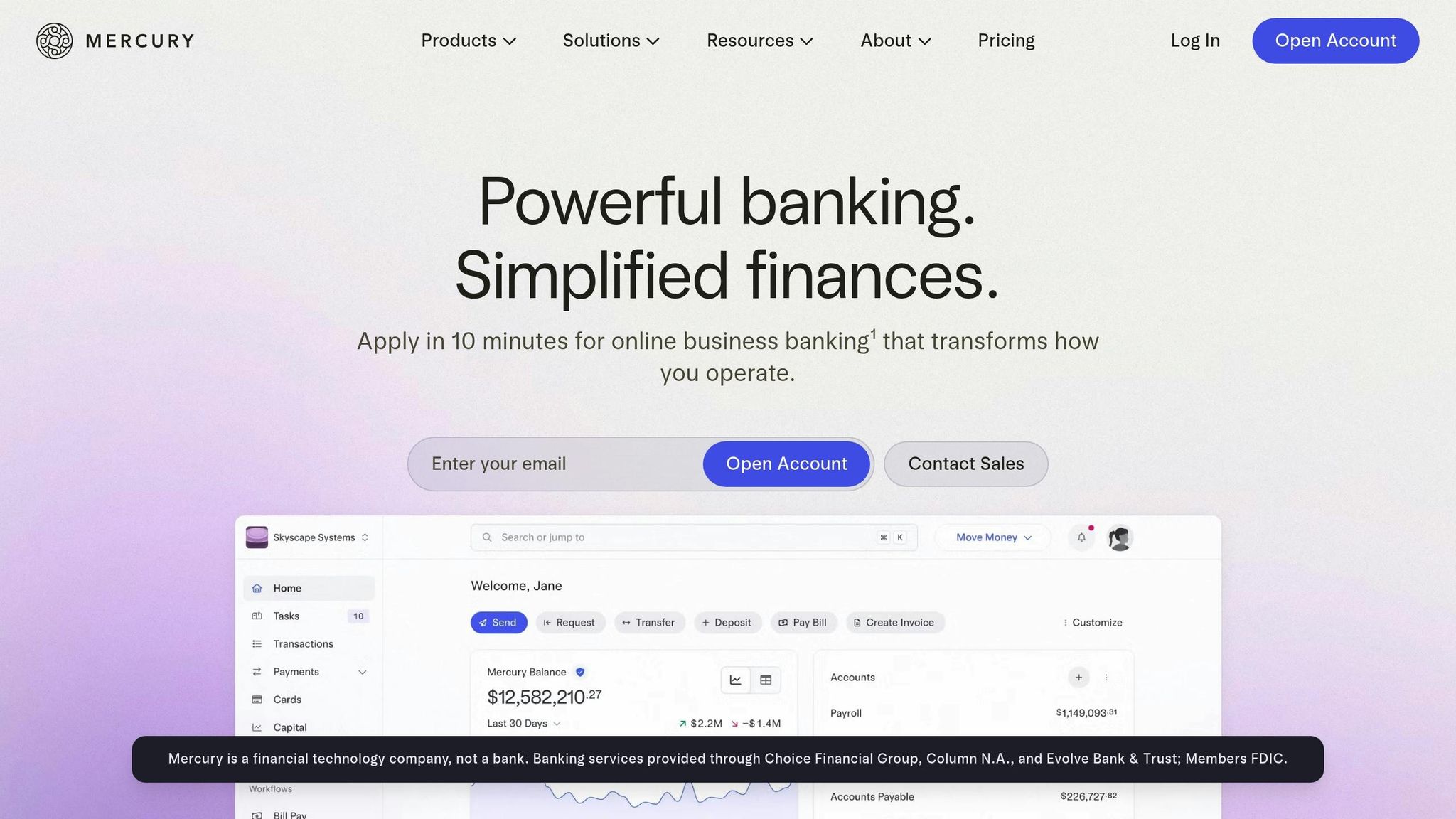
Mercury Bank is a fintech platform offering privacy-focused and secure business banking services. By partnering with FDIC-insured banks, Mercury ensures both data protection and compliance with regulatory standards.
Security Infrastructure
Mercury uses multiple security measures to safeguard business accounts:
| Security Feature | Implementation | Benefit |
|---|---|---|
| Encryption | Standard protocols for data at rest and in transit | Protects against unauthorized data access |
| Authentication | Touch ID and time-based one-time passwords | Avoids risks linked to SMS-based verification |
| Monitoring | Dark web surveillance and device verification | Identifies potential threats early |
| Database Security | Bcrypt algorithm for password hashing | Strengthens defense against breaches |
Asset Protection Framework
Mercury prioritizes asset protection through insurance coverage and risk management tools:
| Protection Feature | Coverage Details | Business Impact |
|---|---|---|
| FDIC Insurance | Up to $5M through partner banks’ sweep networks | Offers coverage beyond the $250,000 standard |
| SIPC Coverage | $500,000 for Treasury accounts | Provides extra investment protection |
| Mercury Vault | Automated fund monitoring | Enables real-time risk tracking |
| Fraud Prevention | Automated monitoring with custom controls | Minimizes unauthorized transactions |
Privacy Controls and Permissions
Mercury gives businesses control over financial data and user access. Customizable permissions and separate accounts for accounts receivable (AR) help reduce risks of breaches and ensure secure financial operations.
Compliance Standards
Mercury maintains strict adherence to regulatory requirements:
- SOC 2 Type II compliance with regular independent audits
- Full compliance with KYC, KYB, and AML regulations
- Continuous OFAC sanctions monitoring
- Annual third-party penetration testing
These measures strengthen Mercury’s ability to protect both business assets and personal data.
"Some things should always be kept private. That’s why we go the extra mile to protect your data." – Mercury
Business Banking Features
Mercury supports secure financial transactions with features designed for business needs:
| Feature Category | Capabilities | Privacy Enhancement |
|---|---|---|
| Payment Processing | Secure payment requests with auto-routing | Limits exposure of main accounts |
| Vendor Management | ACH authorization system | Blocks unauthorized payments |
| Spend Control | Customizable transaction limits and approvals | Ensures better oversight |
| Account Structure | Separate AR accounts for incoming payments | Keeps financial flows isolated |
"An operator’s dream. Mercury combines the speed, simplicity, and smarts that I need to get back to running my business. Search for data or actions, all at your fingertips." – Lindsay Liu, CEO & co-founder, Super
With over 97% of customer deposits FDIC-insured, Mercury’s proactive approach to security and privacy makes it a trusted choice for businesses focused on protecting their financial data.
Bank Features Comparison
This section provides a summary of privacy and asset protection features to help you choose the right banking option.
Bank Comparisons
| Bank | Asset Protection Features | Legal Environment |
|---|---|---|
| Global Wealth Protection | Offshore trust integration | Multiple jurisdiction options |
| Cayman National Bank | No direct taxes | Strong legal protections |
| Swissquote Bank | Combines Swiss banking privacy with international reporting standards | Swiss regulatory framework |
| Deltec Bank & Trust | Multi-jurisdiction structure | Regional asset protection measures |
| Capital Security Bank | Operates under New Zealand regulations | Reliable legal safeguards |
| Mercury Bank | FDIC-supported partnership network | US regulatory framework |
This table outlines the main differences to help guide your decision.
Privacy Standards and Compliance
Swissquote blends traditional Swiss privacy with compliance under CRS and AEOI reporting standards. Meanwhile, Cayman National Bank benefits from strong legal protections that safeguard client data.
When it comes to asset protection, the Cook Islands stands out for its robust legal history. For example, fraudulent transfer claims must be filed within one year of the lawsuit or two years after the cause of action arises. These strict timelines enhance its reputation as a secure jurisdiction.
Key Considerations
- Assess the legal framework: Make sure the bank operates within a jurisdiction with strong legal protections.
- Verify privacy compliance: Ensure the bank adheres to privacy regulations and facilitates smooth international transactions.
- Examine efficiency: Look into the bank’s operational capabilities.
Jurisdictions like Nevis also impose strict requirements to deter creditors. For instance, a $100,000 cash deposit is mandatory before initiating litigation, adding another layer of asset protection.
How to Set Up Private Banking
Follow this guide to establish secure private banking for your business.
Initial Assessment
Start by identifying your specific banking needs. Key considerations include:
- Volume of transactions
- Need for international payments
- Goals for asset protection
- Privacy expectations
- Desired investment services
- Minimum deposit requirements
Choosing the Right Jurisdiction
Selecting the appropriate jurisdiction is a critical step. Pay attention to these factors:
- Economic Stability
For example, Singapore is known for its advanced banking systems and infrastructure.
- Regulatory Framework
Check if the jurisdiction complies with international standards. Look for:
- Information-sharing agreements
- FATF compliance
- OECD rankings
- Bail-in legislation
- Banking System Security
Assess deposit protection policies. For instance, some banks in Belize maintain at least 24% deposit availability, while others hold 100% of deposits.
Bank Selection Process
Evaluate potential banks using an assessment matrix:
| Criteria | What to Evaluate |
|---|---|
| Financial Health | Liquidity ratios and deposit reserves |
| Technology | Online banking features and accessibility |
| Privacy Measures | Strong data protection protocols |
| Compliance Standards | Adherence to KYC, AML, and CTF procedures |
| Account Features | Multi-currency accounts and international transfers |
Once you’ve analyzed your options, move forward with banks that meet your criteria and align with your compliance needs.
Meeting Compliance Requirements
Set up a strong compliance system to ensure smooth operations:
- Prepare key documents, including business registration, ownership details, and proof of funds.
- Implement internal controls, such as:
- Regular account audits
- Transaction monitoring
- Staff training in privacy protocols
- Cybersecurity measures
Monitoring and Maintenance
Your choice of banking location is as important as selecting an investment property or a place to live.
Ongoing Management Tips
- Conduct quarterly reviews of banking policies
- Keep track of jurisdiction stability
- Maintain detailed transaction records
- Stay in regular contact with your bank
- Monitor updates to privacy laws
Managing Risks
Protect your banking relationships with these practices:
- Set up clear internal controls
- Keep thorough documentation for major transactions
- Use separate accounts for operations and reserves
- Review bank statements regularly
- Watch for any unusual or suspicious activities
Summary
Here’s a quick overview of the main advantages and steps for implementing private banking. With identity theft losses surpassing $10 billion in 2023 and increasing by 14% each year, taking strong privacy measures is more important than ever.
Key Advantages of Private Banking
- Stronger Security
- Protects business assets with additional layers of security.
- Using Anonymous LLCs in states like Wyoming, Delaware, or Nevada reduces exposure to risks.
- Risk Mitigation
- Shields against frivolous lawsuits.
- Reduces risks of identity theft, corporate espionage, and financial fraud.
- Privacy in Operations
- Ensures secure international transactions.
- Keeps financial information protected.
- Maintains confidentiality in business dealings.
"Protecting banking customers’ privacy as they interact with an expanding variety of screen experiences is not only ethically imperative but also beneficial to both customers and businesses." – Robert Ramsey, CEO, Rain Technology
Steps to Establish Private Banking
- Identify your privacy and compliance requirements.
- Outline data flows and set clear retention policies.
- Put in place strong security measures and response plans.
- Regularly review compliance to stay up to date.
- Choose jurisdictions that offer favorable conditions for asset protection.
"Your money is indeed your business, and offshore banking can keep it that way."
FAQs
What should I look for in a privacy-focused bank for my business?
When selecting a privacy-focused bank for your business, prioritize institutions that offer robust data privacy protections, secure transactions, and asset protection. Look for features like anonymous account options, strong encryption for online banking, and clear policies on safeguarding your financial information.
It’s also important to consider the bank’s compliance with U.S. privacy regulations, such as the Gramm-Leach-Bliley Act, and its approach to information-sharing practices. Evaluate whether the bank provides international banking support, ease of access for offshore accounts, and services like same-day wire transfers or 24/7 private banking assistance.
By focusing on these factors, you can ensure your financial data remains secure while meeting your business’s operational needs.
How do privacy-focused banks comply with regulations like GDPR and CCPA while protecting customer data?
Privacy-focused banks comply with regulations like GDPR and CCPA by implementing key practices to safeguard customer data. They ensure data is processed lawfully, often relying on customer consent, legal obligations, or legitimate business interests. Transparency is a priority, with clear privacy policies and robust security measures in place to protect sensitive information.
Additionally, these banks respect consumer rights, such as the right to access, delete, or opt out of data sharing. Regular audits, data protection assessments, and maintaining detailed records of data processing activities help ensure accountability and compliance with international standards.
What key security features should I prioritize when choosing a bank to protect my business assets and information?
When selecting a bank to safeguard your business assets and data, prioritize robust security measures that ensure confidentiality and protection. Look for features like encryption to secure your transactions, two-factor authentication (2FA) for account access, and real-time fraud monitoring with instant security alerts. These tools can help detect and prevent unauthorized activity.
Additionally, consider banks that offer biometric authentication (e.g., fingerprint or facial recognition) and enforce strong password requirements to enhance account security. These measures provide an added layer of protection for your sensitive financial information, ensuring your business operates securely and with peace of mind.
